
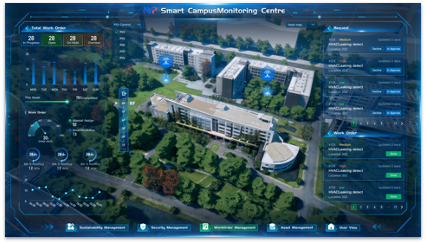

How to Reduce Equipment Downtime by 50%: Complete Implementation Guide
Reduce equipment downtime with proven CMMS strategies. Root cause analysis, PM optimisation, and real-time monitoring that cuts unplanned failures by 45%.

Key Takeaways
- Unplanned downtime costs industrial manufacturers up to 50 billion dollars annually
- Preventive maintenance programs reduce equipment failures by 25-30%
- Root cause analysis eliminates recurring failures rather than just fixing symptoms
- CMMS data analytics identify the 20% of assets causing 80% of downtime
Every hour of unplanned equipment downtime costs manufacturing facilities an average of $260,000, according to recent industry research. Fortune Global 500 manufacturing companies collectively lose an estimated $1.5 trillion annually due to unplanned downtime.
For individual facilities, the impact is equally severe. The average manufacturer experiences 800 hours of downtime per year, over 2 hours every single day. A single day of unexpected downtime costs $5,000-$15,000 in lost productivity alone, before accounting for emergency repair premiums of 150-200% over planned maintenance costs.
Yet some organizations have cut their downtime in half. They are not using proprietary technology or unlimited budgets. They are executing eight proven maintenance strategies consistently and systematically.
This guide shows exactly how they did it, with specific tactics, realistic timelines, and measurable benchmarks you can apply to your own facility.
Understanding the True Cost of Equipment Downtime
Before implementing solutions, you need to understand what downtime costs your organization specifically. The numbers vary dramatically by industry and equipment criticality.
Industry-Specific Downtime Costs
According to comprehensive downtime research, downtime costs break down by sector as follows:
| Industry | Cost Per Hour | Annual Impact |
|---|---|---|
| Automotive | $2.3 million | $22,000 per minute |
| Food & Beverage | $50,000-$100,000 | Significant spoilage risk |
| Pharmaceutical | $100,000-$300,000 | Compliance penalties |
| General Manufacturing | $20,000-$50,000 | Production target misses |
| Process Manufacturing | $10,000-$30,000 | Quality consistency issues |
Hidden Costs Beyond Production Loss
Direct production loss represents only part of the total impact. Research from industrial manufacturers shows downtime creates cascading costs:
- Emergency repair premiums - Rush shipping adds 30-50% to parts costs, overtime labor rates increase 50-100%
- Secondary equipment damage - Cascading failures from related equipment increase repair scope
- Production rescheduling - Administrative overhead to reschedule work, communicate delays
- Customer penalties - Late delivery fees, lost contracts, damaged relationships
- Safety incidents - Rushed repairs increase injury risk, OSHA violations
- Quality issues - Equipment running outside specifications produces defects
One study found that poor maintenance strategies reduce plant productive capacity between 5-20%, even when accounting for scheduled maintenance windows.
The Prevention Math
The math strongly favors prevention over reaction. According to maintenance ROI research, for every dollar spent on preventive maintenance, companies receive a 545% return on investment. That is a $5.45 return for every $1 invested.
Companies using preventive maintenance save 12-18% compared to reactive maintenance strategies. Each dollar spent on preventive maintenance saves an average of $5 in future repair costs.
The case for structured maintenance programs is financially clear. The question becomes: which strategies deliver the greatest impact for your specific operation?
Strategy 1: Shift from Reactive to Preventive Maintenance
The single biggest downtime reduction comes from performing maintenance before equipment fails rather than after.
According to FMX downtime research, proactive maintenance leads to a 65% reduction in unplanned downtime compared to reactive approaches. Aberdeen Group studies found that organizations using CMMS for preventive maintenance achieve 28% higher equipment uptime and 20% lower maintenance costs.

The Maintenance Maturity Spectrum
Most organizations progress through distinct maintenance maturity stages:
| Approach | Maintenance Trigger | Downtime Reduction | Cost Profile |
|---|---|---|---|
| Reactive (Run to Failure) | Equipment breaks | Baseline (worst) | Highest total cost |
| Time-Based Preventive | Calendar schedule | 30-50% improvement | Moderate cost |
| Usage-Based Preventive | Runtime hours/cycles | 35-55% improvement | Balanced cost |
| Condition-Based | Indicator thresholds | 40-60% improvement | Lower cost |
| Predictive Analytics | AI failure forecasting | 50-70% improvement | Lowest cost |
Implementing Preventive Maintenance Programs
Most facilities can establish basic preventive maintenance within 60-90 days following this framework:
Phase 1: Equipment Criticality Assessment (Week 1-2)
Identify which equipment failures cause the most operational disruption:
- Equipment that stops production entirely when it fails
- Assets with the longest repair lead times
- Systems with safety implications when they fail
- Equipment with the highest historical downtime impact
Use a simple criticality matrix scoring equipment on failure frequency multiplied by failure impact. Focus preventive efforts on the top 20% of critical equipment first.
Phase 2: Baseline Maintenance Schedules (Week 3-4)
Start with manufacturer-recommended maintenance intervals:
- Review equipment manuals for recommended service schedules
- Document required tasks, estimated time, required skills
- Identify needed parts and tools for each maintenance task
- Create standardized preventive maintenance checklists
Do not over-engineer initial programs. Start with manufacturer guidelines and refine based on actual equipment performance data.
Phase 3: Implementation and Tracking (Week 5-8)
Deploy preventive maintenance using CMMS scheduling capabilities:
- Create recurring work orders for each preventive maintenance task
- Assign tasks to qualified technicians
- Track completion rates and schedule compliance
- Document actual time spent versus estimated time
- Record parts consumed during preventive maintenance
Target 90% or higher preventive maintenance completion rates. Anything below 85% indicates scheduling or resource allocation problems.
Phase 4: Data-Driven Optimization (Month 3+)
After three months of preventive maintenance data, analyze and adjust:
- Equipment still failing frequently needs more frequent or different maintenance
- Equipment never failing between preventive maintenance tasks may be over-maintained
- Tasks consistently taking longer than estimated need schedule adjustments
- Frequently consumed parts should be stocked in inventory
This iterative approach prevents both under-maintenance (equipment still fails) and over-maintenance (wasting labor on unnecessary tasks).
Download the Full Report
Get 100+ data points, verifiable sources, and actionable frameworks in a single PDF.
Get the ReportSee It In Action
Watch how facilities teams achieve 75% less unplanned downtime with Infodeck.
Book a DemoStrategy 2: Master MTBF and MTTR Metrics
You cannot improve what you do not measure. Two metrics determine overall equipment availability: Mean Time Between Failures (MTBF) and Mean Time to Repair (MTTR).
According to Tractian’s maintenance KPI research, these metrics together determine system availability using the formula:
Availability = MTBF ÷ (MTBF + MTTR)Understanding MTBF (Equipment Reliability)
What MTBF measures: How long equipment runs before failing
Calculation formula:
MTBF = Total Operating Time ÷ Number of FailuresExample calculation:
- Conveyor system operated 4,000 hours
- Experienced 8 failures during that period
- MTBF = 4,000 hours ÷ 8 failures = 500 hours
Interpretation: On average, this conveyor runs 500 hours between failures.
Goal: Increase MTBF over time through better preventive maintenance, improved operating procedures, and equipment upgrades.
Understanding MTTR (Repair Efficiency)
What MTTR measures: How quickly you restore equipment to operation after failure
Calculation formula:
MTTR = Total Repair Time ÷ Number of RepairsExample calculation:
- 8 repairs completed
- Total repair time was 32 hours
- MTTR = 32 hours ÷ 8 repairs = 4 hours
Interpretation: On average, each repair takes 4 hours from failure detection to equipment restart.
Goal: Decrease MTTR over time through better diagnostics, parts availability, technician training, and documented procedures.
Industry MTTR Benchmarks
Target MTTR varies significantly by industry criticality. According to F7i’s reliability research:
| Industry | Critical System MTTR Target | Rationale |
|---|---|---|
| IT Services | 15-60 minutes | Revenue impact per minute |
| Financial Systems | 5-15 minutes | Regulatory requirements |
| Healthcare | Under 15 minutes | Patient safety implications |
| Manufacturing | 1-6 hours | Production schedule impact |
| Technology (Web Services) | 15-30 minutes | User experience standards |
| Facilities Management | 2-8 hours | Occupant comfort priorities |
Your specific targets depend on equipment criticality within your operation. Critical production equipment requires faster MTTR than non-critical support systems.
Why Both Metrics Matter
Focusing exclusively on MTTR creates a “firefighting culture” where teams become excellent at responding to emergencies but never prevent them. eMaint’s KPI research emphasizes tracking both metrics together.
Scenario 1: Good MTTR, Poor MTBF
- MTBF = 200 hours, MTTR = 2 hours
- Availability = 200 ÷ (200 + 2) = 99.0%
- Problem: Equipment fails frequently despite fast repairs
Scenario 2: Good MTBF, Poor MTTR
- MTBF = 2,000 hours, MTTR = 20 hours
- Availability = 2,000 ÷ (2,000 + 20) = 99.0%
- Problem: Rare failures cause extended downtime
Scenario 3: Balanced Excellence
- MTBF = 2,000 hours, MTTR = 4 hours
- Availability = 2,000 ÷ (2,000 + 4) = 99.8%
- Result: Equipment rarely fails and recovers quickly when it does
Balanced improvement delivers superior availability.
Implementing MTBF/MTTR Tracking
Modern CMMS platforms calculate these metrics automatically from work order data:
- Capture failure events - Create work orders for every equipment failure
- Record timestamps - Log when failure occurred and when repair completed
- Track operating time - Monitor runtime hours or production cycles
- Calculate automatically - Let CMMS compute MTBF and MTTR by equipment
- Review trends - Monitor whether metrics improve over time
- Take action - Investigate equipment with declining MTBF or increasing MTTR
The goal is not achieving specific absolute values but rather demonstrating continuous improvement in your facility’s specific context.
Strategy 3: Implement Condition-Based Maintenance
Time-based preventive maintenance performs tasks on fixed schedules (every 30 days, every 500 operating hours). Condition-based maintenance triggers work based on actual equipment condition, optimizing maintenance timing.
According to SSG Insight’s 2026 manufacturing research, condition-based maintenance allows teams to focus attention where most needed, especially on critical assets. Aberdeen Group research found that best-in-class maintainers using condition monitoring achieved 89% overall equipment effectiveness (OEE) compared to 69% for companies using traditional preventive maintenance, a 29% performance advantage.

Condition Monitoring Methods
| Monitoring Method | Equipment Type | Condition Indicators | Implementation Cost |
|---|---|---|---|
| Vibration analysis | Rotating equipment, motors, pumps | Frequency spectrum, amplitude changes | $$ - $$$ |
| Thermal imaging | Electrical systems, motors, bearings | Temperature differentials, hot spots | $$ |
| Oil analysis | Engines, hydraulics, gearboxes | Metal particulates, viscosity, contamination | $ - $$ |
| Ultrasonic testing | Compressed air, steam systems | Leak detection, valve condition | $$ |
| Electrical testing | Motors, transformers | Current signature, insulation resistance | $$ - $$$ |
| Visual inspection | Belts, seals, filters, structure | Wear patterns, degradation, damage | $ (labor only) |
Starting with Manual Condition Monitoring
You do not need expensive sensors to implement condition-based maintenance. Start with structured inspections:
Daily operator inspections (5-10 minutes per equipment):
- Unusual noises, vibrations, or smells
- Visible leaks, damage, or wear
- Abnormal temperatures (touch test)
- Performance changes (slower, inconsistent)
Weekly technician inspections (15-30 minutes per equipment):
- Belt tension and condition
- Fluid levels and cleanliness
- Electrical connection tightness
- Bearing temperature and noise
- Filter condition and pressure drops
Monthly detailed inspections (30-60 minutes per equipment):
- Vibration measurements at key points
- Thermal imaging of electrical connections
- Ultrasonic leak detection
- Alignment verification
- Calibration checks
Document all inspection findings in your CMMS. Establish thresholds that trigger maintenance work orders when exceeded.
Advancing to Automated Condition Monitoring
For critical equipment where downtime costs exceed $10,000 per incident, automated monitoring delivers rapid ROI.
IoT sensor integration enables continuous condition monitoring:
- Vibration sensors detect bearing wear, misalignment, imbalance in rotating equipment
- Temperature sensors identify overheating before failure in motors, electrical systems
- Pressure sensors detect filter clogging, system leaks, pump degradation
- Current sensors monitor electrical load changes indicating mechanical problems
Automated systems alert maintenance teams when conditions exceed thresholds, triggering condition-based work orders before failure occurs.
Strategy 4: Optimize Spare Parts Management
According to Facilio’s manufacturing research, lack of essential spare parts significantly increases MTTR due to extended repair times. Nothing extends downtime like waiting for parts to arrive.
The Spare Parts Paradox
Organizations face competing pressures:
- Stock everything - Never wait for parts but carry excessive inventory costs
- Stock nothing - Minimize inventory costs but face extended downtime waiting for parts
- Strategic stocking - Carry the right parts based on failure probability and lead time
Critical Parts Identification Matrix
Use this framework to determine which parts to stock:
| Part Failure Frequency | Equipment Criticality | Lead Time | Stocking Decision |
|---|---|---|---|
| High (monthly) | Critical | Any | Stock 2-3 units |
| High (monthly) | Non-critical | Any | Stock 1 unit |
| Medium (quarterly) | Critical | Over 1 week | Stock 1 unit |
| Medium (quarterly) | Non-critical | Under 1 week | Order when needed |
| Low (annual+) | Critical | Over 1 week | Stock 1 unit |
| Low (annual+) | Any | Under 1 week | Order when needed |
Implementing Strategic Spare Parts Management
Phase 1: Analyze Failure History
Review 12-24 months of maintenance records to identify:
- Which parts fail most frequently
- Which equipment experiences the most failures
- Average time between part replacements
- Total annual consumption by part number
Phase 2: Assess Lead Times and Criticality
For each frequently consumed part:
- Contact suppliers for standard lead times
- Identify parts with extended lead times (2+ weeks)
- Note parts from single-source suppliers (supply risk)
- Evaluate equipment criticality when that part fails
Phase 3: Set Stocking Levels
Establish minimum and maximum inventory levels:
Minimum Stock Level = (Average Monthly Usage × Lead Time in Months) + Safety Stock
Maximum Stock Level = Minimum Stock Level + Reorder Quantity
Example:
- Hydraulic pump seal fails twice per month on average
- Lead time is 3 weeks (0.75 months)
- Minimum stock = (2 × 0.75) + 1 safety unit = 2.5, round up to 3 units
- Reorder quantity = 3 units (avoid frequent small orders)
- Maximum stock = 3 + 3 = 6 units
Phase 4: Implement Automated Reordering
Use inventory management software to:
- Track parts consumption automatically when used in work orders
- Alert when stock reaches minimum level
- Generate purchase orders for reorder quantities
- Update inventory when parts received
- Report on inventory turnover and carrying costs
Parts Organization for Fast Access
Physical organization impacts MTTR significantly:
- Label everything - Clear labels with part numbers, equipment applications
- Logical arrangement - Group by equipment type or by part type depending on your operation
- Document locations - Store bin locations in CMMS for every part
- Keep common parts accessible - High-turnover items near work areas
- Secure expensive parts - Prevent loss or unauthorized use
Organizations implementing these practices typically reduce parts-related MTTR delays by 30-50%.
Download the Full Report
Get the complete State of Maintenance 2026 report with all benchmark data and implementation frameworks.
Download Free ReportSee It In Action
Ready to join the facilities teams achieving 75% less unplanned downtime? Start your free 30-day trial.
Start Free TrialStrategy 5: Build Maintenance Knowledge Management
According to eMaint’s CMMS research, CMMS platforms serve as knowledge storehouses containing work order checklists and standard operating procedures that streamline repairs and minimize downtime.
Slow repairs frequently stem from knowledge gaps rather than technical difficulty. Technicians spend time troubleshooting problems that colleagues solved previously but never documented.
The Knowledge Transfer Problem
Maintenance knowledge traditionally exists in three problematic forms:
- Tribal knowledge - Critical information stored only in experienced technicians’ heads
- Paper documentation - Equipment manuals filed in cabinets, rarely consulted
- Scattered digital files - Schematics, procedures, parts lists in various locations
When the experienced technician is unavailable or that paper manual cannot be found, repairs take significantly longer.
Creating a Centralized Knowledge Base
Effective maintenance knowledge bases include:
Equipment Documentation Library
- Original equipment manufacturer (OEM) manuals
- Electrical schematics and wiring diagrams
- Hydraulic and pneumatic diagrams
- Parts lists with manufacturer part numbers
- Warranty documentation and service contacts
Repair History Database
- Previous work orders on the same equipment
- Detailed descriptions of what was done
- Parts replaced during each repair
- Time required to complete repair
- Lessons learned and troubleshooting notes
Standard Operating Procedures
- Step-by-step repair procedures
- Safety precautions and lockout-tagout requirements
- Required tools and equipment
- Quality checkpoints and testing procedures
- Common mistakes to avoid
Troubleshooting Guides
- Symptom-to-cause decision trees
- Diagnostic procedures and measurement points
- Normal operating parameters
- Abnormal condition interpretations
- Recommended corrective actions
Vendor and Supplier Information
- Technical support contact information
- Parts supplier details and account numbers
- Service contractor capabilities and rates
- Emergency contact procedures
- Preferred vendor lists
Implementing Knowledge Management Practices
Capture Knowledge During Repairs
Require technicians to document:
- What symptom led them to diagnose the problem
- What they checked during troubleshooting
- What they found as the root cause
- What they did to fix it
- How they verified the repair worked
This transforms every repair into institutional knowledge.
Create Work Order Templates
For common maintenance tasks, create templates containing:
- Complete task descriptions and procedures
- Safety requirements and hazards
- Estimated time and required skills
- Parts typically needed
- Quality verification steps
Templates reduce variation, improve training, and ensure nothing is forgotten.
Attach Documentation to Assets
Link relevant documents directly to equipment records in your asset management system:
- Equipment photo for identification
- OEM manuals and documentation
- Custom schematics or modifications
- Maintenance history and trends
- Spare parts list specific to that equipment
When a work order is created for that equipment, technicians access all relevant information immediately.
Conduct Post-Repair Reviews
After significant repairs or recurring problems:
- Review what happened with the maintenance team
- Identify knowledge gaps that extended repair time
- Document solutions in the knowledge base
- Update procedures based on lessons learned
- Share insights across the team
Measurable Knowledge Management Impact
Organizations implementing structured knowledge management report:
- 30-45% reduction in MTTR for documented repairs versus undocumented
- 50-70% faster training for new technicians with accessible procedures
- 60-80% decrease in repeat mistakes when lessons learned are captured
- 25-40% reduction in emergency vendor calls when internal knowledge is complete
One electronics manufacturer reduced MTTR by 45% using automated diagnostics and digital repair logs accessible at the point of service.
Strategy 6: Cross-Train Your Maintenance Team
According to ErectaStep’s maintenance research, cross-training employees is critical. If only one person knows how to restore a critical system and they are unavailable, significant delays occur.
The Single Point of Failure Problem
Many maintenance departments unknowingly create human single points of failure:
- One HVAC specialist who handles all climate control emergencies
- One electrician qualified for high-voltage work
- One controls technician who understands the BMS
- One plumber who knows the complex chilled water system
When that person is on vacation, out sick, or working another emergency, critical equipment stays down longer than necessary.
Cross-Training Strategy Framework
Phase 1: Skills Inventory Assessment
Document current capabilities:
- List all maintenance skills required in your facility
- Identify which team members possess each skill
- Note skills held by only one person (high-risk areas)
- Record certification and licensing requirements
- Identify skills gaps where no one is currently qualified
Phase 2: Priority Skill Development Plan
Focus cross-training efforts on:
- Skills held by only one person (highest risk)
- Critical equipment maintenance (highest downtime impact)
- Frequently needed skills (highest utilization)
- Skills with upcoming retirements (knowledge preservation)
Phase 3: Structured Knowledge Transfer
Implement pairing strategies:
- Assign junior technicians as assistants on complex repairs
- Rotate technicians through different equipment types
- Have experienced technicians document procedures while performing them
- Create video recordings of complex procedures
- Conduct formal training sessions on specialized equipment
Phase 4: Competency Verification
Ensure skills transfer effectively:
- Have trainees perform tasks under supervision
- Use checklists to verify all steps completed correctly
- Document competency achievement in training records
- Assign progressively more independent work
- Track certifications and recertification requirements
Balancing Specialization and Versatility
Not every technician needs to do everything. Effective teams balance:
Specialists - Deep expertise in complex systems
- Maintain high skill level through frequent practice
- Handle most challenging repairs and troubleshooting
- Train others in their specialty area
- Available for consultation and support
Generalists - Broad skills across multiple systems
- Handle routine preventive maintenance
- Perform common repairs independently
- Escalate complex issues to specialists
- Provide backup during specialist absences
T-shaped technicians - Broad general skills plus one specialty
- Most valuable team members
- Handle most situations independently
- Provide specialist backup in their expertise area
- Train others in their specialty
Cross-Training Impact on MTTR
Organizations implementing systematic cross-training report:
- 20-35% reduction in emergency response time due to more available responders
- 15-25% reduction in MTTR from faster access to qualified technicians
- 40-60% reduction in vendor dependency for specialized repairs
- 30-50% improvement in schedule flexibility from interchangeable resources
Track these metrics to demonstrate cross-training ROI and justify ongoing training investment.
Strategy 7: Use Data for Equipment Replacement Decisions
According to MaintainX’s downtime research, maintenance helps but sometimes simply replacing aging equipment reduces downtime by 43%.
The Repair vs. Replace Decision Framework
Aging equipment presents a difficult decision: continue maintaining or invest in replacement?
Factors favoring continued repair:
- Equipment under 50% of expected useful life
- Repair costs consistently under 30% of replacement cost annually
- Parts readily available from multiple suppliers
- Failure frequency stable or decreasing
- Production requirements not exceeding equipment capacity
- Budget constraints preventing replacement
Factors favoring replacement:
- Equipment over 75% of expected useful life
- Annual repair costs exceeding 50% of replacement cost
- Increasing failure frequency despite maintenance
- Parts becoming obsolete or single-source
- Safety concerns from equipment age
- Energy costs significantly higher than modern alternatives
- Production requirements exceeding current capacity
- Maintenance consuming excessive technician time
Using Maintenance Data to Support Replacement
Your CMMS contains the data needed to make objective replacement decisions:
Total Cost of Ownership Analysis
Calculate annual costs over the past 3-5 years:
- Labor hours spent on repairs multiplied by hourly rate
- Parts and materials consumed
- Downtime cost (hours down multiplied by production loss rate)
- Energy costs (if measurable)
- Safety incidents or near-misses
Compare total annual cost to replacement equipment cost:
- If annual cost exceeds 30% of replacement cost, consider replacing
- If annual cost exceeds 50% of replacement cost, replacement usually justified
- If annual cost increasing year over year, replacement timeline accelerating
Failure Frequency Trend Analysis
Review work orders by month over 3-5 years:
- Is time between failures decreasing (MTBF declining)?
- Are failure severities increasing?
- Are different components failing more frequently?
- Is preventive maintenance becoming less effective?
Accelerating failure rates indicate equipment approaching end of life.
Availability Impact Calculation
Calculate equipment availability using actual data:
Availability % = (Total Hours - Downtime Hours) ÷ Total Hours × 100Compare current availability to business requirements:
- Production equipment typically requires 95-98% availability
- Critical HVAC may require 99%+ availability
- Support equipment may accept 90-95% availability
When equipment consistently fails to meet availability requirements despite proper maintenance, replacement becomes necessary.
Building the Replacement Business Case
Use maintenance data to justify capital expenditure:
Current State Analysis
- Annual maintenance cost for past 3 years showing trend
- Total downtime hours and production impact
- Safety incidents related to equipment age
- Energy consumption compared to modern alternatives
Future State Projection
- New equipment purchase cost and installation
- Expected maintenance cost reduction
- Expected downtime reduction and production improvement
- Energy savings from efficient modern equipment
- Estimated useful life of replacement equipment
Financial Analysis
- Payback period calculation
- Net present value over equipment life
- Internal rate of return
- Risk reduction from eliminating chronic failures
Present this data-driven analysis to secure replacement approval when justified.
Strategy 8: Advance to Predictive Maintenance
For organizations with mature preventive maintenance programs, predictive maintenance offers the next level of downtime reduction.
According to comprehensive 2025 research, predictive maintenance reduces unplanned downtime by 30-50% and maintenance costs by 10-40%. Deloitte studies show predictive maintenance delivers 35-45% downtime reduction and 70-75% elimination of unexpected breakdowns.
More dramatically, one pilot implementation of predictive capabilities reduced unplanned downtime by 80% and saved approximately $300,000 per asset.
How Predictive Maintenance Works
Traditional preventive maintenance performs tasks on fixed schedules regardless of condition. Predictive maintenance uses data to forecast failures weeks before they occur.
Data Collection
- Continuous monitoring via IoT sensors
- Vibration, temperature, pressure, current, flow measurements
- Operating parameters logged every second or minute
- Environmental conditions affecting equipment
Pattern Analysis
- Machine learning algorithms analyze historical data
- Identify normal operating patterns
- Detect deviations indicating developing problems
- Compare current conditions to pre-failure signatures
Failure Prediction
- Calculate probability of failure within specific timeframe
- Predict remaining useful life of components
- Recommend maintenance timing
- Generate work orders automatically
Maintenance Execution
- Maintenance scheduled during planned downtime
- Components replaced before failure occurs
- Validation that corrective action resolved condition
- Continuous learning from each intervention
Predictive Maintenance Technology Requirements
| Component | Purpose | Typical Investment |
|---|---|---|
| Condition sensors | Collect real-time equipment data | $500-$5,000 per sensor location |
| Edge computing | Local data processing and filtering | $1,000-$10,000 per installation |
| Connectivity infrastructure | Transmit data to analytics platform | $100-$1,000 per device |
| Analytics platform | Pattern recognition and predictions | $10,000-$100,000 annually |
| CMMS integration | Connect predictions to work orders | $5,000-$25,000 implementation |
While initial investment appears significant, ROI typically occurs within 6-18 months for critical equipment through downtime prevention.
Starting Your Predictive Maintenance Journey
Do not attempt organization-wide predictive maintenance immediately. Start small and prove value:
Step 1: Identify Pilot Candidates (Month 1)
Select equipment meeting these criteria:
- High failure cost (downtime over $25,000 per incident)
- Frequent failures despite preventive maintenance
- Long lead time for replacement equipment
- Safety risk from unexpected failure
- Sensors can be retrofitted cost-effectively
Step 2: Implement Monitoring (Months 2-3)
Install sensors and connectivity:
- Work with vendors for sensor selection and placement
- Ensure reliable data transmission
- Validate data quality and completeness
- Begin collecting baseline operating data
Step 3: Establish Baselines (Months 4-9)
Collect data through various operating conditions:
- Normal operations at different load levels
- Startup and shutdown cycles
- Seasonal variations if applicable
- Known maintenance events and responses
Step 4: Develop Predictive Models (Months 10-12)
Work with analytics platform to:
- Define normal operating ranges
- Identify early warning indicators
- Set alert thresholds for maintenance intervention
- Establish confidence levels for predictions
Step 5: Validate Predictions (Months 13-18)
Test predictive accuracy:
- Compare predictions to actual failures
- Refine models based on false positives and missed predictions
- Document successful failure preventions
- Calculate actual ROI from downtime avoided
Step 6: Expand to Additional Equipment (Month 19+)
After proving value on pilot equipment:
- Apply lessons learned to additional critical assets
- Prioritize expansion based on failure cost and prediction feasibility
- Gradually build enterprise predictive maintenance capability
Predictive Maintenance Adoption Trends
By 2025, over 50% of industrial companies have adopted AI-driven predictive maintenance, making it a critical component of modern manufacturing. Fortune 500 companies are estimated to save 2.1 million hours of downtime and $233 billion in maintenance costs annually with full adoption of condition monitoring and predictive maintenance.
Case studies show organizations achieving 85% downtime reduction within six months of implementing comprehensive monitoring and predictive analytics programs.
The technology has matured to the point where predictive maintenance is now accessible to mid-sized operations, not just large enterprises with dedicated data science teams.
Measuring Your Downtime Reduction Progress
As you implement these eight strategies, measure improvement systematically to demonstrate ROI and identify remaining opportunities.
Weekly Operational Metrics
Track these metrics weekly to identify immediate issues:
| Metric | Target | Action if Target Missed |
|---|---|---|
| Unplanned downtime hours | Trending down | Review failure root causes |
| Emergency work orders | Under 20% of total | Analyze preventable emergencies |
| Preventive maintenance completion | Over 90% | Address resource or scheduling issues |
| Average response time | Trending down | Evaluate staffing and procedures |
| Parts stockouts | Zero for critical parts | Review inventory management |
Monthly Strategic Metrics
Analyze these monthly to evaluate program effectiveness:
| Metric | Target | Insight Provided |
|---|---|---|
| MTBF by critical equipment | Increasing | Preventive maintenance effectiveness |
| MTTR by equipment type | Decreasing | Repair efficiency improvement |
| Reactive vs. planned work ratio | More planned over time | Maintenance maturity progression |
| Equipment availability % | Meeting requirements | Overall reliability achievement |
| Maintenance cost per operating hour | Stable or decreasing | Cost efficiency |
Quarterly Business Impact Metrics
Report these quarterly to executive leadership:
| Metric | Target | Business Value |
|---|---|---|
| Overall equipment availability | 95%+ for critical assets | Production capacity preserved |
| Total downtime cost avoided | Trending up | Maintenance program ROI |
| Production target achievement % | Meeting or exceeding | Revenue protection |
| Equipment replacement decisions | Data-supported | Capital allocation optimization |
| Safety incidents related to equipment | Zero or decreasing | Risk mitigation |
The 50% Downtime Reduction Timeline
Achieving 50% downtime reduction is realistic within 12 months using this phased approach:
Months 1-3: Foundation Phase
Implementations:
- Deploy CMMS for work order tracking and history
- Establish preventive maintenance schedules for critical equipment
- Begin capturing MTBF and MTTR data systematically
- Organize spare parts inventory for critical components
Expected Results:
- 10-20% downtime reduction from catching obvious preventable failures
- Baseline data established for measuring future improvement
- Team adoption of systematic maintenance practices
Months 4-6: Optimization Phase
Implementations:
- Analyze 3-6 months of failure pattern data
- Adjust preventive maintenance frequencies based on actual failure rates
- Improve spare parts availability based on usage patterns
- Cross-train technicians on high-impact equipment
- Build knowledge base from repair documentation
Expected Results:
- 25-35% cumulative downtime reduction from optimized programs
- Reduced parts-related repair delays
- Faster repairs from improved procedures and training
- Fewer repeat failures from documented solutions
Months 7-12: Maturity Phase
Implementations:
- Implement condition-based monitoring for critical equipment
- Establish troubleshooting guides and standard procedures
- Optimize all preventive maintenance programs based on historical performance
- Evaluate predictive maintenance for highest-cost failure equipment
- Make data-supported equipment replacement decisions
Expected Results:
- 45-55% cumulative downtime reduction from mature maintenance practices
- Proactive maintenance culture replacing reactive firefighting
- Measurable ROI demonstrating program value
- Foundation established for continuous improvement
Real-World Success Stories
These documented case studies demonstrate achievable results:
Bemis Manufacturing - Achieved 85% reduction in downtime, from 20% down to 3%, and increased technician utilization from 50% to 80% within six months using automated metrics and centralized maintenance management.
Electronics Manufacturer - Reduced MTTR by 45% using automated diagnostics and digital repair logs accessible at the point of service.
Manufacturing Facility - Reported 30% reduction in downtime within six months after adopting CMMS with IoT sensor integration for condition monitoring.
Process Manufacturer - Achieved 70% downtime reduction through predictive maintenance implementation on critical production equipment.
Industrial Equipment Contractor - Reported 30-50% reduction in unplanned downtime and 55-70% lower maintenance costs after implementing AI-powered predictive maintenance achieving 92-95% accuracy in predicting equipment failures 3-8 weeks in advance.
These are not outliers. They represent what systematic maintenance management achieves consistently across industries.
Taking Action on Downtime Reduction
Cutting equipment downtime by 50% does not require revolutionary technology or unlimited budgets. It requires executing proven maintenance strategies systematically and measuring results consistently.
Start with the highest-impact, lowest-complexity strategies:
- Implement preventive maintenance schedules for your most critical equipment using maintenance scheduling software
- Track MTBF and MTTR metrics to establish baselines and measure improvement using work order management
- Organize spare parts inventory to eliminate parts-related repair delays with inventory tracking
- Document repair procedures to capture institutional knowledge in a searchable knowledge base
- Cross-train your team to eliminate human single points of failure
As these foundational practices mature, advance to higher-impact strategies like condition-based monitoring, automated diagnostics, and ultimately predictive maintenance.
The organizations achieving 50% downtime reduction started where you are now. They took the first step, measured results, and improved systematically.
Ready to cut your equipment downtime in half? See how Infodeck’s maintenance platform helps facilities teams prevent failures, optimize maintenance programs, and eliminate unplanned downtime. Start your free trial today.
Sources
- Manufacturing Downtime Statistics Report 2026
- The High Cost of Downtime in Manufacturing in 2026
- Key Maintenance Statistics & Trends for 2026
- Industry 4.0 and Predictive Maintenance - Deloitte Insights
- 25 Maintenance Stats, Trends, And Insights For 2026
- Bemis 85% Downtime Reduction Case Study
- Maximising Uptime in 2026 - SSG Insight
- How to Reduce Downtime - FMX Blog
- MTBF and MTTR: Maintenance KPIs - Tractian
- Cost of Downtime in Industrial Manufacturing - Sumitomo


