


Key Takeaways
- Remote facility monitoring through CMMS and IoT sensors enables 24/7 building oversight without on-site staff presence
- Automated alerts from connected sensors detect equipment anomalies, environmental changes, and safety issues in real-time
- Centralized monitoring dashboards provide portfolio-wide visibility across multiple buildings and geographic locations
- Integration between IoT platforms and CMMS automates work order creation when sensor readings exceed thresholds
- Organizations implementing comprehensive remote monitoring report 35-50% reductions in emergency maintenance calls
The traditional approach to facilities management required constant physical presence. Technicians walked the building conducting manual inspections, checking gauges, listening for unusual sounds, and waiting for occupants to report problems. This reactive model meant issues often went undetected until they caused disruptions, equipment failures happened without warning, and maintenance teams had limited visibility into building conditions outside normal working hours.
Remote facility monitoring fundamentally transforms this paradigm. By combining IoT sensors with cloud-based CMMS platforms, facilities managers gain continuous visibility into building conditions and equipment performance from any location. Temperature spikes trigger immediate alerts at 3 AM, vibration anomalies in mechanical rooms generate automated work orders, and energy consumption patterns reveal efficiency opportunities across entire building portfolios.
This shift from periodic physical inspections to continuous remote oversight delivers measurable benefits. According to MarketsandMarkets research, the facility management market is projected to expand from USD 61.08 billion in 2025 to USD 138.50 billion by 2030, driven largely by IoT-enabled platforms offering real-time data analytics, predictive maintenance, and centralized control over building operations. Organizations implementing comprehensive remote monitoring report 35-50% reductions in emergency maintenance calls, 20-30% decreases in energy costs through optimization, and 40-60% faster response times to building issues.
The numbers tell a compelling story. Recent research shows that over 65% of large manufacturers have initiated or completed IoT sensor deployment for core assets, a number projected to exceed 85% by 2026. Companies implementing IoT-driven predictive maintenance are cutting costs by up to 40% and reducing machine downtime by 50%.
This guide explores how modern remote facility monitoring systems work, the IoT sensor technologies that enable continuous oversight, integration strategies between sensors and CMMS platforms, and practical implementation roadmaps for organizations of any size.
Understanding Remote Facility Monitoring Architecture
Remote facility monitoring systems consist of three integrated layers working in harmony: sensing hardware that collects real-time data, connectivity infrastructure that transmits information to the cloud, and software platforms that analyze data and drive action.
The Sensing Layer: IoT Sensors and Connected Equipment
Modern buildings generate thousands of data points through various sensing technologies. Environmental sensors track temperature, humidity, air quality, and occupancy patterns throughout the facility. Equipment sensors monitor vibration, temperature, current draw, and operating hours on critical assets like HVAC units, pumps, and motors. Utility sensors measure electricity, water, and gas consumption at circuit and zone levels. Safety sensors detect water leaks, smoke, unauthorized access, and other security concerns.
The sensing layer has evolved dramatically in recent years. Earlier systems relied on wired connections to building automation systems, requiring extensive installation labor and limiting deployment to new construction or major renovations. According to Mordor Intelligence research, the building automation system market stands at USD 202.29 billion in 2025 and is forecast to reach USD 347.05 billion by 2030, reflecting the massive adoption of these technologies.
Modern wireless IoT sensors use cellular, WiFi, or low-power wide-area networks like LoRaWAN to transmit data without physical connections. Battery-powered sensors with multi-year lifespans can be installed in minutes using adhesive backing or magnetic mounts, making comprehensive monitoring economically feasible even in older buildings. Ericsson projected that cellular IoT connections would reach approximately 4.5 billion by late 2025, with smart sensors surpassing 14.5 billion units worldwide.
Sensor selection depends on monitoring objectives and building characteristics. A manufacturing facility might prioritize vibration monitoring on production equipment to detect bearing wear before failures occur. A healthcare facility focuses on temperature and humidity monitoring to maintain regulatory compliance in pharmaceutical storage areas. An office building emphasizes energy monitoring to identify optimization opportunities and track sustainability goals.
The Connectivity Layer: Getting Data to the Cloud
Sensor data reaches cloud platforms through various connectivity pathways, each offering distinct advantages for different deployment scenarios. WiFi connectivity uses existing building networks, providing high bandwidth and low latency for sensors within range of access points. Cellular connectivity uses LTE or newer 5G networks, offering building-wide coverage without dependence on local network infrastructure. Low-power wide-area networks like LoRaWAN provide extended range and battery life, ideal for large campuses or remote equipment locations.
Gateway devices often serve as intermediaries between sensors and cloud platforms. A single gateway might aggregate data from hundreds of Bluetooth or Zigbee sensors and transmit consolidated information via cellular or Ethernet connection. This hub-and-spoke architecture reduces connectivity costs while maintaining real-time data flow.
Edge computing capabilities increasingly move processing closer to data sources. Rather than transmitting every sensor reading to the cloud, edge devices perform initial analysis and transmit only significant events or aggregated summaries. This reduces bandwidth consumption, lowers cloud processing costs, and enables faster local response to critical conditions.
The infrastructure supporting remote monitoring has reached impressive scale. Industry data indicates that more than 68% of industrial facilities adopted automated monitoring systems in 2024, with cloud-based monitoring platforms growing by 41% year-over-year. Large enterprises integrating IoT-enabled systems now account for 72% of the market.
The Software Layer: CMMS and Analytics Platforms
Cloud-based CMMS platforms serve as the integration and action layer for remote monitoring systems. When connected sensors detect conditions exceeding defined thresholds, the CMMS platform automatically generates work orders with all relevant context. A temperature sensor detecting refrigeration failure at 2 AM creates a high-priority work order, notifies the on-call technician via mobile app, and provides access to equipment history and vendor contacts.
Modern CMMS platforms designed for IoT integration provide specialized capabilities beyond traditional maintenance management. Real-time dashboards visualize current conditions across entire building portfolios, with drill-down capabilities from enterprise overview to individual sensor readings. Trend analysis tools identify gradual degradation patterns that manual inspections might miss, such as slowly increasing vibration levels indicating bearing wear.
Verdantix research on IoT digital platforms for building operations finds that solutions allow building owners and operations teams to remotely monitor and manage a portfolio of building sites, use advanced analytics to identify potential issues, and automatically optimize environments based on real-time needs and conditions. In one documented case, a Class A office building used autonomous HVAC control technology to save 50% on energy usage and reduce energy costs by $3,500 per month.
The integration between IoT platforms and CMMS systems eliminates manual data transfer and ensures immediate action on detected issues. When asset monitoring identifies anomalies, the system automatically creates work orders assigned to appropriate technicians based on skills, location, and availability. Technicians receive mobile notifications with sensor readings, equipment specifications, and maintenance history, enabling informed response even when working remotely.
Start Free Trial
Experience the full platform with 30-day free access. No credit card required.
Start Free TrialBook a Demo
Get a personalized walkthrough from our team. See how Infodeck fits your operation.
Schedule DemoEssential Sensor Types for Comprehensive Building Monitoring
Effective remote monitoring requires strategic sensor deployment focused on critical systems and high-risk areas. Different sensor categories address specific monitoring objectives and operational concerns.
Environmental Monitoring Sensors
Temperature and humidity sensors form the foundation of environmental monitoring, particularly for HVAC performance verification and comfort management. Space-level sensors distributed throughout the building track conditions in occupied areas, identifying hot or cold spots that indicate system imbalances. Return air sensors monitor HVAC performance, detecting issues before they impact occupant comfort. Sensors in critical areas like server rooms or pharmaceutical storage provide continuous compliance monitoring with automated alerts when conditions drift outside acceptable ranges.
Air quality sensors measure carbon dioxide, volatile organic compounds, particulate matter, and other parameters affecting occupant health and productivity. Elevated CO2 levels indicate inadequate ventilation, prompting HVAC adjustments or maintenance attention. VOC sensors detect cleaning chemical residues, off-gassing from new materials, or potential contamination issues requiring investigation.
Occupancy sensors using passive infrared, ultrasonic, or camera-based technologies track space utilization patterns. This data optimizes HVAC scheduling, identifies underutilized areas for space planning, and verifies cleaning service delivery. Advanced occupancy analytics reveal usage trends that inform strategic decisions about building configuration and resource allocation.
The business case for environmental sensors is compelling. Building automation systems research indicates the market was valued at USD 101.74 billion in 2025 and is projected to reach USD 191.13 billion by 2030, with energy efficiency being the primary driver. BAS technologies help reduce energy consumption by intelligently controlling HVAC, lighting, and other critical systems while supporting compliance with stringent green building codes and sustainability goals.
Equipment Health Monitoring Sensors
Vibration sensors detect the subtle changes in rotating equipment that precede bearing failures, misalignment, or imbalance conditions. Accelerometers mounted on motors, pumps, fans, and compressors establish baseline vibration signatures during normal operation. Algorithms analyze frequency spectrum changes that indicate specific failure modes, often providing weeks of advance warning before catastrophic failure occurs.
Temperature sensors on equipment surfaces detect overheating conditions caused by electrical problems, bearing friction, or cooling system failures. Infrared sensors provide non-contact temperature monitoring of electrical panels, motor windings, and other components where physical sensor installation proves difficult. Thermal imaging integrated with monitoring systems enables automated hot spot detection across entire electrical distribution systems.
Current sensors monitor the electrical draw of motors and other powered equipment, revealing performance degradation and efficiency losses. Baseline power consumption established during commissioning provides reference points for ongoing comparison. Gradual increases in current draw indicate mechanical problems like bearing wear or impeller buildup requiring maintenance attention.
Runtime meters track equipment operating hours, enabling condition-based maintenance scheduling that reflects actual usage rather than calendar intervals. A backup generator running only 50 hours per year requires different maintenance timing than one running 500 hours. Runtime data integrated with CMMS systems automatically adjusts preventive maintenance schedules based on actual equipment use.
The impact of equipment health monitoring is substantial. Research indicates that Fortune 500 companies are estimated to save 2.1 million hours of downtime and $233 billion in maintenance costs annually with full adoption of condition monitoring and predictive maintenance technologies.

Utility and Energy Monitoring Sensors
Electrical meters at panel and circuit levels provide granular visibility into energy consumption patterns. Building-level meters track total consumption for utility verification and trend analysis. Panel-level meters identify which systems consume the most energy, focusing optimization efforts on high-impact areas. Circuit-level monitoring detects individual equipment problems like failed economizers or stuck dampers that waste energy while escaping visual inspection.
Water meters throughout the facility detect leaks, verify system performance, and allocate consumption to specific areas or tenants. Continuous flow monitoring identifies leaks within minutes rather than waiting for monthly utility bills. Sudden flow increases trigger immediate alerts, minimizing water damage and associated repair costs. Historical consumption data reveals seasonal patterns and identifies opportunities for fixture upgrades or system optimization.
Gas meters monitor consumption in facilities using natural gas for heating, cooking, or industrial processes. Consumption patterns correlated with weather data identify inefficient equipment or control problems. Unexpected gas flow during off-hours indicates equipment malfunctions or operational errors requiring investigation.
Energy monitoring delivers measurable returns. Organizations implementing comprehensive energy monitoring typically identify savings opportunities of 15-25% of baseline consumption through behavioral changes, scheduling adjustments, and targeted equipment repairs or replacements. For a facility spending $500,000 annually on energy, this represents $75,000-125,000 in annual savings.
Safety and Security Monitoring Sensors
Water leak detectors placed near at-risk equipment prevent catastrophic damage from plumbing failures, HVAC condensate issues, or roof leaks. Sensors in mechanical rooms, below water heaters, near HVAC units, and in ceiling spaces provide early warning before minor leaks become major incidents. Integration with building automation systems can automatically shut off water supplies when leaks are detected, minimizing damage extent.
Smoke and fire detection systems integrated with monitoring platforms provide redundant notification pathways ensuring emergency response even outside normal business hours. Cloud connectivity enables remote verification of alarm conditions, reducing false alarm responses while ensuring immediate action on genuine emergencies.
Door and access sensors track entry to restricted areas, mechanical rooms, and sensitive spaces. Unexpected access outside authorized hours triggers security alerts and creates audit trails for compliance purposes. Integration with video surveillance systems provides visual verification of access events for enhanced security monitoring.
Building Automated Alert Systems That Drive Action
Remote monitoring generates value only when detected anomalies trigger appropriate responses. Effective alert systems balance comprehensive coverage with manageable notification volumes, ensuring critical issues receive immediate attention without overwhelming teams with false alarms.
Defining Meaningful Alert Thresholds
Alert threshold configuration determines which conditions warrant immediate notification versus those requiring only passive logging. Thresholds must account for normal operating ranges, seasonal variations, and equipment-specific characteristics. A refrigeration unit maintaining 38°F might trigger alerts at 42°F, while a server room maintained at 68°F might alert at 75°F despite the higher absolute temperature.
Multi-stage thresholds provide graduated responses matching severity levels. Minor deviations from ideal conditions generate low-priority notifications logged for analysis but not requiring immediate response. Moderate deviations create standard-priority work orders for attention during normal business hours. Severe deviations trigger high-priority alerts with immediate notification to on-call personnel.
Time-based thresholds account for conditions that become concerning only when sustained. Brief temperature spikes during equipment startup may not warrant alerts, while the same temperature sustained for 30 minutes indicates genuine problems. Hysteresis prevents alert storms from conditions fluctuating around threshold values, requiring readings to return well below alert levels before notifications clear.
The sophistication of threshold management continues advancing. AI and predictive maintenance research shows that less than one-third of maintenance and operations teams currently have fully or partially implemented AI, though 65% of maintenance teams plan to use AI by the end of 2026. These AI systems will enable more intelligent threshold management that adapts to equipment-specific patterns and operating contexts.
Intelligent Alert Routing and Escalation
Alert routing directs notifications to appropriate personnel based on issue type, severity, location, and time of day. HVAC alerts route to mechanical technicians, electrical alerts to electricians, and security alerts to appropriate safety personnel. Location-based routing sends alerts to technicians responsible for specific buildings in multi-site operations.
Escalation procedures ensure critical alerts receive response even when primary contacts are unavailable. An alert not acknowledged within 15 minutes automatically escalates to backup personnel or management. Multi-level escalation paths continue notifications up the organizational hierarchy until someone confirms awareness and begins response activities.
Integration with workforce management systems considers technician availability, location, and skills when routing alerts. A plumbing alert automatically assigns to on-site plumbers during business hours but routes to on-call personnel during nights and weekends. Mobile workforce management shows technician locations, enabling assignment to the closest qualified responder for urgent issues.
Preventing Alert Fatigue Through Intelligent Filtering
Excessive alerts undermine monitoring effectiveness as personnel begin ignoring notifications or disabling systems entirely. Alert fatigue prevention requires careful configuration and continuous refinement based on operational experience.
Correlation engines group related alerts into single notifications, preventing alert storms when cascading failures affect multiple sensors. A chiller failure might trigger alerts from refrigerant pressure sensors, temperature sensors, and current monitors. Rather than generating six separate notifications, the system creates a single consolidated alert identifying the root issue and affected systems.
Machine learning algorithms identify normal patterns and alert only on genuine anomalies rather than expected variations. A system learning that motor vibration increases slightly during startup stops generating alerts for this normal condition. Algorithms adapt to seasonal patterns, recognizing that certain equipment runs hotter during summer without indicating problems.
Maintenance mode suppression temporarily disables alerts during planned service activities. When technicians begin work on equipment, they activate maintenance mode preventing the system from generating alerts for conditions caused by service activities. Automatic timeouts ensure maintenance mode does not remain active indefinitely if technicians forget to clear it.
Download the Full Report
Get 100+ data points, verifiable sources, and actionable frameworks in a single PDF.
Get the ReportSee It In Action
Watch how facilities teams achieve 75% less unplanned downtime with Infodeck.
Book a DemoCreating Effective Remote Monitoring Dashboards
Dashboard design significantly impacts monitoring effectiveness. Well-designed interfaces provide intuitive access to critical information while enabling detailed investigation when needed. Poor designs bury important data in navigation hierarchies or overwhelm users with excessive detail.
Portfolio-Wide Overview Dashboards
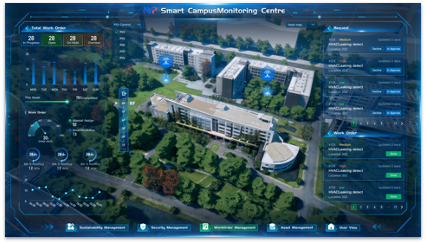
Executive dashboards provide high-level visibility across entire building portfolios, summarizing key performance indicators without requiring deep technical knowledge. Active alert counts by severity level show at a glance whether operations are running smoothly or require immediate attention. Building health scores aggregate multiple metrics into single values enabling quick comparison across locations. Energy consumption trends reveal optimization opportunities and verify conservation program effectiveness.
Geographic visualizations place portfolio buildings on maps with color coding indicating status. Green buildings operate normally, yellow buildings have minor issues requiring attention, and red buildings have critical alerts demanding immediate response. This spatial context helps multi-site operations teams understand the geographic distribution of issues and optimize technician routing.
Trend charts show portfolio-wide metrics over time, revealing seasonal patterns and long-term trajectories. Total energy consumption trending downward confirms efficiency program success. Increasing maintenance costs in specific building categories identify assets requiring capital investment or replacement consideration.
Building-Specific Operational Dashboards
Facilities managers responsible for individual buildings need more detailed dashboards showing current conditions across all major systems. Floor plan visualizations display sensor locations with color-coded status indicators, enabling quick identification of problem areas. HVAC system diagrams show equipment status, current operating conditions, and alert indicators for the entire chain from chillers to air handling units to terminal units.
Real-time metrics display current readings from critical sensors with historical context. A temperature reading of 72°F gains meaning when shown alongside the 24-hour trend revealing gradual increase from 68°F, suggesting developing problems despite current readings within acceptable range. Mini-trend graphs embedded in dashboard tiles provide this context without requiring navigation to separate detailed views.
Equipment status summaries show all critical assets with operating state, runtime hours, and days until next scheduled maintenance. Visual indicators highlight equipment nearing maintenance due dates, enabling proactive scheduling before calendar-based work orders generate. Alert indicators show which equipment currently has active issues requiring attention.

Detailed Analytics and Investigation Tools
Technical teams investigating specific issues need access to detailed sensor data with advanced analysis capabilities. Time-series graphs show selected sensor readings over configurable time periods, from minutes to years. Multi-sensor overlays enable correlation analysis, such as comparing vibration levels with motor current draw to diagnose mechanical problems.
Threshold visualization shows acceptable ranges overlaid on sensor readings, making it obvious when and how severely readings exceeded normal limits. Annotations mark significant events like maintenance activities or operational changes, providing context for understanding reading variations. Export capabilities enable downloading data for external analysis or reporting purposes.
Comparison tools enable side-by-side analysis of similar equipment across multiple locations. Comparing vibration signatures from ten identical pumps reveals the one with developing problems despite readings still within absolute acceptable ranges. Benchmarking tools identify high-performing buildings within portfolios, revealing best practices applicable to other locations.
Integrating Remote Monitoring with CMMS Work Order Automation
The connection between monitoring systems and CMMS platforms transforms passive observation into active maintenance management. Automated work order creation ensures detected issues immediately enter maintenance workflows without manual intervention.
Automated Work Order Generation from Sensor Alerts
When sensor readings exceed configured thresholds, integrated CMMS platforms automatically create work orders capturing all relevant context. The work order includes sensor readings that triggered the alert, equipment specifications and location, maintenance history for the affected asset, and recommended troubleshooting procedures. This comprehensive information package enables informed response even when technicians have no prior knowledge of the specific equipment or issue.
Work order prioritization rules automatically assign urgency levels based on alert severity and asset criticality. A temperature alert in a mechanical room might generate standard priority, while the same alert in a hospital operating suite generates emergency priority requiring immediate response. Asset criticality ratings established during system configuration inform these automated priority decisions.
Automatic assignment rules route generated work orders to appropriate technicians based on skills, certifications, and availability. Electrical alerts assign to licensed electricians, refrigeration alerts to HVAC technicians with refrigeration certification, and security alerts to safety personnel. Geographic assignment rules direct work orders to technicians responsible for specific buildings or zones in large facilities.
Enriching Work Orders with Historical Context
Automated work order generation systems enhance tickets with historical data that accelerates diagnosis and resolution. Equipment maintenance history shows all previous work performed on the affected asset, highlighting recurring problems or recent repairs that might relate to current issues. Similar issue analysis identifies work orders addressing comparable problems on identical equipment, suggesting likely causes and effective solutions.
Sensor trend data attached to work orders shows not just the reading that triggered the alert but the pattern leading to it. A bearing temperature alert becomes more actionable when the work order includes a graph showing gradual temperature increase over the past week rather than sudden spike. This context helps technicians determine whether immediate shutdown is necessary or whether the issue can wait for scheduled maintenance.
Parts and consumables suggestions based on historical repair patterns help technicians bring appropriate materials on first visits. If 80% of work orders for a particular alert type required specific replacement parts, the system suggests securing those parts before heading to the site. This predictive guidance reduces trips back to the shop and accelerates issue resolution.
Closing the Loop: Feedback from Resolution to Prevention
Work order completion data feeds back into monitoring and alerting systems, continuously improving automation effectiveness. When technicians indicate an alert represented normal operation rather than actual problem, threshold adjustments prevent future false alarms for similar conditions. If multiple work orders for the same alert type consistently resolve with specific repairs, automated troubleshooting guidance is enhanced with this proven solution.
Root cause analysis tools correlate sensor data with maintenance outcomes, revealing patterns that enable proactive intervention. If temperature increases above 5°F over two weeks consistently lead to compressor failures requiring expensive repairs, the system learns to alert at 3°F increase enabling preventive action before failure occurs. This continuous learning transforms reactive alerts into proactive maintenance scheduling.
Predictive maintenance algorithms use the combined history of sensor data and maintenance outcomes to forecast equipment failures with increasing accuracy. Machine learning models identify subtle combinations of sensor readings that precede failures by days or weeks, even when individual readings remain within normal ranges. These predictions generate scheduled maintenance work orders addressing developing problems before they cause operational disruptions.
Remote Monitoring Strategies for Multi-Site Operations
Organizations managing multiple buildings face unique challenges in monitoring infrastructure across distributed locations. Effective multi-site strategies balance centralized oversight with local autonomy, ensuring consistent standards while adapting to location-specific needs.
Centralized Monitoring with Distributed Response
Multi-site monitoring platforms provide portfolio-wide visibility from centralized dashboards while enabling local teams to focus on their specific facilities. Central facilities management teams monitor high-level metrics across all locations, identifying trends and issues requiring corporate attention. Local technicians access filtered views showing only their assigned buildings, preventing information overload while maintaining situational awareness.
Alert routing strategies consider both local and central personnel. Critical alerts notify local technicians for immediate response while also informing central management of significant issues. Non-urgent issues route only to local teams, avoiding unnecessary notifications to corporate personnel. Escalation procedures automatically involve central management when local teams do not respond within defined timeframes.
Standardized alert thresholds applied across similar buildings ensure consistent monitoring quality while reducing configuration burden. Corporate facilities teams establish baseline thresholds for common equipment types and space categories. Local teams customize these baselines for site-specific conditions while maintaining alignment with corporate standards.
Benchmarking and Performance Comparison
Multi-site monitoring enables powerful benchmarking analysis revealing performance variations across similar facilities. Energy consumption per square foot compared across office buildings identifies locations operating inefficiently and deserving investigation. Equipment failure rates by location highlight buildings with systemic maintenance issues or aging infrastructure requiring capital investment.
Peer comparison dashboards motivate facility teams by showing how their location performs relative to similar buildings in the portfolio. Healthy competition often drives operational improvements as facilities managers strive to move their building rankings higher. Recognition programs acknowledging top-performing locations reinforce positive behaviors and encourage knowledge sharing across the organization.
Best practice identification becomes systematic rather than anecdotal when comprehensive monitoring data reveals high performers. When one location consistently achieves lower energy consumption or higher equipment reliability than peers, formal analysis documents their operational practices for adoption across the portfolio. Remote monitoring provides the quantitative foundation making these comparisons objective rather than subjective.
Optimizing Multi-Site Technician Deployment
Real-time visibility into issues across multiple buildings enables dynamic technician routing based on current conditions and priorities. Mobile workforce management integrated with monitoring systems assigns work orders considering technician location, skills, and current workload. A technician completing work at one location automatically receives assignment to the highest-priority nearby issue rather than returning to a central shop.
Predictive work order aggregation combines multiple low-priority issues at the same location into single service visits, reducing travel time and improving productivity. Rather than sending technicians for three separate lamp replacements over three days, the system schedules a single visit addressing all lighting issues. This aggregation requires visibility into all pending work across the facility, which remote monitoring systems provide.
Emergency response optimization routes critical alerts to the nearest qualified technician regardless of their normal assigned locations. In multi-site portfolios, this flexibility reduces response times compared to rigid geographic assignments. A plumbing emergency receives response from the closest plumber even if that person normally covers a different building in the portfolio.
Implementing Remote Monitoring: Practical Roadmap
Successful remote monitoring implementation requires phased deployment that builds capabilities progressively while delivering value at each stage. Organizations attempting comprehensive monitoring deployment across all systems simultaneously often fail due to resource constraints, configuration complexity, and change management challenges.
Phase 1: Critical Asset Monitoring
Initial deployment focuses on highest-value, highest-risk equipment where monitoring delivers immediate return on investment. Refrigeration systems in food service or healthcare facilities prevent costly spoilage through early failure detection. Central plant equipment like chillers and boilers justify monitoring through expensive repair cost avoidance. Life safety systems including fire pumps and emergency generators warrant monitoring for regulatory compliance and occupant safety.
Limited initial scope enables teams to develop monitoring expertise and refine alert configurations without overwhelming operational capacity. Technicians learn to interpret sensor data and respond to automated alerts on familiar critical equipment before expanding to less familiar systems. Early successes build organizational confidence and secure stakeholder support for broader deployment.
Quick wins during the initial phase demonstrate tangible value justifying continued investment. A single prevented chiller failure that would have cost $75,000 in repairs and lost productivity pays for substantial monitoring infrastructure. These documented successes build the business case for expanding monitoring coverage to additional equipment categories and buildings.
Phase 2: Expanding System Coverage
With critical assets under monitoring and teams comfortable with alert response, deployment expands to secondary equipment and broader facility systems. HVAC terminal units throughout the building provide comfort management and energy optimization opportunities. Electrical distribution monitoring identifies power quality issues and consumption patterns. Water systems including domestic water, chilled water, and condensate systems reveal leaks and inefficiencies.
Systematic expansion follows risk-based prioritization considering both failure impact and monitoring cost. Equipment with high failure rates or expensive repair costs receives monitoring before reliable systems with cheap repairs. Systems where sensor installation proves simple and inexpensive deploy before those requiring complex integration work.
Standardized sensor kits for common equipment types accelerate deployment and reduce configuration complexity. A standard motor monitoring kit might include vibration sensor, temperature sensor, and current monitor with pre-configured alert thresholds based on motor size and type. Technicians install these standardized kits without custom engineering for each deployment.
Phase 3: Advanced Analytics and Optimization
With comprehensive sensor coverage established, focus shifts from reactive alert response to proactive optimization and predictive maintenance. Historical data accumulated during earlier phases enables trend analysis revealing gradual performance degradation. Machine learning algorithms identify subtle patterns preceding equipment failures, extending alert capabilities beyond simple threshold monitoring.
Industry projections indicate that 2026 will be the moment when predictive maintenance stops being merely a technological advantage and becomes a market standard, a marker of digital maturity, and a key tool for building organizational resilience. By 2026, the integration of Edge AI, ultra-reliable 5G connectivity, and advanced digital twins will make predictive maintenance not just an option, but a standard operating practice for competitive manufacturers.
Energy optimization programs use granular consumption data to identify waste and verify conservation measure effectiveness. Correlation analysis reveals relationships between operational patterns and consumption, suggesting behavioral or scheduling changes that reduce costs without capital investment. Measurement and verification using monitoring data quantifies savings from efficiency projects, building business cases for additional investments.
Predictive maintenance programs use sensor data and maintenance history to forecast failures and optimize service timing. Rather than replacing components on fixed schedules, organizations replace based on actual condition indicated by monitoring data. This condition-based maintenance reduces both premature parts replacement and unexpected failures, optimizing maintenance spending and equipment reliability simultaneously.
Integration Considerations and Technology Selection
Platform selection significantly impacts implementation success and long-term operating costs. Cloud-based CMMS platforms with built-in IoT integration reduce complexity compared to point solutions requiring custom integration work. Unified platforms where sensor data, work orders, asset information, and analytics exist in a single environment enable the automated workflows and analytics that deliver maximum value from monitoring investments.
Open API architecture ensures flexibility for future expansion and integration with existing building systems. Organizations should prioritize platforms supporting standard protocols like BACnet, Modbus, and MQTT enabling connection to diverse sensor ecosystems. Vendor lock-in to proprietary systems limits future flexibility and creates dependencies on single suppliers for sensors, connectivity, and software.
Scalability considerations ensure selected platforms support growth from initial pilot deployments to enterprise-wide monitoring across large building portfolios. Cloud-based architecture scales more cost-effectively than on-premise systems requiring server infrastructure upgrades as sensor counts increase. Subscription pricing models align costs with deployment scope, avoiding large upfront investments while maintaining flexibility to adjust as needs change.
Measuring Remote Monitoring Return on Investment
Justifying monitoring investments requires quantifying benefits across multiple value categories. Comprehensive ROI analysis considers both direct cost savings and indirect operational improvements.
Direct Cost Avoidance from Failure Prevention
Early detection preventing catastrophic equipment failures delivers easily quantified value. A vibration sensor detecting bearing wear prevents compressor failure requiring $50,000 replacement versus $500 bearing replacement. Water leak detection preventing structural damage avoids repair costs often exceeding $100,000. These discrete events provide clear return calculations even if they occur infrequently.
Emergency response cost reduction from faster problem identification and resolution adds up across many incidents. Traditional reactive maintenance involves tenant complaint, facilities staff investigation to locate problem, diagnosis of root cause, and repair often spanning hours or days. Remote monitoring collapses this cycle by immediately identifying problem location and likely cause, reducing response time from hours to minutes and total resolution time proportionally.
Energy cost reduction from optimization enabled by granular monitoring data provides ongoing recurring savings. Organizations implementing comprehensive energy monitoring typically identify savings opportunities of 15-25% of baseline consumption through behavioral changes, scheduling adjustments, and targeted equipment repairs or replacements. For a facility spending $500,000 annually on energy, this represents $75,000-125,000 in annual savings.
Operational Efficiency Gains
Reduced routine inspection time frees technician capacity for value-added maintenance activities. Manual rounds checking equipment status, reading meters, and recording observations might consume 2-3 hours per technician per day. Remote monitoring eliminates these routine tasks, recapturing 25-35% of technician capacity for preventive maintenance, project work, and other productivity-enhancing activities.
Optimized preventive maintenance scheduling based on actual equipment conditions and usage patterns reduces both over-maintenance and under-maintenance costs. Calendar-based maintenance schedules inevitably service some equipment too frequently while missing others that need attention. Condition-based scheduling aligned to actual equipment state through continuous monitoring optimizes service timing, reducing unnecessary parts replacement while preventing failures from deferred maintenance.
Improved first-time fix rates result from automated work orders containing comprehensive context about equipment history, current conditions, and likely problems. Technicians arrive on site with better information enabling more accurate diagnosis and ensuring they bring appropriate parts and tools. This reduces return visits, accelerates issue resolution, and improves occupant satisfaction with facilities services.
Risk Mitigation and Compliance Value
Regulatory compliance documentation becomes automatic rather than manual through continuous monitoring and data retention. Healthcare facilities maintaining pharmaceutical storage temperature logs, data centers documenting environmental conditions, or food service operations tracking refrigeration temperatures satisfy regulatory requirements through automated sensor data collection. This eliminates manual logging labor while providing more comprehensive, tamper-proof documentation.
Reduced liability exposure from faster detection and response to safety issues provides risk mitigation value difficult to quantify but nonetheless real. Water leak detection preventing mold growth avoids both remediation costs and potential occupant health claims. Fire system monitoring ensuring equipment readiness reduces liability risks from safety system failures during emergencies.
Insurance premium reductions may result from comprehensive monitoring and maintenance documentation. Some insurers offer discounts for facilities with automated fire protection monitoring, water leak detection, or predictive maintenance programs that reduce claim likelihood and severity. These premium reductions provide quantifiable ongoing savings offsetting monitoring system costs.
Future of Remote Facility Monitoring
Remote monitoring capabilities continue advancing rapidly as sensor costs decrease, connectivity improves, and analytics become more sophisticated. Organizations implementing monitoring systems today should consider emerging trends that will shape capabilities in coming years.
Artificial Intelligence and Predictive Analytics
Machine learning algorithms will increasingly predict equipment failures weeks or months before they occur by identifying subtle patterns invisible to human analysis. Rather than simple threshold alerts, AI systems will recognize complex combinations of sensor readings that historically preceded failures even when individual metrics remained normal. This extends maintenance planning windows from days to weeks, enabling better scheduling and parts procurement.
Automated root cause analysis will help facilities teams understand why problems occur rather than just detecting that they occurred. When multiple related alerts trigger, AI systems will analyze causal relationships and identify the original failure that caused cascading issues. This accelerates troubleshooting and ensures repairs address root causes rather than symptoms.
Optimization algorithms will continuously adjust building system setpoints balancing competing objectives like comfort, energy efficiency, and equipment longevity. Rather than static programming, AI systems will learn from building response and adapt control strategies to changing conditions, weather patterns, and occupancy profiles.
Advanced Sensor Technologies
Sensor miniaturization and cost reduction will enable monitoring of equipment categories currently uneconomical to instrument. Wireless sensors costing under $10 enable monitoring individual motors, pumps, and other assets where current sensors costing hundreds of dollars cannot justify the investment. This granular coverage will provide unprecedented visibility into equipment populations currently monitored only through manual inspection.
Energy harvesting sensors eliminate battery replacement requirements through power generation from vibration, temperature differentials, or ambient light. These maintenance-free sensors enable long-term deployments in inaccessible locations where battery replacement proves impractical.
Computer vision systems using cameras and image recognition will supplement traditional sensors for certain monitoring applications. Video analytics detecting water accumulation, physical damage, or improper equipment operation will complement conventional sensors providing additional monitoring dimensions.
Enhanced Integration and Automation
Deeper integration between monitoring systems, CMMS platforms, and building automation systems will enable comprehensive automated responses to detected conditions. Rather than just generating work orders, integrated systems will automatically adjust building operations in response to detected issues. A zone temperature alert might trigger both work order creation and temporary HVAC setpoint adjustment maintaining comfort until technicians resolve the problem.
Integration with procurement and inventory systems will automate parts ordering when predictive algorithms forecast upcoming component replacements. Organizations will maintain leaner spare parts inventories as just-in-time ordering based on predicted need replaces large safety stock provisions.
Voice-activated interfaces and augmented reality tools will enhance technician interaction with monitoring systems during problem response. Technicians will query monitoring systems through voice commands while working hands-free, and AR displays will overlay real-time sensor data onto physical equipment during troubleshooting.
Conclusion
Remote facility monitoring through integrated IoT sensors and CMMS platforms fundamentally transforms facilities management from reactive response to proactive oversight. Organizations implementing comprehensive monitoring gain 24/7 visibility into building conditions and equipment health from any location, enabling faster response to issues, prevention of costly failures, and optimization of energy and maintenance spending.
The market data validates this transformation. The global remote monitoring control market is projected to rise from USD 25.01 billion in 2025 to USD 39.75 billion by 2031, representing an 8.03% CAGR. The facility management sector overall is expanding from USD 61.08 billion in 2025 to USD 138.50 billion by 2030, driven largely by IoT-enabled platforms offering real-time monitoring and predictive maintenance capabilities.
Successful implementation follows phased deployment beginning with critical assets where monitoring delivers immediate value, expanding systematically to comprehensive coverage across all significant building systems. The integration between sensors and CMMS platforms automates work order creation, enriches maintenance data with operational context, and enables predictive maintenance programs that optimize equipment reliability and maintenance costs.
The return on investment from remote monitoring manifests across multiple categories including direct cost avoidance from prevented failures, operational efficiency gains from optimized maintenance practices, and risk mitigation through improved compliance and safety. For most organizations, comprehensive monitoring pays for itself within 18-24 months through quantifiable savings and cost avoidance.
As sensor costs decline and analytics capabilities advance, remote monitoring will become standard practice rather than competitive advantage. Organizations beginning implementation today position themselves to take advantage of emerging capabilities while building the operational foundation and cultural readiness that effective monitoring requires. The question is no longer whether to implement remote monitoring but rather how quickly you can deploy comprehensive coverage across your facility portfolio.
Ready to implement remote facility monitoring for your operations? Explore the Infodeck platform to see how integrated IoT sensors and CMMS automation deliver real-time visibility and proactive maintenance management. Start your free trial today to experience remote monitoring capabilities firsthand, or learn more about our IoT integration capabilities to understand how sensor data transforms maintenance operations.


