

Key Takeaways
- BAS-CMMS integration eliminates data silos by connecting real-time building performance data directly to maintenance workflows
- BACnet, Modbus, and LonWorks are the three dominant BAS protocols, and your CMMS integration approach depends on which your building uses
- Automated work order generation from BAS fault alerts reduces average response time from hours to minutes
- Runtime-based preventive maintenance triggered by BAS data cuts unnecessary service visits by 20-30% compared to calendar schedules
- Organizations with integrated BAS-CMMS report 15-25% energy savings through faster detection and resolution of equipment anomalies
Your building automation system knows when something is wrong. It detects a chiller running 15% above normal amperage draw at 2:00 AM. It logs the alarm. It might even send an email to a distribution list.
But here is what typically happens next: nothing. The alarm sits in a BAS operator workstation log until someone manually reviews it, decides it is worth investigating, and, if your team is disciplined, creates a work order in a completely separate system. By then, the chiller has been laboring for eight hours, your energy costs have spiked, and what could have been a simple filter replacement has become a compressor repair.
This is the data silo problem that plagues facilities teams worldwide. Your building automation system and your CMMS software operate as isolated islands, each holding critical information the other needs.
This guide walks through how to bridge that gap: the protocols involved, practical integration architectures, real use cases, and a step-by-step process for connecting your BAS to your maintenance management platform.
Why Your BAS and CMMS Need to Talk to Each Other
Most facilities teams operate two parallel systems that should be one conversation.
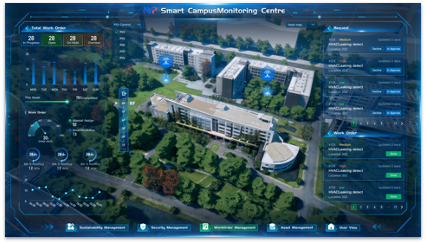
The building automation system monitors and controls HVAC, lighting, fire systems, and other mechanical equipment in real time. It collects thousands of data points every hour: temperatures, pressures, flow rates, equipment status, energy consumption. It is extremely good at detecting when something deviates from normal.
The CMMS manages the human response to those deviations: work orders, technician assignments, parts inventory, maintenance history, and compliance documentation. It is extremely good at organizing and tracking maintenance work.
Without integration, the handoff between “something is wrong” and “someone is fixing it” depends entirely on a person noticing, interpreting, and manually creating a work order. That handoff is where problems fall through the cracks.
The Cost of Disconnected Systems
According to the International Facility Management Association (IFMA), facilities teams spend an average of 30-40% of their time on reactive maintenance, responding to problems after they have already caused disruption. A significant portion of that reactive work could be prevented if building performance data automatically triggered maintenance actions.
Here is what disconnected BAS and CMMS systems actually cost:
| Impact Area | Without Integration | With Integration |
|---|---|---|
| Alarm response time | 4-12 hours (next shift reviews logs) | 5-15 minutes (auto-generated work order) |
| Energy waste detection | Days to weeks | Hours |
| PM scheduling accuracy | Calendar-based (fixed intervals) | Runtime-based (actual usage) |
| Compliance documentation | Manual log compilation | Automated reporting |
| Equipment failure rate | Industry average | 20-35% reduction |
The pattern is consistent: every hour of delay between detection and response increases cost. Integration eliminates that delay.
What Is a Building Automation System?
Before diving into integration specifics, let us establish a shared vocabulary. If you already know your BAS inside and out, skip to the integration architecture section.

A building automation system is the centralized control platform for a building’s mechanical, electrical, and plumbing (MEP) systems. Think of it as the nervous system of your facility: it senses conditions through sensors, makes decisions through controllers, and acts through actuators and relays.
BAS System Layers
Field devices: sensors (temperature, humidity, pressure, CO2, occupancy), actuators (valves, dampers), and relays that interact with physical equipment.
Controllers: programmable devices that execute control logic. Direct Digital Controllers (DDCs) handle zone-level control. Supervisory controllers manage building-wide sequences.
Network infrastructure: the communication backbone connecting controllers to each other and to the operator workstation. This is where integration protocols become critical.
Operator workstation / head end: the software interface where building engineers monitor, adjust, and troubleshoot building systems.
The Three Dominant BAS Protocols
Your integration approach depends heavily on which communication protocol your BAS uses. Here are the three you will encounter in the vast majority of buildings:
| Protocol | Developed By | Standard | Common In | Integration Ease |
|---|---|---|---|---|
| BACnet | ASHRAE | ANSI/ASHRAE 135 | Commercial buildings, campuses | High - open standard, well-documented |
| Modbus | Modicon (1979) | De facto standard | Industrial, older buildings | Medium - simple but limited data model |
| LonWorks | Echelon Corp | ANSI/CEA-709.1 | European buildings, transit | Medium - peer-to-peer, less common today |
BACnet (Building Automation and Control Networks)
BACnet is the gold standard for modern building automation integration. Developed by ASHRAE (American Society of Heating, Refrigerating and Air-Conditioning Engineers) and published as ANSI/ASHRAE Standard 135, BACnet was specifically designed for building systems interoperability.
Why BACnet matters for CMMS integration:
- Object-oriented data model: every data point is a defined “object” (Analog Input, Binary Output, Schedule, Trend Log) with standardized properties. Your CMMS knows exactly what it is receiving.
- Multiple transport options: BACnet/IP runs over standard Ethernet networks, making it straightforward to connect to web-based CMMS platforms. BACnet MS/TP uses RS-485 serial connections common in field-level networks.
- Built-in alarming: BACnet has native alarm and event notification services. Your CMMS can subscribe to specific alarm types rather than polling for changes.
According to BACnet International, over 1.2 million BACnet devices have been installed worldwide. If your building was built or renovated after 2005, there is a strong chance your BAS speaks BACnet.
Modbus
Modbus is simpler and older, originally developed for industrial PLCs in 1979, but remains widespread in building automation, especially for standalone equipment controllers (boilers, chillers, generator sets) and submetering systems.
Key characteristics for integration:
- Register-based: data is stored in numbered registers. Your integration layer needs a register map to know what each number means.
- Two variants: Modbus RTU uses serial connections (RS-485); Modbus TCP runs over Ethernet. For CMMS integration, Modbus TCP is significantly easier.
- No inherent alarming: Modbus is a polling protocol. Your integration layer must regularly query devices and compare values against thresholds.
LonWorks
LonWorks uses a peer-to-peer architecture where every device can communicate directly with every other device. It was popular in European markets and for specific applications like lighting control and transit systems.
For CMMS integration, LonWorks typically requires a dedicated gateway to translate LonTalk protocol data into BACnet or a web API format.
Integration Architecture: How BAS Connects to CMMS
There are three primary architectural approaches to connecting your BAS data to your CMMS platform. The right choice depends on your BAS age, protocol, IT infrastructure, and budget.
Approach 1: API-Based Integration (Recommended)
Best for: Modern BAS with BACnet/IP or IP-accessible controllers, cloud-based CMMS
This is the most flexible and maintainable approach. Your BAS head-end software or a BAS-side API gateway exposes building data through RESTful APIs. Your CMMS consumes those APIs to pull alarm data, equipment status, and runtime information.
[BAS Controllers] --> [BAS Server/API Gateway] --> [REST API] --> [CMMS Platform]Advantages:
- Standard web technologies (JSON, REST, webhooks)
- Easy to maintain and troubleshoot
- Supports real-time event push via webhooks
- Cloud-CMMS compatible without VPN complexity
- Scalable to multi-building portfolios
Requirements:
- BAS server with API capability (most modern platforms: Tridium Niagara, Honeywell EBI, Siemens Desigo CC, Johnson Controls Metasys)
- Network path between BAS server and CMMS (typically outbound HTTPS)
- API documentation and authentication credentials
Many modern BAS platforms now include built-in web service APIs. Tridium’s Niagara Framework, for example, is specifically designed as an integration middleware that normalizes data from multiple protocols into a unified API layer.
Approach 2: Middleware / Integration Platform
Best for: Complex multi-vendor BAS environments, enterprise portfolios with diverse building systems
Middleware sits between your BAS and CMMS, handling protocol translation, data normalization, and business logic. This is common in large commercial portfolios where buildings use different BAS vendors.
[BAS 1 - BACnet]  --\
[BAS 2 - Modbus]  ---+--> [Middleware Platform] --> [CMMS Platform]
[BAS 3 - LonWorks] -/
Common middleware platforms:
- Tridium Niagara (building-focused)
- SkySpark (analytics + integration)
- CopperTree Analytics
- Custom Node-RED or Apache Kafka pipelines
Advantages:
- Handles multi-protocol environments
- Can add analytics and fault detection logic
- Normalizes data from disparate sources
- Provides a single integration point for CMMS
Disadvantages:
- Additional software to license and maintain
- Adds latency and potential failure points
- Requires specialized skills to configure
Approach 3: Direct Protocol Integration (IoT-Native)
Best for: Organizations using an IoT-native CMMS that natively speaks BAS protocols
Some modern CMMS platforms can communicate directly with BAS controllers without middleware. The CMMS itself includes BACnet or Modbus client capabilities, or uses lightweight edge gateways that translate BAS data into the platform’s native format.
[BAS Controllers] --> [Edge Gateway] --> [IoT-Native CMMS Platform]This is the approach Infodeck uses for BMS/BAS integration. The platform’s native IoT architecture means building data flows directly into the same system that manages work orders, assets, and maintenance history, with no middleware layer required.
Advantages:
- Fewest moving parts
- Lowest latency (alerts become work orders in seconds)
- Single vendor for the full integration
- Unified data model (BAS data lives alongside maintenance records)
Disadvantages:
- Requires CMMS with native protocol support
- May not handle extremely complex legacy environments without gateways
Architecture Comparison Summary
| Factor | API-Based | Middleware | Direct/IoT-Native |
|---|---|---|---|
| Implementation time | 4-8 weeks | 8-14 weeks | 3-6 weeks |
| Ongoing maintenance | Low | Medium-High | Low |
| Multi-protocol support | Limited | Excellent | Good (with gateways) |
| Latency | Seconds | Seconds-minutes | Sub-second |
| Cost | $5,000-15,000 | $20,000-80,000 | $3,000-10,000 |
| Complexity | Medium | High | Low |
Start Free Trial
Experience the full platform with 30-day free access. No credit card required.
Start Free TrialBook a Demo
Get a personalized walkthrough from our team. See how Infodeck fits your operation.
Schedule Demo5 Practical Use Cases for BAS-CMMS Integration
Integration for its own sake is pointless. Here are the five use cases that deliver measurable value to facilities teams.

Use Case 1: Automatic Work Order Generation from BAS Alarms
This is the highest-impact use case and the reason most teams pursue integration in the first place.
How it works:
- BAS detects a fault condition (e.g., AHU supply air temperature exceeds setpoint by 5 degrees for 15+ minutes)
- BAS sends alarm event to CMMS via API webhook or direct integration
- CMMS automatically creates a prioritized work order with:
- Equipment identification (asset tag, location, system)
- Alarm details (what was detected, threshold, duration)
- Relevant trend data (last 24 hours of the affected data point)
- Suggested priority based on alarm severity
- Smart workflow assigns the work order to the appropriate technician based on skills and availability
- Technician receives mobile notification and responds
Real scenario: A facilities team managing a 200,000 sq ft office campus reduced their average alarm-to-response time from 6.5 hours to 23 minutes after integrating their Tridium Niagara BAS with their CMMS. Emergency HVAC calls dropped 45% because problems were caught and fixed before occupants noticed.
For detailed setup instructions on configuring automatic work order creation, see Infodeck’s work order creation guide and smart workflows documentation.
Use Case 2: Energy Anomaly Detection and Response
Buildings account for approximately 40% of total energy consumption globally, according to the U.S. Department of Energy. A significant portion of that energy is wasted due to equipment operating inefficiently, problems that the BAS can detect but that require maintenance action to resolve.
How it works:
- BAS monitors energy consumption patterns across major equipment
- Integration layer compares current consumption against baseline profiles
- When consumption deviates beyond threshold (e.g., chiller kW/ton exceeds baseline by 15%), CMMS receives an anomaly alert
- Work order is created: “Investigate elevated energy consumption on Chiller-02”
- Technician inspects, finds fouled condenser tubes, schedules cleaning
- After repair, CMMS tracks energy consumption returning to baseline
Impact: Organizations with integrated energy anomaly detection typically identify 10-20% in energy savings opportunities within the first six months, according to research published by Lawrence Berkeley National Laboratory.
Use Case 3: Runtime-Based Preventive Maintenance
Calendar-based preventive maintenance is better than reactive maintenance, but it is still imprecise. You service an AHU every 90 days whether it has run 2,000 hours or 500 hours. BAS integration enables runtime-based scheduling that matches maintenance to actual equipment usage.
How it works:
- BAS tracks equipment run status (on/off) and accumulates runtime hours
- Runtime totals are periodically sent to CMMS (daily or weekly summary)
- CMMS compares accumulated runtime against PM thresholds (e.g., filter replacement every 2,000 runtime hours)
- When threshold is reached, PM work order auto-generates
- After maintenance, runtime counter resets
Example PM thresholds:
| Equipment | Runtime-Based PM Trigger | Calendar Equivalent | Typical Variance |
|---|---|---|---|
| AHU filters | Every 2,000 run-hours | ~90 days | +/- 30 days |
| Chiller oil | Every 4,000 run-hours | ~6 months | +/- 2 months |
| Cooling tower | Every 1,500 run-hours | ~60 days | +/- 20 days |
| Pump bearings | Every 8,000 run-hours | ~12 months | +/- 4 months |
Runtime-based PM eliminates two problems simultaneously: servicing equipment too early (wasting labor and parts) and servicing too late (risking breakdown). Teams that switch from calendar to runtime-based PM typically reduce unnecessary service visits by 20-30%.
For setting up runtime-triggered PMs in your CMMS, refer to Infodeck’s IoT management guide.
Use Case 4: Comfort Complaint Correlation
Tenant and occupant comfort complaints are a daily reality for facilities teams. Without BAS data in your CMMS, every complaint is investigated from scratch. With integration, you can instantly correlate complaints with actual building conditions.
How it works:
- Occupant submits a comfort complaint through the CMMS (too hot, too cold, air quality)
- CMMS automatically queries the BAS for current conditions in the complaint zone
- Work order is enriched with actual data: zone temperature, supply air temp, damper positions, VAV box status
- Technician sees the complaint alongside real data before arriving on site
- Resolution is faster because the technician arrives knowing whether the system is actually malfunctioning or operating as designed
Real scenario: A university campus averaged 12 minutes per comfort complaint investigation when technicians had to check the BAS workstation before heading to the zone. After integration added BAS data directly to CMMS work orders, investigation time dropped to 4 minutes because technicians could assess the situation from their mobile device while walking to the location.
Use Case 5: Automated Compliance and Performance Reporting
Regulatory compliance, especially for indoor air quality, energy performance, and HVAC maintenance documentation, requires combining BAS operational data with CMMS maintenance records. Without integration, compiling these reports is a painful manual exercise.
How it works:
- BAS provides operational data: temperatures maintained, air changes per hour, energy consumption, equipment uptime
- CMMS provides maintenance data: PMs completed, response times, corrective actions, parts replaced
- Integrated reporting combines both datasets into compliance-ready formats
- Reports auto-generate on schedule (monthly, quarterly, annually)
This is particularly valuable for organizations pursuing or maintaining certifications like BCA Green Mark in Singapore, LEED, or WELL Building Standard, where you must demonstrate both operational performance and maintenance diligence.
Step-by-Step BAS-CMMS Integration Process
Having helped dozens of facilities teams connect their building automation systems to Infodeck, here is the process that works consistently. Whether you use Infodeck or another CMMS, these steps apply.
Step 1: Audit Your BAS Infrastructure (Week 1-2)
Before touching any integration configuration, understand what you are working with.
Document these details for each building:
- BAS vendor and software version (Honeywell, Siemens, Johnson Controls, Schneider, Tridium, etc.)
- Communication protocols in use (BACnet/IP, BACnet MS/TP, Modbus TCP, Modbus RTU, LonWorks, proprietary)
- Network architecture (IP addressing, VLANs, firewalls between BAS and IT networks)
- Available integration interfaces (built-in APIs, OPC servers, data export capabilities)
- Number of controllers and major equipment points
- Current alarm configuration and volume (how many alarms per day/week)
Common discovery: Many teams discover their BAS is more capable than they realized. A Siemens Desigo CC installed five years ago may have a full REST API that nobody has used. A Niagara-based system almost certainly has web service endpoints ready to go.
Step 2: Define Your Data Requirements (Week 2-3)
Not all BAS data belongs in your CMMS. Sending everything creates noise. Be selective.
Prioritize these data categories:
| Priority | Data Type | CMMS Use | Update Frequency |
|---|---|---|---|
| Critical | Fault alarms and critical alerts | Auto work order creation | Real-time (event-driven) |
| High | Equipment runtime hours | Runtime-based PM triggers | Daily summary |
| High | Energy consumption anomalies | Investigation work orders | Hourly comparison |
| Medium | Zone conditions (temp, humidity) | Complaint correlation | On-demand query |
| Medium | Equipment performance metrics | Trend analysis on assets | Daily/weekly summary |
| Low | Setpoints and schedules | Reference only | Weekly sync |
Rule of thumb: If a data point should trigger a maintenance action or enrich a work order, send it to the CMMS. If it is only useful for real-time building control, leave it in the BAS.
Step 3: Design the Integration Architecture (Week 3-4)
Based on your BAS audit and data requirements, select the integration approach that fits:
- Modern BAS with APIs: go API-based (fastest, lowest cost)
- Multi-vendor environment: consider middleware
- IoT-native CMMS: use direct protocol integration
For Infodeck customers, our integration services team handles architecture design. The platform’s native IoT capabilities mean most BAS integrations use the direct approach with lightweight edge connectors. Check the integrations settings guide for configuration details.
Step 4: Configure Alarm-to-Work-Order Mapping (Week 4-6)
This is the core of the integration. You need rules that translate BAS alarms into appropriate CMMS actions.
Mapping considerations:
- Alarm severity to work order priority: Critical BAS alarms create P1 work orders. Warning-level alarms create P2 or P3.
- Equipment to asset: BAS equipment identifiers must map to CMMS asset records. Establish a consistent naming convention.
- Alarm type to work order category: HVAC faults route to mechanical technicians. Electrical alarms route to electrical team.
- Deduplication logic: prevent the same persistent alarm from creating 50 work orders. Use time windows and acknowledgment logic.
- Suppression rules: known maintenance windows should suppress alarm-generated work orders.
Example alarm mapping table:
| BAS Alarm | Severity | CMMS Work Order | Priority | Assignment |
|---|---|---|---|---|
| Supply air temp high | Warning | Investigate AHU overcooling failure | P2 | HVAC team |
| Chiller fault | Critical | Emergency chiller repair | P1 | Senior HVAC tech |
| Filter differential pressure | Warning | Replace air filters | P3 | General maintenance |
| Freezestat alarm | Critical | Freeze protection response | P1 | On-call technician |
| VFD fault | Major | Investigate VFD failure | P2 | Electrical team |
Step 5: Test, Tune, and Go Live (Week 6-8)
Testing phase:
- Simulate alarms in the BAS and verify work orders appear in CMMS correctly
- Confirm priority assignments, technician routing, and notification delivery
- Test deduplication: trigger the same alarm repeatedly and verify only one work order is created
- Validate runtime data flow: confirm equipment hours accumulate accurately
- Test edge cases: what happens during BAS restart, network outage, or CMMS downtime?
Tuning phase (first 2-4 weeks after go-live):
- Expect to adjust alarm thresholds. BAS alarms tuned for operator awareness are often too sensitive for automatic work order generation.
- Monitor work order volume. If integration creates more than your team can handle, tighten the filters.
- Gather technician feedback. Are the auto-generated work orders useful? Do they have enough context?
Common Integration Challenges and Solutions
Having supported numerous BAS-CMMS integrations, these are the problems that come up repeatedly and how to solve them.
Challenge 1: Alarm Flooding
Problem: BAS generates hundreds of alarms daily. Connecting them all to CMMS overwhelms technicians with low-value work orders.
Solution: Implement tiered alarm management. Only route confirmed fault conditions (not informational or advisory alarms) to CMMS. Use time delays: an alarm must persist for 10-15 minutes before generating a work order. This filters out transient conditions that self-resolve.
Challenge 2: Network Segmentation
Problem: BAS sits on an isolated OT (Operational Technology) network. IT security will not allow direct connections to cloud-based CMMS.
Solution: Use a DMZ architecture with a secure edge gateway. The gateway has one interface on the BAS network and one on the corporate network. Data flows outbound only (BAS to CMMS), never inbound. Most IT security teams will approve this architecture when properly documented. The NIST Cybersecurity Framework provides guidelines for securing OT-IT network boundaries.
Challenge 3: Inconsistent Asset Naming
Problem: BAS calls it “AHU-3F-01.” CMMS calls it “Air Handler Unit - 3rd Floor East.” Neither system can match records.
Solution: Create a master asset register with a standardized naming convention and unique identifiers. Map BAS equipment IDs to CMMS asset IDs as part of your integration configuration. This is tedious upfront work but absolutely essential. Infodeck’s asset management module supports custom identifier fields specifically for this purpose.
Challenge 4: Legacy Protocol Translation
Problem: Older BAS uses proprietary protocols that modern CMMS cannot read directly.
Solution: Protocol gateways are mature, affordable technology. A BACnet-to-Modbus gateway from vendors like Contemporary Controls or Intesis costs $500-2,000 and sits between the legacy controller and your integration layer. For very old systems, consider a phased approach: integrate what you can now, budget controller upgrades over time.
Challenge 5: Data Quality and False Positives
Problem: BAS sensors drift over time. Bad readings trigger unnecessary work orders.
Solution: Implement reasonableness checks in your integration logic. If a temperature sensor reports -40 degrees in a tropical climate, that is a sensor fault, not a freeze event. Add validation rules that flag obviously bad data rather than creating work orders. Regular sensor calibration should itself be a PM task in your CMMS.
Download the Full Report
Get the complete State of Maintenance 2026 report with all benchmark data and implementation frameworks.
Download Free ReportSee It In Action
Ready to join the facilities teams achieving 75% less unplanned downtime? Start your free 30-day trial.
Start Free TrialMeasuring ROI of BAS-CMMS Integration
How do you know integration is delivering value? Track these metrics from day one.
Direct Cost Savings
| Metric | How to Measure | Typical Improvement |
|---|---|---|
| Emergency repair costs | Compare quarterly spend before/after | 25-40% reduction |
| Energy costs | Compare normalized energy consumption | 10-20% reduction |
| Unnecessary PM costs | Count PM work orders avoided by runtime data | 20-30% reduction |
| Overtime labor | Track after-hours call-outs | 30-50% reduction |
Operational Improvements
| Metric | How to Measure | Typical Improvement |
|---|---|---|
| Mean time to respond | Average time from alarm to technician dispatch | 60-80% faster |
| First-time fix rate | Percentage of work orders completed in one visit | 15-25% improvement |
| Comfort complaints | Monthly complaint volume | 30-50% reduction |
| Compliance audit prep time | Hours spent compiling reports | 70-90% reduction |
Sample ROI Calculation
For a 100,000 sq ft commercial building with a $300,000 annual maintenance budget:
| Savings Category | Annual Impact |
|---|---|
| Reduced emergency repairs (30% reduction of $80,000 reactive spend) | $24,000 |
| Energy savings (12% reduction of $150,000 energy spend) | $18,000 |
| Reduced unnecessary PMs (25% of $50,000 PM labor) | $12,500 |
| Overtime reduction (40% of $30,000 overtime) | $12,000 |
| Total Annual Savings | $66,500 |
| Integration Cost (Year 1) | $15,000-25,000 |
| First-Year ROI | 166-343% |
For a deeper dive into calculating maintenance technology ROI, see our CMMS ROI calculation guide.
Getting Started with BAS-CMMS Integration
If you have read this far, you are probably already thinking about how integration would work in your building. Here is how to take the first step.
For Infodeck customers: Our BMS integration module provides native connectivity to BACnet, Modbus, and API-based building automation systems. The IoT monitoring platform handles real-time data ingestion and threshold management. Book a demo and we will walk through your specific BAS environment to design the right integration approach.
For teams evaluating CMMS options: Make BAS integration capability a core selection criterion, not an afterthought. Ask vendors specific questions: What protocols do you support natively? Can I see a live integration example? What is the typical implementation timeline? Platforms with native IoT architecture will give you the smoothest integration path.
For teams with existing CMMS: Check your current platform’s API documentation. Many CMMS vendors have added BAS integration capabilities in recent years. If your platform does not support it, middleware solutions like Niagara or SkySpark can bridge the gap. Alternatively, this may be the right time to evaluate modern CMMS platforms that were built for connected buildings.
The buildings are already generating the data. The maintenance teams are already doing the work. Integration simply connects those two realities so problems are caught faster, fixed smarter, and documented automatically.
Ready to connect your building automation system to intelligent maintenance management? Book a demo to see how Infodeck’s native BMS integration turns BAS alarm data into automatic, prioritized work orders, no middleware required. Or explore our pricing to see how an integrated platform fits your budget.
Sources and References
- ASHRAE Standard 135 - BACnet - Building Automation and Control Networks standard for interoperability
- BACnet International - Industry organization promoting BACnet standard adoption and device testing
- IFMA - International Facility Management Association - Facilities management benchmarking and best practices research
- U.S. Department of Energy - Building Technologies Office - Building energy consumption statistics and efficiency research
- Lawrence Berkeley National Laboratory - Building Technology & Urban Systems - Research on building energy performance and fault detection
- BCA Green Mark Scheme - Singapore - Singapore green building certification and energy performance standards
- NIST Cybersecurity Framework - Guidelines for securing operational technology networks and IT-OT integration
- Tridium Niagara Framework - Building automation integration middleware platform


