

Key Takeaways
- Singapore manages over 4,000 commercial buildings with smart FM technologies, achieving 15-30% energy savings through government-backed initiatives and IoT integration powered by 1.2 million sensors nationwide
- The 80-80-80 in 2030 vision targets 80% of buildings by GFA achieving Green Mark certification, 80% of new developments as Super Low Energy buildings, and 80% energy efficiency improvement in best-in-class buildings
- JTC Corporation's Open Digital Platform integrates smart systems in industrial facilities, allowing robots to communicate with lifts, doors, and building management systems in a unified environment
- Tropical climate challenges drive innovation: 24/7 cooling loads average 200-250 kWh per square meter annually, with IoT sensors detecting equipment failures 3-6 months earlier in high-humidity environments
- Government grants cover up to 50% of CMMS implementation costs through Productivity Solutions Grant, with facilities management prioritization shifting from lowest price to providers who understand business needs
Singapore manages over 4,000 commercial buildings in a tropical climate where 24/7 cooling is not optional; it is survival. Air conditioning accounts for 60% of a typical commercial building’s energy consumption here, equipment faces accelerated corrosion from constant 80-90% humidity, and maintenance teams operate in one of the world’s most expensive labor markets where median FM technician salaries exceed SGD 36,000 annually.
The city-state has turned these challenges into competitive advantages, becoming ASEAN’s undisputed benchmark for smart facilities management. From government ministries to polytechnics to Grade A office towers, Singapore smart facilities management has evolved from reactive repairs to predictive, data-driven operations that deliver measurable ROI through AI-enabled cost reductions of 10-30% in energy and maintenance.
This transformation did not happen by accident. It is the result of coordinated government initiatives, substantial financial incentives, and an FM industry willing to embrace digital transformation. For facilities managers across APAC watching Singapore’s journey, there are concrete lessons, and proven playbooks, worth adopting.
Singapore’s FM Evolution: From Manual Logbooks to 1.2 Million Sensors
Twenty years ago, Singapore’s facilities management looked remarkably similar to FM operations across the developing ASEAN region. Maintenance teams carried clipboards. Work orders lived in filing cabinets. Equipment breakdowns were addressed reactively. Preventive maintenance schedules existed on paper, if at all.
The 2000s brought Building Management Systems to larger commercial properties, automating basic HVAC controls and energy monitoring. But BMS platforms remained isolated islands, closed ecosystems that required specialized training, could not communicate with other building systems, and generated data that facilities teams had neither time nor tools to analyze meaningfully.
The real inflection point came between 2014-2018, when three forces converged to accelerate Singapore’s smart FM revolution.
The Smart Nation Initiative: Government-Led Digital Transformation
Singapore’s Smart Nation initiative launched in 2014, committing the city-state to becoming a leading digital economy and global smart city pioneer. While much public attention focused on autonomous vehicles and cashless payments, the built environment quietly became a massive beneficiary.
Government buildings became testbeds for IoT sensor deployments, digital twin modeling, and AI-powered optimization. The Government Technology Agency deployed an interconnected network of 110,000 lampposts with wireless sensors to collate data for urban planning, maintenance, and incident response. By integrating 1.2 million sensors with 5G, edge computing, and AI, Singapore set a global standard for smart cities that extends directly to facilities management operations.
The Infocomm Media Development Authority deployed nationwide IoT infrastructure supporting building sensors, creating the connectivity foundation for smart FM systems. The Smart Nation Sensor Platform enabled IoT devices to work together, establishing interoperability standards that prevent proprietary lock-in and enable true system integration.
Tropical Climate Challenges Intensify Operational Demands
Singapore’s average temperature rose 0.25 degrees Celsius per decade since 1980, according to the National Climate Change Secretariat. Higher ambient temperatures increased cooling loads 8-12%, while rising humidity accelerated corrosion rates on critical HVAC components. Reactive maintenance could no longer keep pace with equipment degradation in conditions where systems operate 6,000-8,000 hours annually under constant load.
Buildings in Singapore average 200-250 kWh per square meter annually, among the highest energy intensities globally due to continuous cooling requirements. Even marginal efficiency improvements deliver substantial savings in an environment where electricity costs range SGD 0.25-0.30 per kWh and carbon taxes escalate from SGD 5 per tonne in 2019 to a projected SGD 50-80 by 2030 under the Singapore Green Plan 2030.
Cloud-Based CMMS Platforms Mature and Democratize
By 2018, cloud CMMS platforms offered mobile-first interfaces, flexible pricing, and integration capabilities that made deployment viable for properties beyond the luxury tier. Earlier FM software required expensive on-premise servers and dedicated IT staff. Cloud platforms eliminated infrastructure barriers, compressed implementation timeframes from 6-12 months to 4-8 weeks, and reduced total cost of ownership by 40-60%.
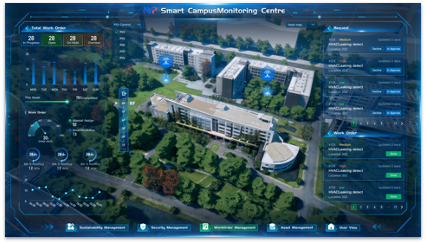
Today’s Singapore FM industry reflects this evolution. Walk into a modern facility management control room, whether at a hospital, university, or shopping mall, and you will see real-time dashboards displaying equipment health scores, energy consumption trends, predicted failures, and technician locations. Mobile apps guide maintenance rounds with QR-code asset verification. IoT sensors detect anomalies before human senses register them.
The “kampong to smart nation” transformation that rebuilt Singapore’s infrastructure has fundamentally rewired how facilities teams operate.
Government Initiatives Driving Smart FM Adoption: The 80-80-80 Vision
Singapore’s smart facilities management leadership is not accidental; it is engineered through deliberate policy, substantial funding, and regulatory frameworks that reward technology adoption with measurable financial incentives.
BCA Green Mark: The 80-80-80 in 2030 Vision
The Building and Construction Authority’s Green Mark scheme has evolved from a voluntary green building rating to a comprehensive sustainability framework driving technology adoption across Singapore’s built environment.
The Singapore Green Building Masterplan aims to deliver three key targets of “80-80-80 in 2030”:
- 80% of buildings by gross floor area achieving Green Mark certification by 2030
- 80% of new developments designed as Super Low Energy buildings from 2030 onwards
- 80% improvement in energy efficiency compared to 2005 levels for best-in-class green buildings by 2030
Since the Green Mark scheme launched in 2005, more than 3,300 buildings have achieved certification. As of end 2020, 43% of Singapore’s buildings have been greened, with the building stock’s overall Energy Use Intensity improved by 9%. Current best-in-class buildings have achieved at least 50% energy savings over 2005 levels.
Achieving Green Mark certification requires continuous energy monitoring, automated building optimization, and documented maintenance practices, capabilities that smart CMMS platforms deliver. The BCA has allocated SGD 19 billion toward green building development, creating a massive economic incentive for property owners to modernize FM operations.
Minimum Energy Performance Standards and Building Control Act
BCA introduced minimum energy performance standards in 2008 for new buildings under the Building Control Act. Since 2013, this requirement has been extended to existing buildings undergoing major retrofitting works, ensuring that older properties meet modern efficiency benchmarks when renovated.
The Building Control Act mandates periodic inspections of structural, fire safety, and mechanical systems. Smart CMMS platforms automate compliance documentation, track inspection schedules, and generate audit-ready reports that satisfy BCA requirements while reducing administrative burden by 80-90%.
Singapore Green Plan 2030: Net-Zero Emissions Target
The Singapore Green Plan 2030 commits the nation to achieving net-zero emissions by 2050, with interim targets that directly impact facilities management:
- Peak emissions by 2030: Buildings must aggressively reduce energy consumption
- Carbon tax escalation: Increasing from SGD 5 per tonne in 2019 to SGD 50-80 by 2030
- Mandatory reporting: Large energy consumers must report consumption data and improvement plans
These policies make decarbonisation in facilities management an operational imperative, not just an environmental ambition. Smart FM technologies that optimize energy usage directly impact bottom-line costs as carbon taxes rise.
Financial Incentives That Lower Adoption Barriers
Singapore backs its sustainability rhetoric with substantial financial support that fundamentally changes ROI calculations for technology adoption:
Productivity Solutions Grant: Covers up to 50% of qualifying costs for pre-approved FM software and CMMS solutions. This grant has democratized smart FM adoption, making enterprise-grade platforms accessible to SME building owners who previously could not justify the investment. A midsize commercial property implementing a cloud CMMS with IoT integration might invest SGD 60,000-80,000. With PSG covering 50%, the net investment drops to SGD 30,000-40,000, often achievable ROI within 12-18 months through energy savings and labor efficiency alone.
Enterprise Development Grant: Supports up to 50% of costs for deeper transformation projects including IoT sensor deployments, BMS integration, and custom software development.
Energy Efficiency Fund: Administered by the National Environment Agency, this fund supports energy audits, monitoring systems, and efficiency improvement projects.
These are not token gestures; they are substantial subsidies that make smart FM technology adoption financially viable for properties across all market segments.
Start Free Trial
Experience the full platform with 30-day free access. No credit card required.
Start Free TrialBook a Demo
Get a personalized walkthrough from our team. See how Infodeck fits your operation.
Schedule DemoKey Technologies Powering Singapore’s Smart FM Revolution
Technology enablement is not about implementing individual tools; it is about creating an integrated ecosystem where data flows directly from physical assets to decision-makers, enabling predictive operations and continuous optimization.
IoT Sensors: 1.2 Million Data Points Across the City-State
Singapore’s tropical climate makes IoT sensors mission-critical rather than nice-to-have. In temperate climates, HVAC equipment might run 2,000-3,000 hours annually. In Singapore, systems operate 6,000-8,000 hours under constant load. Humidity-accelerated corrosion affects electrical connections, condensate drain pans, and cooling coils, reducing equipment lifespans by 20-30% compared to manufacturer ratings based on temperate conditions.
Singapore has integrated 1.2 million sensors with 5G, edge computing, and AI to create a comprehensive smart city infrastructure that extends directly to building operations. Modern IoT deployments in Singapore buildings typically include:
Environmental sensors monitoring temperature, humidity, CO2 levels, and air quality in real-time across zones. When humidity in a server room climbs to 65%, alerts trigger before condensation forms on equipment, preventing catastrophic data center failures.
Vibration sensors on critical rotating equipment like chillers, cooling tower fans, and elevator motors detect bearing wear, imbalance, and misalignment 3-6 months before human inspection would notice degradation. Properties implementing vibration monitoring report 40% reduction in unplanned HVAC downtime.
Current sensors on electrical systems identify anomalous power consumption patterns indicating failing motors, clogged filters, or system inefficiencies. A slight uptick in current draw combined with marginally increased vibration might indicate a bearing beginning to fail, a prediction that enables planned replacement during scheduled downtime rather than emergency repair during business hours.
Leak detection sensors in areas with water-cooled equipment, bathroom facilities, and below-grade spaces, critical in high-humidity environments where small leaks quickly become mold problems that compromise indoor air quality and tenant satisfaction.
The data these sensors generate feeds into CMMS platforms with IoT analytics capabilities, where machine learning algorithms identify patterns humans miss and enable predictive maintenance that maximizes equipment uptime.
JTC’s Open Digital Platform: Integrated Smart Estate Management
JTC Corporation, Singapore’s industrial infrastructure developer, has developed the Open Digital Platform that integrates smart estate solutions horizontally on a single platform. The ODP allows estate managers to monitor, analyze, optimize, and control various sub-systems including:
- Pneumatic waste conveyance systems
- District cooling systems
- Smart visitor management systems
- Robotic autonomous management systems
- Building access and security
- Energy monitoring and optimization
The platform enables robots to “talk” to lifts, doors, and other systems in a building, creating truly integrated operations where autonomous systems coordinate maintenance activities without human intervention for routine tasks.
JTC’s Punggol Digital District demonstrates Singapore’s first smart business district, serving as a living laboratory for integrated building technologies that other APAC cities study when developing smart infrastructure roadmaps.
BMS and iBMS Integration: Breaking Down Data Silos
Legacy Building Management Systems controlled HVAC, lighting, and access control independently, as separate systems with separate interfaces and separate data. Modern integrated BMS platforms unify these systems, but the real value comes from connecting building controls with CMMS work order systems.
Leading Singapore facilities implement BMS integration that enables:
Automated work order creation: When BMS detects an AHU filter pressure differential exceeding thresholds, it automatically generates a CMMS work order, assigns it to the appropriate technician based on skillset and location, and includes diagnostic data, eliminating manual intervention for routine issues.
Contextual maintenance: Technicians responding to equipment issues access full operational history, recent alarm patterns, and related sensor data through mobile CMMS interfaces, replacing guesswork with data-driven diagnostics that reduce troubleshooting time by 30-40%.
Closed-loop verification: After completing maintenance, system performance data confirms whether interventions resolved issues. If a chiller optimization work order should reduce energy consumption by 15% but sensors show only 5% improvement, the CMMS flags incomplete resolution for follow-up investigation.
This integration level requires open APIs, standardized data protocols, and platforms designed for interoperability, technical capabilities that have matured significantly through Singapore’s Smart Nation Sensor Platform standardization efforts.
AI-Powered Energy Optimization: 10-30% Cost Reductions
AI can cut energy and maintenance costs 10-30% through predictive controls, according to JLL’s 2026 corporate real estate outlook. Singapore’s commercial buildings average 200-250 kWh per square meter annually, among the highest energy intensities globally due to continuous cooling loads. Even marginal efficiency improvements deliver substantial savings.
AI-powered optimization platforms analyze historical energy consumption, weather patterns, occupancy data, and equipment performance to continuously tune building operations. These systems:
- Predict optimal chiller plant staging based on forecasted cooling loads and utility rate structures
- Adjust air handler flow rates and temperatures by zone based on actual occupancy from access control and IoT sensors
- Identify “energy waste” patterns like simultaneous heating and cooling, unnecessary equipment runtime during low-occupancy periods, or inefficient sequencing
- Benchmark performance against similar buildings and flag anomalies indicating equipment degradation or control issues
Early adopters in Singapore’s commercial real estate sector report 15-30% energy reductions, translating to SGD 200,000-600,000 annual savings for a 50,000 square meter building. With electricity costs of SGD 0.25-0.30 per kWh and escalating carbon taxes, optimization ROI is measured in months, not years.
Digital Twins: Virtual Building Management for Scenario Testing
Digital twin technology, creating virtual replicas of physical buildings with real-time data synchronization, has moved from research labs to commercial deployment in Singapore’s premium properties and government facilities.
A digital twin combines 3D BIM geometry, real-time sensor data feeds, equipment specifications and maintenance history, and operational rule sets and control logic. Facilities managers use digital twins to simulate “what-if” scenarios before implementation:
- What happens to indoor air quality if we reduce air exchange rates during low-occupancy periods?
- How would relocating a tenant impact cooling loads and system capacity?
- Can we defer a chiller replacement one more year if we adjust operating parameters?
- What is the optimal maintenance schedule that maximizes equipment life while minimizing business disruption?
While digital twins remain premium implementations typically seen in Grade A commercial properties and institutional facilities, costs are declining rapidly. What required SGD 500,000+ investment three years ago is now achievable for SGD 150,000-250,000 including setup, integration, and first-year operation.
Cloud-Based CMMS: The Integration Hub at the Center
At the center of Singapore’s smart FM ecosystem sits the cloud-based CMMS platform, the integration hub connecting IoT sensors, BMS systems, mobile technicians, procurement systems, and management dashboards into a unified operational environment.
Modern CMMS deployments in Singapore provide:
Mobile-first technician interfaces: In tropical heat and humidity, requiring technicians to return to an office workstation for work order updates is inefficient and uncomfortable. Mobile CMMS apps enable QR-code asset scanning, photo documentation, parts requests, and completion updates from any location, improving productivity by 20-30% according to leading FM providers.
Preventive maintenance automation: Moving from calendar-based to condition-based maintenance schedules. Instead of servicing chillers every 3 months regardless of condition, maintenance triggers when runtime hours, start-stop cycles, or performance metrics indicate service is actually needed, optimizing resource allocation.
Vendor and contractor management: Coordinating multiple service providers (cleaning, security, landscaping, specialized trades) through a single platform with SLA tracking, invoice approval workflows, and performance analytics.
Compliance documentation: Automatically generating inspection records, maintenance logs, and audit reports that satisfy BCA compliance requirements, workplace safety regulations, and building certification standards with 80-90% reduction in documentation time.
Inventory and spare parts optimization: Tracking parts consumption, automating reorder points, and ensuring critical components are available when needed without excess capital tied up in slow-moving inventory.
The shift from on-premise to cloud CMMS has democratized access to enterprise-grade capabilities that previously required dedicated IT infrastructure and specialized staff.
Download the Full Report
Get 100+ data points, verifiable sources, and actionable frameworks in a single PDF.
Get the ReportSee It In Action
Watch how facilities teams achieve 75% less unplanned downtime with Infodeck.
Book a DemoSingapore’s Unique FM Challenges and Smart Solutions
Understanding Singapore’s smart FM success requires acknowledging the unique operational challenges that drive innovation and technology adoption across the built environment.
Challenge 1: Tropical Climate Equipment Stress and Accelerated Degradation
Singapore’s climate is unforgiving to mechanical equipment. Constant high temperatures, 80-90% humidity, and intense UV exposure accelerate wear that temperate climates experience over multiple years.
Impact: HVAC system lifespans are 20-30% shorter than manufacturer ratings based on temperate conditions. Corrosion affects electrical connections, control boards, and metal housings. Biological growth clogs condensate drains and cooling coils. Elastomeric seals and gaskets degrade faster. Equipment that should last 15-20 years in temperate climates may require replacement after 10-12 years in tropical Singapore.
Smart FM Solution: Tropical climate-optimized maintenance strategies combine increased inspection frequencies with predictive technologies. IoT sensors detect early corrosion indicators through electrical resistance changes. Thermal imaging identifies hot spots before component failure. Water quality monitoring in cooling systems prevents biological growth. Vibration analysis detects bearing degradation 3-6 months before failure.
Properties implementing condition-based monitoring report 40% reduction in unplanned HVAC downtime, critical in a market where even brief cooling system failures create tenant complaints and potential lease issues. The investment in monitoring technology pays for itself through extended equipment life and avoided emergency repairs.
Challenge 2: Continuous 24/7 Cooling Requirements and Limited Maintenance Windows
Unlike temperate climates where buildings reduce HVAC during winter months or cool evening hours, Singapore’s commercial properties run cooling systems continuously. A typical office building might shut down HVAC for 500-1,000 hours annually during holidays and deep-night periods, but that is less than 12% downtime.
Impact: Limited maintenance windows for major equipment. In New York or London, facilities teams perform intensive chiller maintenance during winter when heating handles comfort loads. Singapore has no such window, so maintenance must be meticulously planned around business operations with backup systems ensuring uninterrupted comfort.
Smart FM Solution: Digital twin modeling and predictive maintenance scheduling optimize limited maintenance windows. Facilities teams simulate maintenance scenarios to identify the least-disruptive timing. Predictive algorithms maximize time between interventions by maintaining equipment at peak efficiency through minor adjustments rather than allowing degradation until major service becomes necessary.
Advanced properties implement N plus 1 or N plus 2 redundancy for critical cooling systems, allowing maintenance on individual chillers while backups handle loads. The investment in redundancy pays dividends in maintenance flexibility and tenant satisfaction, often justifying 8-12% rental premiums for Grade A properties with reliable systems.
Challenge 3: High-Density Urban Environment and Complex Mixed-Use Properties
Singapore’s 730 square kilometers hosts 5.9 million people and one of the world’s highest densities of commercial real estate. Mixed-use developments combine retail, office, residential, and hospitality in single properties. Buildings are interconnected through shared infrastructure, central utilities, and integrated systems.
Impact: Single-building failures cascade across multiple tenants or properties. A chilled water plant serving a mixed-use complex must balance competing demands, as hotels need peak cooling at different hours than offices, while retail spaces have weekend-heavy usage patterns. Coordination complexity multiplies with shared services.
Smart FM Solution: Integrated facilities management platforms provide single-pane visibility across complex properties. Real-time monitoring identifies conflicts before they become tenant complaints. Automated work prioritization balances competing demands based on SLA commitments and business impact.
The most sophisticated operators deploy tenant-facing portals where retail, office, and residential occupants submit service requests, track resolution progress, and provide feedback, creating transparency that builds trust even when issues occur.
Challenge 4: Labor Costs, Manpower Constraints, and Skills Gaps
Singapore’s median FM technician salary exceeds SGD 3,000 monthly, among ASEAN’s highest labor costs. Foreign worker quotas limit industry access to more affordable regional labor. An aging domestic workforce means fewer young Singaporeans entering trades.
Impact: 84% of FM leaders cite costs as their top concern, with labor representing 40-50% of FM operational costs. Inefficient dispatch, duplicated travel, or technicians waiting for information directly hits margins. Skills gaps prevent effective use of advanced technologies.
Smart FM Solution: Mobile CMMS platforms with intelligent routing optimize technician productivity. When multiple work orders exist in a building, the system batches assignments and sequences tasks by floor or system to minimize travel. QR-code asset access provides instant equipment history, maintenance procedures, and parts specifications, augmenting technician knowledge and reducing reliance on tribal knowledge that walks out the door when experienced staff retire.
Leading FM providers invest in digital skills training, upskilling experienced technicians in IoT diagnostics, BMS operation, and CMMS workflows. The productivity gains from these investments often exceed 20-30%, equivalent to adding headcount without salary costs.
78% of organizations now prioritize providers who understand their business, not just those offering the lowest price, shifting FM procurement from pure cost competition to value-based partnerships.
Challenge 5: Regulatory Compliance Complexity and Documentation Burden
Singapore’s built environment operates under comprehensive regulatory oversight. The Building Control Act mandates periodic inspections of structural, fire safety, and mechanical systems. BCA Green Mark compliance requires energy performance monitoring and regular audits. Workplace Safety and Health regulations demand documented maintenance of critical systems. Fire Code requirements govern equipment testing frequencies.
Impact: Compliance documentation represents significant administrative burden. Missing inspection deadlines, incomplete records, or inadequate documentation creates liability exposure and potential penalties. During audits, facilities teams scramble to compile evidence across spreadsheets, paper logs, and disparate systems.
Smart FM Solution: Modern CMMS platforms automate compliance tracking and documentation. Inspection schedules automatically generate work orders with required checklists and photo documentation requirements. Completed maintenance records include technician sign-off, timestamp verification, and asset-specific data. One-click audit reports compile all inspections, maintenance activities, and compliance certifications for BCA, NEA, or MOM review.
Properties using comprehensive CMMS platforms report 80-90% reduction in compliance documentation time, hours that redirect to proactive maintenance rather than paperwork.
Singapore Smart FM Success Stories Across Sectors
Theory becomes actionable when validated by real-world implementation. Singapore organizations across sectors demonstrate how smart facilities management delivers measurable outcomes.
Education Sector: Polytechnics Lead Campus Innovation
Singapore’s polytechnics manage extensive campus facilities combining classrooms, specialized labs, sports complexes, residential facilities, and commercial F&B operations, creating microcosms of mixed-use complexity with demanding student populations.
These institutions face unique challenges: academic calendars create usage spikes during semesters and ghost-town conditions during breaks. Student feedback is instantaneous and amplified through social media. Government funding requires demonstrable efficiency and sustainability outcomes aligned with national targets.
Leading polytechnics have implemented comprehensive smart FM ecosystems:
- IoT sensor networks monitoring air quality in labs working with chemicals, vibration on workshop equipment, and environmental conditions in specialized spaces where equipment failures disrupt academic programs
- Student-facing service portals where learners report maintenance issues, track resolution, and provide feedback, creating service transparency that builds campus community and measurably improves satisfaction
- Energy dashboards visible to students and staff, gamifying conservation efforts and demonstrating institutional sustainability commitment aligned with Green Plan 2030 goals
- Predictive maintenance on critical systems like backup power, fire suppression, and specialized lab equipment where failures disrupt academic programs and compromise student safety
The outcomes speak clearly: 20-25% energy reductions contributing to Green Mark certification, 30-40% faster response times to maintenance requests, and measurably improved student satisfaction scores on facility-related survey questions.
Healthcare: Hospital FM Where Reliability is Life-Critical
Singapore’s hospitals operate under intense scrutiny where equipment failures are not inconvenient; they are potentially life-threatening. Regulatory compliance requirements exceed standard commercial properties. Infection control protocols impact maintenance procedures and scheduling.
Smart FM implementations in healthcare focus on reliability and compliance:
- Critical equipment monitoring: Real-time tracking of backup generators, medical gas systems, surgical suite HVAC, and sterilization equipment with instant alerts for any deviation from normal parameters
- Automated compliance documentation: Electronic logs of equipment testing, calibration verification, and maintenance activities that satisfy Ministry of Health inspection requirements with complete audit trails
- Vendor management platforms: Coordinating multiple specialized service providers (biomedical engineering, facility services, waste management, food services) through unified SLA tracking and performance analytics
- Condition-based maintenance: Moving from fixed preventive schedules to condition-driven servicing that maximizes equipment availability while ensuring reliability, critical when every hour of equipment downtime potentially impacts patient care
Healthcare facilities report that smart CMMS adoption has enabled 25-35% reduction in unplanned equipment downtime, a metric that directly translates to patient safety, care quality, and operational efficiency in resource-constrained healthcare environments.
Commercial Real Estate: Grade A Office Competition and Tenant Experience
Singapore’s premium office market is intensely competitive. Grade A buildings compete on amenities, sustainability credentials, operating efficiency, and tenant experience. Smart facilities management has become a differentiator that commands rent premiums in a market where trophy properties justify 8-12% premium rents.
Trophy properties implement comprehensive smart building ecosystems:
- Digital twin platforms that simulate building performance, test optimization scenarios, and identify efficiency opportunities before implementing changes that might disrupt tenant operations
- Tenant experience apps providing visibility into indoor air quality, booking of meeting rooms and parking, service request submission, and building sustainability metrics that demonstrate landlord commitment to ESG goals
- AI-powered energy optimization continuously tuning chiller plants, air handlers, and lighting based on occupancy patterns, weather forecasts, and utility rate structures, delivering 15-20% energy cost reductions
- BMS-CMMS integration enabling automated work order creation, diagnostic data sharing, and closed-loop verification of maintenance effectiveness that demonstrates value to demanding corporate tenants
Properties at the forefront report SGD 300,000-500,000 annual energy savings for a 50,000 square meter building, 30-40% improvement in tenant satisfaction scores, and Green Mark Platinum or Pearl certifications that justify rental premiums and improve asset valuations in competitive Singapore office market.
Hospitality: Maintaining Guest Experience in Tropical Conditions
Singapore’s hotels operate in a brutally competitive market where online reviews amplify every maintenance shortcoming. A malfunctioning air conditioner or stained carpet does not just impact one guest; it becomes a permanent TripAdvisor entry seen by thousands of potential customers.
Tropical climate conditions intensify challenges. High humidity creates mold risks in bathrooms, soft goods, and concealed spaces. Continuous HVAC operation means more frequent filter changes and system maintenance. Landscaping requires intensive upkeep in year-round growing conditions.
Leading hotels implement smart FM strategies prioritizing guest experience:
- Predictive maintenance on in-room HVAC and plumbing that schedules interventions based on usage patterns and performance data rather than waiting for guest complaints that damage reputation
- Mobile CMMS enabling housekeeping staff to report maintenance issues instantly during room cleaning, with technician dispatch prioritizing occupied rooms to resolve issues before guest check-in
- Automated work order routing ensuring that guest-facing issues receive immediate attention while back-of-house tasks queue during low-priority windows
- Vendor SLA tracking ensuring landscaping, pool maintenance, and specialized services consistently meet brand standards that justify premium room rates
Hotels using advanced CMMS platforms report 50-60% faster response times to guest-reported issues, 30-40% reduction in negative maintenance-related reviews, and measurably improved guest satisfaction scores that directly correlate with RevPAR performance.
What Singapore Can Teach the Rest of APAC: Actionable Lessons
Singapore’s smart FM journey offers concrete, actionable lessons for facilities managers, building owners, and policymakers across the APAC region seeking to modernize operations.
Lesson 1: Government-Industry Partnership Accelerates Adoption
Singapore’s success is not purely private sector innovation; it is deliberate public-private collaboration. Government agencies established clear sustainability targets through the 80-80-80 in 2030 vision, created comprehensive regulatory frameworks rewarding technology adoption, and backed rhetoric with substantial financial incentives totaling SGD 19 billion for green building development.
Actionable takeaway: APAC cities do not need Singapore’s resources to replicate its collaborative approach. Start with stakeholder alignment, bringing together building owners, FM providers, technology vendors, and government agencies to establish shared goals. Pilot smart FM technologies in government buildings to demonstrate viability before mandating private sector adoption. Create modest grant programs that reduce financial risk for early adopters, similar to Singapore’s PSG program structure.
Malaysia’s Green Building Index and Thailand’s TREES rating systems provide frameworks similar to Singapore’s Green Mark. The key is connecting certifications with operational excellence through technology enablement, not just design compliance that achieves certification but fails to deliver ongoing performance.
Lesson 2: Standards and Interoperability Prevent Vendor Lock-In
Singapore’s FM ecosystem thrives because systems can communicate through standardized protocols. Open APIs, standardized data protocols, and platforms designed for integration prevent the proprietary lock-in that plagued earlier BMS deployments.
Actionable takeaway: When evaluating CMMS platforms, prioritize integration capabilities over feature checklists. A system that connects directly with BMS, IoT sensors, procurement, and accounting delivers exponentially more value than a feature-rich platform operating in isolation. Demand vendor demonstrations of actual integrations, not theoretical possibilities documented in whitepapers.
Industry associations can accelerate interoperability by establishing regional standards for building data exchange, similar to Singapore’s IFC adoption for BIM standardization that enables data exchange across platforms and project phases.
Lesson 3: Tropical Climate Requires Purpose-Built Strategies
ASEAN’s tropical climate creates operational challenges unlike temperate regions. Equipment stress, biological growth risks, corrosion acceleration, and continuous cooling demands require maintenance strategies and technologies specifically designed for these conditions, not solutions developed in temperate climates and ported to tropical environments without adaptation.
Actionable takeaway: Do not blindly adopt FM practices or technologies validated in temperate climates. Evaluate tropical climate maintenance requirements explicitly. Prioritize corrosion-resistant materials, frequent inspection of critical systems exposed to humidity, and humidity-specific monitoring that detects degradation early. When implementing IoT sensors, specify IP67 or better environmental protection ratings and validate sensor longevity in 80-90% humidity environments.
Singapore’s experience demonstrates that proactive tropical-optimized maintenance reduces long-term costs despite higher upfront investments through extended equipment life and avoided emergency repairs.
Lesson 4: Start With Quick Wins, Build Toward Comprehensive Vision
Singapore’s smart FM ecosystem was not implemented overnight. It evolved through incremental adoption, starting with manageable projects delivering fast ROI before progressing to comprehensive transformation enabled by foundational capabilities.
Actionable takeaway: Do not let perfect become the enemy of good. Start with a cloud CMMS platform implementing basic work order management and preventive maintenance scheduling. This foundation delivers immediate productivity gains while establishing the data infrastructure for advanced capabilities. Add IoT sensors to the 3-5 most critical assets, typically chillers, cooling towers, and primary air handlers. Demonstrate value before expanding deployment.
Phased implementation reduces change management challenges, proves ROI to skeptical stakeholders, and allows teams to build competency progressively rather than overwhelming staff with wholesale transformation.
Lesson 5: Workforce Transformation Requires Training Investment
Technology enables transformation, but people execute it. Singapore’s FM sector invested heavily in digital skills training, upskilling experienced technicians in IoT diagnostics, data analytics, and integrated building systems rather than replacing staff wholesale.
Actionable takeaway: Budget for training alongside technology implementation, typically 10-15% of total project costs. Engage vendor-provided training, online certification programs, and hands-on workshops. Create internal mentorship where digitally savvy team members support colleagues transitioning from paper-based workflows. Recognize that older, experienced technicians bring invaluable domain knowledge, and the goal is augmenting expertise with digital tools, not replacing seasoned professionals with younger workers.
The most successful implementations pair digital tools with analog experience, combining both for optimal outcomes that neither technology nor experience alone can achieve.
The Future of FM in Singapore: 2026-2030 Outlook
Singapore’s facilities management industry continues evolving rapidly as technology matures and national sustainability targets drive innovation. Leading indicators point to several key developments shaping the next five years.
Autonomous Building Operations and Self-Optimizing Systems
The convergence of AI, IoT, and advanced building controls enables increasingly autonomous operations. Buildings will self-optimize across multiple objectives (energy efficiency, occupant comfort, equipment longevity, and carbon emissions) without human intervention for routine adjustments.
Facilities managers evolve from tactical operators making thousands of daily decisions to strategic supervisors setting operational parameters, defining optimization priorities, and intervening only for exceptions requiring human judgment. AI-powered predictive controls handle routine optimization while humans focus on strategic planning and tenant relationships.
Singapore is already testing autonomous building control systems in government facilities and premium commercial properties. Expect broader adoption as platforms mature and early implementations demonstrate reliability that satisfies risk-averse building owners.
AI-Driven Predictive Maintenance at Portfolio Scale
Current predictive maintenance implementations focus on critical, high-value assets such as chillers, central plants, and specialized equipment. The next frontier applies AI-powered prediction to ordinary assets across entire portfolios without manual configuration for each asset.
Instead of manually creating maintenance schedules for 5,000 assets, machine learning algorithms analyze usage patterns, performance data, and failure history across properties to automatically optimize service intervals for each asset individually. The CMMS becomes predictive by default rather than requiring manual configuration and ongoing tuning.
Singapore’s largest FM providers are piloting portfolio-wide predictive maintenance platforms. Successful deployments show 20-30% reduction in total maintenance costs through optimized resource allocation and reduced failures that previously required emergency response.
Carbon-Neutral Building Operations and Escalating Carbon Taxes
Singapore’s net-zero 2050 commitment and escalating carbon taxes make building decarbonization an operational imperative. Properties will integrate renewable energy generation primarily through rooftop solar, battery storage, grid demand response, and aggressive efficiency measures into unified strategies.
Smart FM platforms will incorporate carbon accounting alongside traditional metrics like energy consumption and maintenance costs. Facilities managers will optimize operations for carbon intensity, not just dollar efficiency, shifting energy-intensive tasks to daytime hours when solar generation peaks, participating in utility demand response programs during grid stress, and prioritizing low-carbon maintenance practices.
Expect carbon dashboards to become standard features in CMMS platforms serving the Singapore market, with automated reporting satisfying regulatory disclosure requirements as carbon taxes escalate toward SGD 50-80 per tonne by 2030.
Regional Hub for FM Technology Export to Southeast Asia
Singapore’s smart FM expertise is rapidly becoming an export industry. ASEAN cities implementing smart building programs increasingly partner with Singapore-based technology providers, consultants, and FM operators who have validated approaches in one of the world’s most demanding markets.
The Economic Development Board actively promotes Singapore as ASEAN’s built environment technology hub. Expect growing regional activity from Singapore-headquartered FM platforms, IoT sensor manufacturers, and building analytics providers expanding across Southeast Asia.
For APAC facilities managers, this means access to proven technologies and implementation partners with deep regional expertise. Singapore’s solutions are purpose-built for tropical climates, high-density urban environments, and mixed-use complexity common across Southeast Asia, more appropriate than solutions developed for temperate Western markets.
Integration With Smart City Ecosystems and District-Scale Systems
Singapore’s Smart Nation vision extends beyond individual buildings to integrated urban systems. Future FM platforms will connect with city-wide infrastructure: integrated transportation systems, district cooling networks, smart grid utilities, and centralized waste management coordinated at district scale.
A commercial property’s CMMS might coordinate with district chiller plants to optimize thermal energy procurement based on real-time demand and pricing, communicate with transportation systems to predict peak occupancy based on transit patterns, or share air quality data with city-wide environmental monitoring networks that inform public health advisories.
This integration level requires standardized data exchange protocols, strong cybersecurity frameworks, and public-private collaboration, capabilities Singapore is actively developing through Smart Nation testbeds like JTC’s Punggol Digital District.
Making the Smart FM Transition: Your Practical Roadmap
For facilities managers inspired by Singapore’s journey but uncertain where to begin, here is a pragmatic roadmap for transitioning from traditional to smart facilities management:
Step 1: Assess Current State and Document Baseline - Document existing systems, processes, pain points, and performance metrics. Quantify reactive maintenance frequency, unplanned downtime hours, energy consumption trends, compliance documentation hours, and tenant satisfaction scores. This baseline enables measuring improvement and calculating ROI that justifies continued investment.
Step 2: Define Business Objectives and Prioritize Outcomes - What outcomes matter most for your specific property or portfolio? Energy cost reduction? Improved tenant satisfaction? Regulatory compliance simplification? Equipment longevity? Labor productivity? Prioritize objectives to guide technology selection toward solutions that address your highest-impact challenges first.
Step 3: Start With CMMS Foundation and Core Workflows - Implement a cloud-based CMMS platform that handles core work order management, preventive maintenance scheduling, asset tracking, and mobile technician access. This foundation delivers immediate productivity gains through better coordination while establishing data infrastructure for advanced capabilities. Target 4-8 week implementation for rapid time-to-value.
Step 4: Add Strategic IoT Monitoring on Critical Assets - Deploy sensors on the 3-5 most critical assets where failures create the highest business impact, typically central chillers, primary air handlers, backup generators, or specialized equipment. Prove ROI through early failure detection and avoided emergency repairs before expanding deployment across entire facility or portfolio.
Step 5: Integrate With Building Systems for Automated Workflows - Connect CMMS with existing BMS platforms to enable automated work order creation, diagnostic data sharing, and performance verification. This integration multiplies platform value without replacing existing investments in building automation infrastructure.
Step 6: Optimize and Expand With Advanced Capabilities - Once core systems stabilize and teams build competency through daily usage, add advanced capabilities like AI-powered energy optimization, digital twins for scenario testing, or portfolio-wide predictive maintenance that draws on data from multiple properties.
Step 7: Measure, Communicate, and Demonstrate Value - Track KPIs demonstrating smart FM value: energy savings in kWh and dollars, downtime reduction in hours, faster response times to work orders, improved satisfaction scores from tenants. Share results with stakeholders through dashboards and reports to justify continued investment and expansion to additional properties or capabilities.
The journey from traditional FM to data-driven excellence is not a single transformation; it is continuous improvement using technology to deliver measurably better outcomes year over year.
Conclusion: Singapore’s Blueprint for APAC Smart FM Leadership
Singapore’s smart facilities management revolution demonstrates what becomes achievable when government vision, industry innovation, and operational excellence converge around shared sustainability goals. From manual logbooks to 1.2 million sensors, from reactive repairs to AI-powered predictive maintenance, from isolated building systems to integrated ecosystems coordinated across districts. The transformation has been comprehensive, measurable, and replicable.
The 80-80-80 in 2030 vision provides clear targets that align stakeholders across public and private sectors. 43% of buildings already achieving Green Mark certification demonstrates progress toward the 80% target. Government grants covering 50% of implementation costs through programs like PSG make smart FM financially accessible to properties across all market segments, not just premium developments.
The lessons extend far beyond Singapore’s borders. APAC cities do not need Smart Nation-scale resources to achieve meaningful smart FM progress. They need stakeholder alignment around shared goals, pragmatic technology adoption that starts with quick wins, workforce investment that augments experience with digital tools, and persistent commitment to continuous improvement rather than one-time transformation projects.
For facilities managers anywhere in the region, Singapore’s journey provides both inspiration and a practical playbook. The technologies enabling Singapore’s success (cloud CMMS platforms, IoT sensors, mobile technician apps, AI-powered optimization) are accessible and affordable with declining costs making enterprise-grade capabilities viable for midsize properties. The financial incentives may vary by market, but the ROI fundamentals remain: smart FM reduces energy costs by 15-30%, extends equipment life by 20-30%, improves occupant satisfaction scores by 30-40%, and simplifies compliance documentation by 80-90%.
The question is not whether to embrace smart facilities management. It is how quickly you will implement proven strategies that deliver measurable value in energy savings, equipment reliability, tenant satisfaction, and regulatory compliance. Singapore has shown the way through government-industry collaboration, substantial financial incentives, and purpose-built solutions for tropical environments. The rest of APAC is following this blueprint with localized adaptations.
Ready to bring Singapore-standard smart FM to your properties? Book a demo to see how Infodeck’s CMMS platform helps facilities teams across APAC achieve data-driven operational excellence with IoT integration, mobile-first workflows, and compliance automation. Or explore our comprehensive platform capabilities to learn how integrated work order management, predictive maintenance, and real-time analytics transform maintenance operations from cost centers to strategic differentiators.
Sources
- Government Technology Agency - Smart City Projects
- BCA Green Mark Certification Scheme
- Singapore Green Building Masterplan
- National Climate Change Secretariat - Buildings
- Singapore Green Plan 2030
- Smart Nation Sensor Platform - Getting IoT Devices to Work Together
- How IoT Is Transforming Smart Cities - Singapore Case Study
- JLL Corporate Real Estate Trends 2026
- JTC Corporation - Clean, Smart, and Collaborative Industrial Developments
- JTC Punggol Digital District - Smart Nation Approach


