

Key Takeaways
- Smart buildings integrate technology systems to automate operations, improve occupant experience, and enable data-driven decision making through connectivity, automation, data analytics, and enhanced occupant experience
- The global smart buildings market reached USD 141.79 billion in 2025 and is projected to reach USD 554.02 billion by 2033, growing at 18.9% CAGR
- Smart facility management applies building technology to FM operations, enabling predictive maintenance that cuts maintenance expenses by 10-15% and reduces unplanned outages by 20-30%
- Smart buildings typically deliver 20-40% energy savings and 15-30% maintenance cost reductions, with payback periods of 2-4 years for most implementations
- You don't need a complete renovation to go smart. Start with BMS integration, add strategic IoT sensors, and build from there using a phased approach
Everyone says they have a “smart building” now. Building automation vendors claim their BMS makes buildings smart. IoT sensor companies say adding temperature sensors creates smart buildings. Software providers insist that having a cloud-based CMMS platform automatically makes your operations smart.
But ask five facility managers what “smart building” or “smart facility management” actually means, and you’ll get five completely different answers. Some describe it as having automated lighting. Others talk about energy dashboards. A few mention AI and machine learning, though they’re not entirely sure what those systems actually do.
Here’s the reality: smart buildings and smart facility management are specific approaches to building operations that go far beyond just installing new technology. They represent a fundamental shift in how buildings operate, how maintenance teams work, and how organizations make decisions about their facilities.
The numbers tell the story. The global smart building market reached USD 141.79 billion in 2025 and is projected to grow to USD 554.02 billion by 2033, representing an 18.9% compound annual growth rate. More importantly, over 45 million smart buildings existed in 2022, with that number expected to reach 115 million by 2026.
This guide cuts through the buzzwords. We’ll define exactly what smart buildings are, explain how they differ from traditional buildings, break down the core technologies involved, and show you what smart facility management looks like in practice. Whether you’re evaluating smart building technology, justifying investment to leadership, or just trying to understand what all the hype is about, you’ll get clear answers here.
What Is a Smart Building? A Clear Definition
A smart building is a facility that uses integrated technology systems to automatically collect data, control building operations, and improve the experience of everyone who uses the space. The key word here is “integrated.” Smart buildings connect systems that traditionally operated independently, enabling them to work together intelligently.
Here’s the clearer definition: A smart building combines sensors, building systems, connectivity infrastructure, and analytics software to:
- Monitor building conditions and equipment performance in real-time
- Automate routine operations based on occupancy, time, weather, and other factors
- Analyze data to identify patterns, predict problems, and optimize performance
- Adapt building operations dynamically based on changing conditions
- Inform facility teams and occupants with actionable insights
This isn’t just about having technology in your building. Most buildings built after 1990 have some form of building automation. What makes a building “smart” is the integration layer that allows different systems to share data and respond intelligently to changing conditions.
According to ABI Research’s analysis of building automation systems, only around 15% of U.S. commercial buildings currently utilize BAS technology, though full utilization of advanced BAS could cut commercial energy use by approximately 29%. This massive gap between current adoption and potential impact explains why smart building technology represents such a significant opportunity for forward-thinking facility managers.
The Four Pillars of Smart Buildings
Every smart building rests on four foundational pillars:
1. Connectivity
All building systems and devices connect to a common network infrastructure. Your HVAC system can communicate with your occupancy sensors. Your lighting system knows what the access control system sees. Your elevator monitors send data to your maintenance platform. Without this connectivity layer, you just have isolated automation, not intelligence.
The Building Automation System market reflects this connectivity imperative. MarketsandMarkets research indicates the global BAS market was valued at USD 92.20 billion in 2024 and is projected to reach USD 191.13 billion by 2030, growing at 13.4% CAGR. This growth is driven primarily by organizations recognizing that connectivity unlocks value that isolated systems cannot deliver.
2. Automation
Building systems operate automatically based on programmed rules and learned patterns. Lights adjust based on occupancy and daylight. HVAC zones respond to actual usage rather than fixed schedules. Equipment runs optimization routines during off-peak hours. The building operates itself according to conditions rather than requiring constant manual adjustment.
Deloitte’s research on smart buildings found that automation systems can help organizations reduce 30-50% of energy usage or more in existing buildings. The key is that automation responds to real-time conditions, not just predetermined schedules.
3. Data Analytics
The building collects, stores, and analyzes operational data to identify patterns and opportunities. You can see which conference rooms are actually used versus just booked. You know which equipment is approaching failure before it breaks. You understand exactly how much energy different zones consume under different conditions. The data becomes actionable intelligence rather than just historical records.
Modern analytics platforms apply machine learning algorithms to identify anomalies and opportunities that humans would never spot manually. As JLL’s research demonstrates, buildings with smart technology can achieve 5-10% higher rental rates and increased asset value specifically because data analytics enable optimization that traditional buildings cannot match.
4. Enhanced Occupant Experience
Building occupants have digital tools to control their environment and access services. They can adjust temperature in their workspace, book meeting rooms from their phone, report maintenance issues through apps, and receive real-time information about building conditions. The building responds to their needs rather than forcing them to adapt to fixed conditions.
Deloitte Research findings show that 52 percent of commercial real estate firms believe that the use of IoT sensors and artificial intelligence are among the topmost factors affecting tenant preferences. The occupant experience isn’t just a nice-to-have. It’s becoming a competitive differentiator in commercial real estate.
These four pillars work together. Connectivity enables automation. Automation generates data. Data analytics improves both automation and occupant experience. Remove any pillar and you’re back to traditional building operations with some technology added on top.
How Smart Buildings Differ from “Buildings with Technology”
Here’s where many organizations get confused. Having a Building Management System doesn’t automatically make your building smart. Installing occupancy sensors doesn’t create intelligence. Buying cloud-based software doesn’t transform operations.
The difference is integration and intelligence:
-
Buildings with technology have systems that operate independently. Your BMS controls HVAC. Your access control system tracks entry. Your CMMS manages work orders. Each system has data, but the data stays siloed within that system.
-
Smart buildings connect these systems so they work together. When someone badges into the building, the access system tells the HVAC system to condition that zone. When equipment shows performance degradation in the BMS, your CMMS automatically generates a preventive maintenance work order. When conference room occupancy sensors show a space is unused, the lighting and HVAC systems adjust accordingly.
According to Facilio’s analysis of building management systems, the key difference is that modern smart buildings integrate the BMS with other business systems through the enterprise level, allowing for integrated management of the entire organization. When integrated with CMMS, automatic work orders can be created when alarms occur in the building management system, and work orders can be assigned automatically to technicians who can address problems immediately.
The technology itself isn’t “smart.” The intelligence comes from how systems share data and respond to it collectively.
Start Free Trial
Experience the full platform with 30-day free access. No credit card required.
Start Free TrialBook a Demo
Get a personalized walkthrough from our team. See how Infodeck fits your operation.
Schedule DemoSmart Building vs. Traditional Building: Key Differences
Let’s make this concrete. Here’s exactly how smart buildings differ from traditional building operations:
Real-World Examples
Traditional Building Scenario: Your BMS alarm shows that AHU-3’s supply air temperature is reading high at 3:47 AM. The alarm goes to the building engineer’s email, which they check when they arrive at 8:00 AM. They create a work order in the CMMS, assign it to a technician, who investigates around 10:00 AM. They discover the cooling coil valve is stuck. Parts are ordered. Meanwhile, the entire floor experiences uncomfortable temperatures for two days.
Smart Building Scenario: At 3:47 AM, the BMS detects AHU-3’s supply air temperature deviation. The integrated building management system immediately creates a high-priority work order in the CMMS with the specific equipment data, symptom description, and most likely causes based on historical patterns. The system also adjusts neighboring AHU zones to compensate partially. At 6:30 AM, the technician receives a mobile alert with the work order and equipment history. They arrive prepared with the most common failure parts. The issue is resolved by 8:30 AM before most occupants arrive. The system logs the resolution and updates its failure prediction models.
The difference isn’t just response time. It’s the intelligence layer that connects systems, predicts problems, and enables proactive action. According to research from Cohesion IB, early fault detection enabled by smart building systems can cut maintenance expenses by 10 to 15 percent and reduce unplanned outages by 20 to 30 percent.

The Key Features and Technologies Behind Smart Buildings
So what actually makes a building smart? Let’s break down the core technologies and features you’ll find in truly smart buildings:
IoT Sensors and Building Systems
The foundation of smart buildings is a network of sensors that continuously monitor building conditions and equipment performance. These aren’t just temperature sensors. Modern smart buildings deploy:
- Environmental sensors: Temperature, humidity, CO2, particulate matter, volatile organic compounds, light levels
- Occupancy sensors: PIR motion, desk occupancy, door status, conference room usage, parking space availability
- Equipment sensors: Vibration, current, pressure, flow rate, runtime hours, filter differential pressure
- Utility meters: Real-time electricity, water, gas, and thermal energy consumption
- Indoor positioning: Bluetooth beacons, WiFi triangulation for asset tracking and wayfinding
These sensors connect to your building network, typically through IoT gateways that aggregate data and manage device communication. According to Matterport’s analysis of smart building sensors, IoT-based approaches using wireless sensors can reduce deployment costs by 30% compared to traditional wired building management systems.
The sensors themselves range from simple Zigbee temperature monitors costing $50 to sophisticated equipment vibration analyzers costing thousands. The key is that all these sensors feed data into central systems where it can be analyzed together. A temperature sensor alone tells you the temperature. Combined with occupancy data, weather forecasts, and HVAC performance metrics, it enables intelligent automation.
Building Management Systems and iBMS
Your Building Management System remains the central nervous system of a smart building, but modern smart buildings often upgrade to an Intelligent Building Management System (iBMS) that goes beyond basic automation.
Traditional BMS platforms control HVAC, lighting, and sometimes access control through programmed sequences. You set schedules, temperature setpoints, and logic rules that run automatically. iBMS platforms add:
- Cross-system integration: Connect previously siloed systems (HVAC, lighting, security, fire, elevators) into unified control and monitoring
- Advanced analytics: Machine learning algorithms that identify patterns, anomalies, and optimization opportunities
- Open protocols: Support for BACnet, Modbus, MQTT, and API connections enabling easy integration with third-party systems
- Cloud connectivity: Remote monitoring and control capabilities with centralized multi-site management
- Predictive capabilities: Equipment health scoring and failure prediction based on operational patterns
The line between iBMS and traditional BMS is blurring as vendors add cloud capabilities and analytics to legacy platforms. What matters is whether your system can share data with other platforms and support intelligent automation, not what the vendor calls it.
According to recent market research, nearly 29 million buildings (23% of all commercial properties) will be equipped with some form of building automation by 2030, up from 12 million buildings (15%) in 2024. This rapid growth reflects the maturation of iBMS platforms that deliver clear operational benefits.
AI and Machine Learning Analytics
This is where the “smart” really happens. Analytics platforms ingest data from all your building systems and apply machine learning algorithms to:
Fault Detection and Diagnostics (FDD): Algorithms continuously analyze equipment performance against expected patterns. When an AHU’s energy consumption increases while maintaining the same temperature output, FDD identifies the inefficiency even if the equipment is still operating “normally.” This catches problems in their early stages before they cause failures or major energy waste.
Predictive Maintenance Scoring: By analyzing historical failure data, maintenance records, and current equipment behavior, ML models predict which assets are most likely to fail in the next 30/60/90 days. Your maintenance team can prioritize preventive work based on actual risk rather than arbitrary calendar schedules.
Energy Optimization: Machine learning models learn building thermal behavior, occupancy patterns, and equipment characteristics to automatically optimize HVAC operations. The system learns that Zone 3 takes 45 minutes to reach comfortable temperature from overnight setback, so it starts conditioning that zone earlier than Zone 7 which reaches temperature in 25 minutes.
Anomaly Detection: When a conference room suddenly starts consuming electricity overnight despite showing no occupancy, the system flags it as an anomaly worthy of investigation. Without analytics, this pattern would be invisible in the mass of building operational data.
Research from FM:Systems on smart building innovations indicates that by 2026, AI platforms will evolve into autonomous building operators that make decisions in real time: adjusting HVAC loads in response to occupancy, forecasting maintenance needs, and even optimizing energy contracts through digital marketplaces. Industry analysts project that AI could reduce building operations and maintenance costs by up to 35% by 2030.
The reality is that most organizations aren’t using sophisticated AI yet, but they are using rule-based analytics that deliver significant value. You don’t need machine learning to get benefits from smart building technology, though ML capabilities will become more important as the technology matures.
Digital Twin Technology
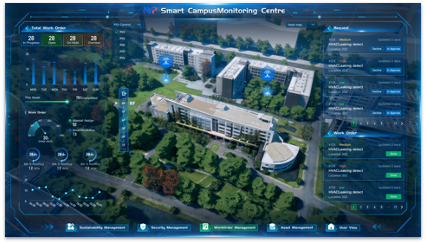
Some advanced smart buildings create digital twins, virtual replicas of the physical building that mirror real-time conditions and enable simulation.
A digital twin connects your building’s geometric model (often from BIM) with live operational data. You can see a 3D visualization of your building showing current temperatures in every zone, equipment status color-coded by condition, real-time energy flows, and occupancy patterns.
More importantly, you can run “what-if” scenarios: What happens to energy consumption if we change the lighting schedule? How would a new HVAC setpoint strategy impact comfort and costs? Which maintenance sequence minimizes disruption while staying within budget?
According to Facility Executive’s predictions for smart building technology, by 2026, digital twins will replace static CAD drawings as the primary reference for facility teams, allowing facility executives to model scenarios, schedule predictive maintenance, and plan renovations with unparalleled precision.
Digital twins remain expensive and complex. They’re currently more common in large commercial developments and campus environments than typical facilities. But the technology is maturing rapidly and costs are dropping. Expect to see more accessible digital twin platforms within the next 2-3 years.
Download the Full Report
Get the complete State of Maintenance 2026 report with all benchmark data and implementation frameworks.
Download Free ReportSee It In Action
Ready to join the facilities teams achieving 75% less unplanned downtime? Start your free 30-day trial.
Start Free TrialWhat Is Smart Facility Management (Smart FM)?
Now let’s connect smart building technology to actual facility management operations. Smart facility management is the practice of using smart building data and connectivity to transform how FM teams work.
Smart FM means:
- Your CMMS platform connects directly to building sensors and systems, not just as a separate work order database
- Maintenance schedules adapt dynamically based on actual equipment usage and condition data
- Work orders generate automatically when systems detect problems, complete with diagnostic information
- Technicians have mobile access to real-time equipment data, maintenance history, and troubleshooting guides
- FM leaders see unified dashboards showing performance across all sites, systems, and teams
- Space planning decisions are based on actual utilization data rather than assumptions
- Energy and sustainability initiatives have granular data to track progress and identify opportunities
The fundamental shift is from reactive, manual operations to proactive, data-driven management. Instead of waiting for equipment to fail, you monitor condition trends and intervene before failure. Instead of treating every asset the same, you prioritize maintenance based on criticality and actual condition.
How Smart FM Changes Daily Work
Let’s look at how smart FM transforms common facility management scenarios:
Scenario 1: Scheduled Preventive Maintenance
Traditional FM: Every AHU gets quarterly filter changes regardless of actual condition. Some filters are barely dirty, wasting replacement costs. Others are completely clogged, causing energy waste and equipment strain before the scheduled service.
Smart FM: Differential pressure sensors on each AHU continuously monitor filter condition. When pressure differential indicates the filter is 80% loaded, your CMMS automatically creates a filter replacement work order for that specific unit. Actual filter life might vary from 2 to 5 months depending on location and air quality. You service based on condition, not calendar.
Scenario 2: Equipment Failure Response
Traditional FM: An occupant calls to report that Meeting Room 4B is too cold. The call center creates a work order. A technician investigates, finds the VAV box damper is stuck open. They go back for parts, return, and fix it. Total time from report to resolution: 6 hours. The meeting was cancelled.
Smart FM: The zone temperature sensor detects the temperature dropped 4 degrees below setpoint despite the thermostat being in heating mode. The BMS checks the VAV box status and sees the damper is commanded to 10% but the airflow sensor shows 80% airflow, indicating the damper is stuck. The integrated system creates a priority work order with specific equipment location, symptom description, and maintenance history showing this damper was last serviced 18 months ago. The mobile technician receives the alert before occupants notice the problem, arrives with the common damper actuator parts based on equipment model, and resolves the issue in 30 minutes. Most occupants never knew there was a problem.
Scenario 3: Space Planning and Allocation
Traditional FM: Leadership asks whether you need all your conference rooms or if some could be converted to collaboration space. You review calendar bookings which show 70% utilization. Based on that data, you keep all the rooms. In reality, many “booked” rooms sit empty while people struggle to find available meeting space.
Smart FM: Occupancy sensors in each conference room track actual usage, not just bookings. Analytics show that while rooms are booked 70% of the time, they’re actually used only 45% of the time. You also see that 8-person rooms are consistently used by 2-3 people while 4-person rooms are overcrowded. You reconfigure space based on actual behavior: convert some large rooms to small huddle spaces, implement a hot-desking policy for rooms that are frequently booked but unused, and provide real-time occupancy information so people can find available space immediately.
According to JLL’s workplace research, organizations implementing smart building occupancy analytics typically find that 30-40% of their workspace is underutilized. Organizations using occupancy data to consolidate space, redesign layouts, and right-size portfolios often reduce space costs by 20 to 35 percent.
Scenario 4: Multi-Site Energy Management
Traditional FM: You manage 15 facilities across different locations. Each site reports monthly utility costs. You know total spending but have limited visibility into what’s driving consumption or where optimization opportunities exist. Energy initiatives are based on building square footage and age assumptions.
Smart FM: Real-time energy monitoring across all sites shows consumption patterns, benchmark comparisons, and anomalies. You see that Building 7’s energy use per square foot is 30% higher than similar buildings. Drill-down analysis reveals that HVAC consumes excessive energy during unoccupied hours because the weekend schedules weren’t updated after occupancy patterns changed. You fix the schedules remotely and see immediate savings. Across your portfolio, you identify the top 10 optimization opportunities ranked by potential impact, enabling you to prioritize energy initiatives based on actual ROI rather than assumptions.
These aren’t theoretical examples. This is how facility management works in organizations that have successfully implemented smart building technology and connected it to their CMMS operations.

Smart FM Software: What to Look For
So you understand what smart buildings are and how smart FM transforms operations. Now the practical question: What should you look for in smart FM software?
Must-Have Capabilities
1. Native IoT Integration
This is non-negotiable. Your CMMS needs to connect directly to IoT sensors, BMS platforms, and other building systems without requiring custom development for every integration.
Look for platforms that support standard protocols (BACnet, Modbus, MQTT, OPC-UA) and provide pre-built connectors for major BMS vendors. The system should be able to:
- Ingest real-time sensor data and display it in asset profiles
- Trigger work orders automatically based on sensor thresholds or anomaly detection
- Display equipment operating parameters alongside maintenance history
- Push work order completions back to the BMS for coordination
If the vendor says “we can integrate with anything via our API” but requires custom development for each sensor type, that’s not native integration. That’s a development project disguised as a feature.
Our platform provides native IoT connectivity that connects to your building systems out of the box, not as a custom integration project.
2. Mobile-First Field Service
Technicians shouldn’t need to return to a desktop computer to update work orders. Smart FM software needs full mobile functionality:
- Complete work order details, history, and documentation on mobile devices
- Real-time equipment data visible in the field during troubleshooting
- Photo and video capture with automatic attachment to work orders
- Offline capability for basement mechanical rooms and areas with poor connectivity
- QR code scanning for instant asset lookup and work order creation
- Digital forms and checklists that replace clipboards
The technician experience determines whether your smart FM implementation actually improves operations or just creates more administrative burden. Our guide on mobile CMMS for technicians covers the essential capabilities in detail.
3. Automated Workflow and Work Order Generation
Smart FM software should reduce manual work order creation, not just digitize it. Look for:
- Automatic work order generation from sensor alerts and BMS alarms
- Conditional logic that routes work based on urgency, skill requirements, and technician location
- Preventive maintenance schedules that adapt based on equipment runtime and condition
- Recurring inspections with digital checklist forms
- Approval workflows for work requiring authorization
- Integration with vendor management and contractor dispatch
The goal is that 60-80% of routine maintenance work enters the system automatically, freeing your team to focus on complex problems rather than administrative tasks.
4. Real-Time Analytics and Dashboards
You need visibility into what’s happening right now, not just historical reports:
- Live equipment status across all sites with drill-down capability
- Work order queues showing open, overdue, and completed tasks
- Technician location and task status in real-time
- Equipment health scores based on operational data
- Energy consumption compared to baselines and benchmarks
- Custom dashboards for different roles (executives see KPIs, technicians see their queue, engineers see equipment performance)
Analytics shouldn’t require a data science degree. The platform should surface insights automatically: “3 AHUs showing early signs of bearing wear,” “Lighting Zone 4 consuming 40% more energy than similar zones,” “Conference room utilization down 15% this quarter.”
5. Multi-Site and Enterprise Scale
If you manage more than one building (or plan to expand), you need capabilities that work across your portfolio:
- Centralized visibility across all sites with location-specific drill-down
- Standardized processes and templates that can be customized per location
- Centralized parts inventory with location-specific stock
- Mobile technicians who can be assigned work across multiple properties
- Consolidated reporting that shows portfolio performance and site comparisons
- Role-based access control that supports corporate, regional, and site-specific permissions
Many CMMS platforms work fine for single sites but become unwieldy when managing multiple locations. Validate that the software scales to your future needs, not just current requirements.
Evaluation Questions to Ask Vendors
When evaluating smart FM software, cut through the marketing claims with these specific questions:
- “Show me exactly how your system ingests data from our BMS and creates work orders. Walk through a real integration example.”
- “What protocols and BMS platforms do you support natively versus requiring custom development?”
- “How long does a typical BMS integration take, and what’s required from our team?”
- “Show me the mobile app experience. Let me see how a technician completes a work order on a phone.”
- “What analytics and insights come out of the box versus requiring custom configuration?”
- “How do you handle equipment that doesn’t have sensors? Can we manage both smart and traditional assets in one system?”
- “What’s your data retention policy? Can we export our data if we change platforms?”
- “Show me your pricing model. What costs are per-user, per-site, per-sensor, or volume-based?”
The vendors with mature smart FM platforms will answer these questions easily with live demos. Vendors still figuring out IoT integration will talk about future roadmaps and custom development capabilities.
Our guide on CMMS vendor selection and evaluation provides a comprehensive framework for assessing platforms against your specific requirements.
The ROI of Going Smart: What the Numbers Say
Smart building technology requires investment. Let’s talk about what you actually get in return, based on industry research and real implementation data.
Energy Savings: 20-40% Reduction
This is the most quantified benefit because energy costs are easily measured. Smart buildings typically achieve:
- 20-30% HVAC energy reduction through occupancy-based control, optimal start/stop timing, and continuous optimization
- 30-40% lighting energy reduction through daylight harvesting, occupancy sensing, and scheduling
- 15-25% overall building energy reduction when all systems are optimized
According to research from the Continental Automated Buildings Association, buildings with integrated building automation and advanced analytics average 25-30% energy cost savings compared to buildings with basic BMS-only automation.
More dramatically, Autodesk’s research on smart buildings found that companies implementing IoT-enabled sensors and smart devices have seen energy savings of up to 70 percent in three years. Building automation can save 15-30% in energy, usually paying for itself in 2-5 years.
Maintenance Cost Reduction: 15-30%
Smart building technology shifts maintenance from reactive firefighting to predictive, condition-based service. Organizations typically see:
- 15-25% reduction in emergency repair costs through early problem detection
- 10-20% reduction in preventive maintenance costs by servicing based on actual condition rather than fixed schedules
- 25-40% reduction in equipment downtime through predictive capabilities
- 5-15% extension of equipment life through optimal operation and timely maintenance
Research from Cohesion IB found that early fault detection can cut maintenance expenses by 10 to 15 percent and unplanned outages by 20 to 30 percent. More specifically, sensors can track critical systems and alert property managers to potential failures, minimizing downtime.
Our analysis of predictive maintenance ROI provides detailed examples of how condition-based maintenance delivers measurable cost savings compared to reactive or time-based approaches.
Space Utilization: 15-25% Improvement
Understanding how space is actually used enables significant real estate optimization:
- 15-25% reduction in required space through activity-based workspace design informed by actual usage data
- 30-50% improvement in meeting room utilization through real-time availability information and booking analytics
- 10-20% increase in employee satisfaction with workspace when personal control and comfort are improved
According to JLL’s workplace research, organizations implementing smart building occupancy analytics typically find that 30-40% of their workspace is underutilized, enabling significant real estate cost savings through consolidation or redesign.
Operational Efficiency Gains
Beyond direct cost savings, smart FM improves how facility teams work:
- 20-30% increase in technician productivity through mobile access, automated dispatch, and better work prioritization
- 40-60% reduction in time spent on manual data collection through automated monitoring
- 50-70% faster problem resolution through immediate alerts and diagnostic information
- 30-50% reduction in occupant complaints through proactive problem detection
These efficiency gains translate to either cost savings (fewer FTEs required) or capacity improvements (same team manages more square footage).
Typical Payback Period
Putting it all together, most smart building investments show payback within 2-4 years:
- Simple IoT sensor deployments: 1-2 years, primarily from energy savings
- Comprehensive smart building retrofits: 3-5 years, from combined energy, maintenance, and space optimization
- New construction with smart features: 5-10 years, but lower cost differential versus retrofit
According to Occuspace’s analysis of smart building costs, an IoT-based monitoring system can cost from only $5,000 to $50,000, and an IoT-based approach using wireless sensors can reduce the deployment cost by 30% compared to a traditional building management system.
The key factor is whether you’re adding smart capabilities to existing buildings (higher cost, but immediate savings) or incorporating them into new construction (lower marginal cost, but longer payback).
Real ROI Example
A 500,000 square foot commercial office building in Singapore implementing smart building technology:
Investment:
- IoT sensors and gateway hardware: $150,000
- BMS upgrade to iBMS platform: $200,000
- Smart FM software implementation: $100,000
- Professional services and integration: $150,000
- Total: $600,000
Annual Benefits:
- Energy cost reduction (25%): $187,500
- Maintenance cost reduction (20%): $100,000
- Avoided FTE from efficiency gains: $60,000
- Total: $347,500/year
Simple payback: 1.7 years
After payback, the $347,500 annual benefit continues with only modest ongoing software subscription and sensor replacement costs.
These numbers aren’t theoretical. Organizations tracking smart building ROI consistently report payback within 2-4 years, with ongoing operational savings continuing long after the initial investment is recovered.
How to Make Your Building Smarter (Without Starting Over)
The most common objection to smart building technology: “We’d need to gut-renovate our building to implement this.” Wrong. Most smart building technology works with existing infrastructure.
Here’s the realistic path to smart building transformation:
Phase 1: Assess and Connect Your BMS (Months 1-2)
Start with what you already have. Most buildings have some form of building management system controlling HVAC and possibly lighting. Your first step is understanding that system’s capabilities and connectivity:
Assessment questions:
- What systems are currently automated (HVAC, lighting, access control)?
- Does your BMS support open protocols (BACnet, Modbus) or is it proprietary?
- Can you access BMS data through APIs or does it require custom integration?
- What’s the age and condition of current BMS hardware?
- Are there areas of the building not covered by the BMS?
Initial actions:
- Document what systems you have and how they’re controlled
- Test connectivity: can you extract data from the BMS programmatically?
- Identify any necessary BMS upgrades to enable open connectivity
- Connect your CMMS to the BMS to start correlating equipment data with work orders
This phase costs little, primarily engineering time and potentially software licensing. But it establishes the foundation for everything that follows.
Phase 2: Deploy IoT Sensors Strategically (Months 3-6)
You don’t need sensors everywhere immediately. Start with use cases that deliver clear value:
High-value initial deployments:
- Critical equipment monitoring: Add vibration and temperature sensors to essential equipment (chillers, critical pumps, data center cooling). If you can prevent one major equipment failure, these sensors pay for themselves.
- Energy metering: Install submeters on major electrical loads to understand consumption patterns and identify waste.
- Occupancy monitoring: Deploy occupancy sensors in conference rooms and common areas to understand space utilization.
- IAQ sensors: Add CO2, particulate matter, and VOC sensors in occupied spaces to monitor indoor air quality and validate HVAC performance.
Start with one floor or one building. Prove the value, refine your processes, then expand to other areas.
Sensor deployment costs:
- Basic sensors (temp, occupancy): $50-150 each
- Advanced sensors (IAQ, vibration): $200-500 each
- IoT gateways and network infrastructure: $2,000-5,000 per building
- Installation labor: $100-300 per sensor point
For a typical 100,000 square foot building, expect $20,000-40,000 for initial strategic sensor deployment covering critical equipment and key spaces.
Phase 3: Implement Smart FM Software (Months 4-8)
With BMS connectivity and initial sensors deployed, implement CMMS software that actually uses that data. This phase includes:
- Software selection and procurement
- Data migration from legacy systems
- Integration with BMS and IoT sensors
- Workflow configuration and automation setup
- Mobile app deployment and technician training
- Dashboard configuration for different user roles
Plan for 3-6 months from vendor selection to full deployment, depending on organization size and complexity.
Smart FM software costs:
- Small organization (1-3 sites): $5,000-15,000/year
- Mid-size organization (4-15 sites): $15,000-50,000/year
- Enterprise (15+ sites): $50,000-200,000+/year
Most platforms price based on number of users, sites, or assets managed. Get clear pricing that includes the IoT integration capabilities, not just base CMMS functionality.
Phase 4: Enable Advanced Analytics (Months 9-12)
Once you have data flowing consistently, layer on analytics capabilities:
- Enable automated fault detection for HVAC equipment
- Configure predictive maintenance scoring for critical assets
- Set up anomaly detection alerts
- Create executive dashboards showing portfolio performance
- Implement energy optimization recommendations
Many smart FM platforms include basic analytics in the base subscription. Advanced analytics (machine learning, digital twins) typically require add-on modules or separate platforms.
Analytics platform costs:
- Basic analytics (included in many CMMS platforms): $0-5,000/year
- Advanced analytics platforms: $10,000-50,000/year depending on building size
- Custom ML model development: $50,000-200,000 as one-time project
Start with built-in analytics. Only invest in advanced platforms after you’ve maximized value from basic capabilities.
Phase 5: Optimize and Expand (Month 12+)
Smart building implementation is continuous improvement, not a one-time project:
- Expand sensor coverage to additional areas based on initial results
- Refine automation rules based on operational data
- Train occupants on digital tools and gather feedback
- Benchmark performance against industry standards
- Identify next-priority optimization opportunities
The organizations getting maximum value from smart building technology treat it as an ongoing operational practice, not a completed project.
What You Don’t Need to Replace
Here’s what you can usually keep:
- Existing HVAC equipment: Smart controls work with most equipment that is 5-15 years old
- Lighting fixtures: Smart switches and wireless controls retrofit to existing fixtures
- Network infrastructure: Most buildings already have sufficient network capacity; IoT sensors use minimal bandwidth
- Physical building systems: You’re adding intelligence to existing systems, not replacing them
You’re adding a brain to your building, not rebuilding the body.
Making Smart Buildings Work in Reality
Let’s address the elephant in the room: plenty of organizations invest in smart building technology and see disappointing results. Sensors get installed but never configured properly. BMS integrations connect systems but don’t change workflows. Dashboards show data nobody uses.
The difference between successful smart building implementations and expensive failures usually comes down to three factors:
1. Start with specific problems, not technology exploration
Don’t implement smart building technology because it’s trendy. Implement it to solve specific operational problems you have today: high energy costs in Building 3, frequent AHU failures, conference room booking problems, whatever keeps your FM team up at night.
When you start with clear problems, you can measure whether technology actually solves them. When you start with technology looking for problems, you end up with sensors collecting data nobody uses.
2. Change processes, not just add technology
Technology alone doesn’t create smart buildings. You need to change how your team works to use the new capabilities. That means:
- Training technicians to check sensor data before troubleshooting, not just respond to symptoms
- Establishing new workflows for sensor alerts versus occupant-reported issues
- Adjusting preventive maintenance schedules based on condition data rather than blindly following calendar routines
- Creating accountability for responding to analytics insights
If your processes stay the same and you just add technology on top, you’ll get limited value. Our guide on change management for CMMS adoption addresses the organizational dynamics that determine implementation success.
3. Integrate platforms, don’t create data silos
The power of smart buildings comes from systems working together. If your IoT sensors connect to one dashboard, your BMS data goes to another platform, and your CMMS operates independently, you’ve just created three more silos instead of integrating operations.
Choose platforms that connect to each other. Insist on open APIs and standard protocols. Push vendors to show you actual integrations, not just promises of future connectivity.
The Future: Where Smart Buildings Are Heading
We’re still early in the smart building evolution. Here’s what’s coming in the next 3-5 years based on industry research:
AI-powered optimization becoming mainstream: Today’s rule-based automation will be replaced by machine learning models that continuously optimize building operations. According to industry analysts, by 2026, AI platforms will evolve into autonomous building operators that make decisions in real time: adjusting HVAC loads in response to occupancy, forecasting maintenance needs, and even optimizing energy contracts. AI could reduce building operations and maintenance costs by up to 35% by 2030.
5G and edge computing enabling real-time response: Current smart building systems have delays of seconds to minutes between sensor readings and system response. 5G connectivity and edge computing will enable millisecond response times, allowing building systems to react instantly to changing conditions.
Digital twins becoming accessible: What’s currently expensive custom development will become productized software offerings that mid-market buildings can afford. Facility Executive’s research indicates that by 2026, digital twins will replace static CAD drawings as the primary reference for facility teams, allowing facility executives to model scenarios, schedule predictive maintenance, and plan renovations with unparalleled precision.
Occupant personalization reaching individual level: Instead of controlling zones, buildings will respond to individual occupants. Your workspace automatically adjusts to your preferred temperature and lighting when you arrive. The building learns your patterns and prepares your environment before you arrive.
Integration extending beyond building systems: Smart buildings will connect to enterprise systems (HR, scheduling, visitor management) and external data sources (weather, traffic, air quality) to optimize operations based on broader context. Your building will know when major events are scheduled, when weather will impact operations, when supply chains might affect parts availability.
Sustainability and wellness becoming measurable and provable: Instead of claiming buildings are “sustainable” or “wellness-focused” based on design features, organizations will provide real-time data proving environmental performance and occupant health outcomes. Certifications will shift from design-based to performance-based evaluation.
The buildings delivering the best results five years from now won’t necessarily be the newest. They’ll be the ones with integrated, adaptable technology platforms that can incorporate these emerging capabilities as they mature.
Getting Started with Smart Buildings
If you’ve made it this far, you understand what smart buildings actually are, how smart facility management transforms operations, and what implementation really looks like.
The question now is whether smart building technology makes sense for your organization. Here’s the honest assessment:
Smart building technology makes sense if:
- Your energy costs are significant enough that 20-30% savings justify investment
- You manage multiple buildings where centralized visibility would improve operations
- Equipment failures are causing operational problems or high emergency repair costs
- You’re struggling to manage maintenance with current staffing levels
- Leadership expects data-driven reporting on facility performance
- You’re planning major renovations or new construction
Smart building technology might not be worth it if:
- Your buildings are very small with simple systems
- You’re managing well with current processes and have no capacity to change workflows
- Capital budget constraints prevent even modest investment
- IT security policies prohibit cloud-connected building systems
- Leadership won’t support the process changes required to use new capabilities
For most organizations managing commercial, institutional, or industrial facilities larger than 50,000 square feet, smart building technology delivers clear ROI and operational improvements. The technology is mature, the cost has decreased significantly, and the results are proven.
Ready to explore how smart facility management software could transform your operations? Book a demo to see our IoT-native CMMS platform in action, or check out our pricing to understand the investment required.
The smart building future isn’t coming. It’s already here. The question is whether you’ll lead the transformation or catch up later.
Sources
- Grand View Research: Smart Building Market Size & Share | Industry Report, 2033
- MarketsandMarkets: Building Automation System Market Size, Share, Industry, 2025 To 2030
- ABI Research: What Is a Building Automation System (BAS)
- Deloitte: Smart buildings for people-centered, digital workplaces
- JLL Spark: Global smart building trends shaping the future of real estate
- Autodesk: Next-gen smart buildings will run cheaper and greener
- Cohesion IB: Smart Building Technology: A First Look at 2026
- Coram AI: Guide to Smart Building Technology in 2026
- Facility Executive: 10 Predictions For Smart Building Technology In 2026 And Beyond
- Facilio: Building Management System (BMS): An Overview


