

Key Takeaways
- Middle East facilities management market valued at $78.25 billion in 2025, projected to reach $147.59 billion by 2030 (13.53% CAGR), driven by mega-projects like NEOM, Expo City Dubai, and Vision 2030 infrastructure initiatives
- District cooling systems dominate UAE commercial real estate with 35.2% of regional market share, requiring specialized CMMS capabilities to manage chillers, thermal storage, and distribution networks serving multiple buildings
- Desert climate maintenance demands preventive maintenance frequencies 40-60% higher than temperate climates due to sand infiltration, extreme temperature cycling (50°C+ summers), and accelerated UV degradation of outdoor equipment
- Saudi Arabia's smart cities market valued at $6.72 billion in 2024, expected to reach $18.74 billion by 2030 (18.64% CAGR), with Dubai managing over 246,000 assets through integrated IoT and digital twin technologies
- Compliance requirements including Estidama Pearl Rating, LEED ME certification, and Vision 2030 building codes demand comprehensive maintenance documentation, with penalties reaching AED 100,000 for expired certifications
The Middle East facilities management market is experiencing explosive growth, with the sector valued at $78.25 billion in 2025 and projected to reach $147.59 billion by 2030, reflecting a 13.53% compound annual growth rate. This expansion is driven by mega-projects including Saudi Arabia’s $500 billion NEOM smart city, Expo City Dubai’s 438-hectare development, and Qatar’s ongoing World Cup infrastructure. Facility managers across the Gulf Cooperation Council states face operational challenges unlike any other global region, from managing district cooling networks serving entire neighborhoods to maintaining equipment in desert conditions with summer temperatures exceeding 50°C. Modern CMMS platforms have evolved from nice-to-have productivity tools into essential infrastructure for organizations navigating extreme climate, stringent compliance requirements, and the region’s ambitious smart city initiatives.
The Middle East Facilities Management Market: Unprecedented Scale and Growth
The Gulf region’s facilities management sector has transformed dramatically over the past decade, evolving from basic building maintenance to sophisticated, technology-driven operations management. The GCC facility management market stood at $70.25 billion in 2025 and is projected to reach $135.47 billion by 2030, with Saudi Arabia commanding the largest share at $30.58 billion in 2025, forecast to reach $57.04 billion by 2030.
What makes Middle East facilities management distinct is the unprecedented scale and complexity of modern developments. Dubai alone has added over 45 million square feet of commercial real estate since 2020, while Riyadh is undertaking massive urban expansion projects including the King Abdullah Financial District and Diriyah Gate. These developments incorporate thousands of interconnected systems requiring coordinated maintenance across HVAC, electrical, plumbing, fire safety, security, and building automation infrastructure. The GCC facility management market was valued at $64.89 billion in 2024, with Saudi Arabia holding the largest market share at 40%.
Saudi Vision 2030 specifically targets facilities management excellence as part of broader economic transformation goals, with the Kingdom allocating over $500 billion to megacity and smart infrastructure projects. The Saudi Arabia integrated facility management market is being driven by smart cities and digital transformation initiatives. New regulations require commercial buildings to implement preventive maintenance programs and digital asset tracking systems, creating strong demand for CMMS platforms that can demonstrate compliance through comprehensive maintenance documentation.
The region’s facilities teams also manage considerably larger portfolios than global counterparts. It’s common for single organizations to oversee 20-50 properties simultaneously, spanning office towers, shopping malls, residential complexes, and mixed-use developments. This multi-site complexity drives the need for centralized work order management and standardized maintenance procedures across diverse asset types.
Energy efficiency has become critical as governments work to reduce carbon emissions and lower operating costs. Commercial buildings in the Gulf typically consume 40-60% more energy per square meter than similar structures in temperate climates, with almost 70% of summer electricity consumption devoted to cooling due to extreme heat. This makes optimized preventive maintenance programs essential for controlling utility expenses and meeting green building certification requirements.
District Cooling Systems: The Middle East’s Unique Infrastructure Challenge
Perhaps no other facilities management challenge is more uniquely Middle Eastern than district cooling. These centralized chilled water production and distribution networks serve multiple buildings from central plants, providing cooling capacity at massive scale. The Middle East district cooling market was valued at $6.6 billion in 2024 and is estimated to grow at a 9.3% CAGR from 2025 to 2034, with the UAE commanding 35.2% of regional market share in 2024.
District cooling infrastructure presents complex maintenance requirements that traditional CMMS platforms often struggle to accommodate. A typical district cooling plant includes industrial-scale chillers (often 5,000+ ton capacity), thermal energy storage tanks holding millions of gallons of chilled water, extensive pump stations, and miles of underground insulated piping distributing chilled water to customer buildings. Empower’s Business Bay DC project in Dubai achieved the Guinness World Record for the highest capacity DC plant at 241,272 refrigeration tons, with total capacity reaching 451,540 RT across 9 plants.
The maintenance demands are substantial and financially critical. Chillers require weekly inspections during peak cooling season (May-September), monthly water quality testing, quarterly performance optimization, and annual compressor overhauls. Thermal storage tanks need regular cleaning to prevent bacterial growth in the water used for thermal mass. Pump stations distributed throughout the network require coordinated maintenance scheduling to avoid service disruptions to connected buildings.
Modern asset management systems configured for district cooling enable operators to track the complete lifecycle of each system component. This includes monitoring runtime hours on individual chillers to balance wear across equipment, tracking refrigerant charge levels and leak detection, documenting water treatment chemical applications, and maintaining comprehensive records for energy efficiency audits.
Integration with SCADA (Supervisory Control and Data Acquisition) systems provides real-time operational data that CMMS platforms can use for condition-based maintenance. When a chiller’s coefficient of performance drops below optimal levels, the system automatically generates work orders for technicians to investigate and address efficiency losses before they significantly impact operating costs.
The financial stakes are enormous. A major district cooling plant may consume $15-25 million in electricity annually. Even small maintenance-driven efficiency gains of 5-10% can deliver millions in annual savings. This creates strong economic incentive for facility operators to implement CMMS software with specialized capabilities for district energy systems. Professional organizations like MEFMA (Middle East Facility Management Association), established in 2009 as a nonprofit association headquartered in Dubai, develop and promote facility management best practices and professional standards throughout the GCC region.

Start Free Trial
Experience the full platform with 30-day free access. No credit card required.
Start Free TrialBook a Demo
Get a personalized walkthrough from our team. See how Infodeck fits your operation.
Schedule DemoDesert Climate Maintenance Challenges: When Standard Schedules Fall Short
The Gulf region’s extreme desert climate creates maintenance challenges unknown in most other global markets. Summer temperatures routinely exceed 50°C (122°F), while winter nights can approach freezing in inland areas. This extreme temperature cycling places tremendous stress on building systems and materials, accelerating degradation and requiring preventive maintenance frequencies 40-60% higher than temperate climate equivalents.
Sand and dust infiltration represents the most pervasive challenge. During shamal wind events (seasonal dust storms), airborne particulate concentrations can exceed 5,000 micrograms per cubic meter, compared to normal levels of 50-100. This fine desert sand penetrates building envelopes through the smallest gaps, contaminating HVAC systems, clogging filters, abrading moving parts, and degrading electrical connections.
HVAC filter replacement schedules in the Middle East typically run 3-4 times more frequently than manufacturer baseline recommendations. What might be a quarterly task in Europe becomes monthly or even bi-weekly during peak dust seasons. Mobile CMMS applications enable technicians to document filter condition during routine inspections, triggering early replacement when visual inspection or pressure differential readings indicate excessive loading.
Cooling coil maintenance presents particular challenges. The combination of sand infiltration and high humidity (coastal cities like Dubai regularly see 80-90% relative humidity) creates ideal conditions for biological growth and corrosion. Leading facilities teams implement automated reminders for monthly coil cleaning and quarterly deep cleaning with specialized chemical treatments to maintain heat transfer efficiency and prevent the 15-25% capacity losses that can occur from fouled coils.
Outdoor equipment faces accelerated UV degradation due to intense solar radiation year-round. Protective coatings on rooftop HVAC units, electrical panels, and exposed piping deteriorate rapidly, requiring more frequent inspection and touch-up painting to prevent corrosion. CMMS platforms configured for desert climates include specific inspection checklists for UV damage assessment, with photo documentation capabilities to track deterioration trends over time.
Lubricant breakdown occurs faster in extreme heat, particularly for equipment operating in non-conditioned spaces. Motors, bearings, and mechanical linkages require lubricant changes at intervals 30-50% shorter than standard schedules. Comprehensive preventive maintenance programs in the region account for these accelerated intervals to prevent costly equipment failures that can cascade across interconnected building systems.
Coastal cities face additional corrosion challenges from salt-laden air. Dubai, Doha, Abu Dhabi, and Jeddah all sit on the coast, where marine environments accelerate metal degradation. Stainless steel, aluminum, and protective coatings all require more frequent inspection and replacement. Facility managers use CMMS data to track mean time between failures for coastal installations and adjust preventive maintenance schedules accordingly, often increasing inspection frequencies by 40-50% compared to inland facilities.
Smart Building Technology Adoption: Leading Global Innovation
The Middle East leads globally in smart building technology adoption, with both government policy and private sector investment driving rapid integration of IoT, AI, and digital twin technologies. The Saudi Arabia smart cities market was valued at $6.72 billion in 2024 and is expected to reach $18.74 billion by 2030, growing at 18.64% CAGR. According to Smart Cities World, Dubai is using advanced technologies to manage more than 246,000 assets, including parks, markets, beaches, service centers, and administrative buildings.
This technology-forward approach creates both opportunities and challenges for facilities teams. On one hand, comprehensive BMS integration provides unprecedented visibility into building performance, enabling predictive maintenance strategies that dramatically reduce unplanned downtime. Research indicates that integrated smart building systems could reduce energy consumption by up to 30%, a massive savings opportunity in Dubai’s commercial real estate market. Expo 2020 Dubai featured over 200,000 sensors, cameras, and IoT devices integrated throughout the infrastructure, constantly collecting real-time data on everything from traffic flow and air quality to energy consumption and security.
On the other hand, the complexity of managing hundreds or thousands of connected devices requires sophisticated CMMS platforms capable of processing and acting on massive volumes of operational data. Smart building implementations in the region typically include 10-15 IoT sensors per 1,000 square meters of space, monitoring everything from occupancy patterns and indoor air quality to equipment vibration signatures and energy consumption at the circuit level.

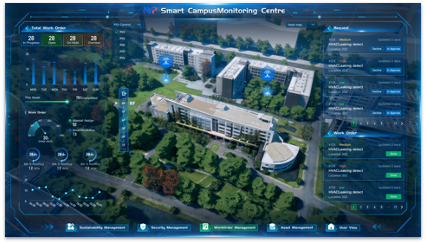
This sensor data feeds into analytics platforms that identify anomalies, predict equipment failures, and optimize maintenance scheduling based on actual operating conditions rather than fixed calendar intervals. Digital twins create virtual replicas of physical buildings, offering facility managers a 3D interactive platform to monitor real-time operations and simulate scenarios. Dubai’s large-scale developments such as Dubai Creek Tower and Dubai Expo 2020 site have embraced digital twin models for efficient infrastructure management.
The integration between smart building systems and CMMS platforms follows several architectural patterns. Real-time data from BMS systems triggers automated work order generation when sensors detect out-of-range conditions, such as supply air temperatures deviating from setpoints, unusual motor vibration patterns, or indoor air quality measurements falling below standards. This automated alerting dramatically reduces the time between problem occurrence and maintenance response, often from hours or days to minutes.
Leading facilities organizations in the region have achieved impressive results through smart building maintenance integration. Energy consumption reductions of 15-25% are common when IoT sensors enable optimization of HVAC schedules based on actual occupancy rather than assumed building usage patterns. Equipment lifespan extensions of 20-30% result from condition-based maintenance that addresses developing problems before they cause catastrophic failures requiring expensive emergency repairs and extended downtime.
Large-scale projects like NEOM incorporate smart facility management from design phase, with AI-powered analytics reducing infrastructure downtime by forecasting wear and tear. The Middle East facility management market is being driven by large-scale projects such as NEOM, Lusail City, and Expo City Dubai, all featuring integrated BMS-CMMS platforms from inception.
Compliance and Green Building Certification Requirements
Middle East facilities teams navigate a complex web of compliance requirements spanning local building codes, international green building certifications, and industry-specific regulations. Unlike regions where compliance may be optional or lightly enforced, Gulf states have made facility performance central to urban planning and economic development strategies, with significant penalties for non-compliance.
The Estidama Pearl Rating System, mandatory for all new construction in Abu Dhabi since 2010 as part of Abu Dhabi Vision 2030, requires comprehensive facilities documentation including preventive maintenance schedules, energy consumption tracking, water usage monitoring, and indoor air quality management. Buildings must maintain their certified Pearl rating (1-5 pearls) through ongoing operational compliance, making CMMS platforms essential for collecting and reporting the required data.
Abu Dhabi’s Department of Municipalities and Transport conducts regular audits of Pearl-rated buildings, reviewing maintenance records for critical systems. Facilities that cannot demonstrate compliant preventive maintenance programs face denial of ratings and inability to obtain necessary permits, effectively blocking occupancy permits or UPC sign-off, which directly impacts property values and marketability. This regulatory environment has driven widespread adoption of digital maintenance documentation through CMMS platforms.
LEED certification, while voluntary, has become a market differentiator for commercial properties across the region. Dubai has more than 600 LEED-certified buildings as of 2024, making it one of the Middle East’s leading cities for environmentally responsible construction, with the certification process requiring detailed maintenance records demonstrating sustainable operations practices. CMMS systems configured for LEED compliance track specific metrics including refrigerant management (to minimize ozone-depleting substances), water efficiency programs, indoor environmental quality measurements, and energy performance documentation.
Saudi Arabia’s building code updates under Vision 2030 have introduced new facility management requirements including mandatory elevator maintenance by certified technicians, fire safety system testing at prescribed intervals, and emergency generator load testing quarterly. The integration of smart building technologies is increasing as Saudi Arabia seeks to modernize its infrastructure and improve energy efficiency. CMMS platforms help facilities teams manage these compliance requirements through automated scheduling, technician qualification tracking, and comprehensive audit trail documentation.
Dubai Municipality’s Al Sa’fat Green Building System, which replaced previous regulations starting from October 19, 2020, requires facilities to report annual energy and water consumption data, demonstrate 20% energy efficiency improvements over baseline code requirements, and maintain indoor air quality standards. All new buildings must obtain the Silver Sa’fa, with owners aiming for higher performance able to apply for the Golden or Platinum Sa’fa. Facilities management teams use CMMS analytics to track these metrics continuously, identifying optimization opportunities and ensuring compliance before annual reporting deadlines.
The financial implications of non-compliance are significant. Penalties for expired fire safety certifications can reach AED 100,000 ($27,000) or more, while failure to maintain elevator certifications can result in forced shutdown of building vertical transportation until compliance is restored. These risks make reliable maintenance tracking through proven CMMS solutions a critical business requirement rather than operational nice-to-have, particularly as regulatory scrutiny intensifies across the region.
Download the Full Report
Get 100+ data points, verifiable sources, and actionable frameworks in a single PDF.
Get the ReportSee It In Action
Watch how facilities teams achieve 75% less unplanned downtime with Infodeck.
Book a DemoManaging Multilingual, Multicultural Facility Teams
The Gulf region’s facility management workforce represents one of the world’s most linguistically and culturally diverse professional environments. A typical maintenance team in Dubai or Riyadh might include technicians speaking Arabic, Hindi, Urdu, Tagalog, Nepali, Bengali, and English as primary languages, with widely varying levels of technical training and literacy.
This diversity creates both operational challenges and opportunities. On the challenge side, work order communication, safety procedures, and technical documentation must be accessible across language barriers. Miscommunication during critical maintenance procedures can lead to equipment damage, safety incidents, or compliance failures. Traditional paper-based systems or English-only digital platforms create significant risks in these multicultural environments.
Modern CMMS platforms address these challenges through comprehensive multilingual support. Leading systems offer interfaces in English, Arabic, and multiple Asian languages, enabling technicians to interact with the system in their preferred language while maintaining consistent underlying data. Work orders generated in English are automatically available in Arabic translation, ensuring clear communication across language boundaries.
Visual work instructions have become essential for Middle East facilities teams. Rather than relying solely on text-based procedures, leading organizations embed photos, diagrams, and videos into CMMS work order templates. A preventive maintenance task for chiller compressor inspection might include annotated photos showing exactly which gauges to read, what components to inspect, and what conditions warrant escalation to senior technicians.
The region’s facilities workforce also spans wide skill level variations. Large facility management companies (including major players like JLL and CBRE, which reported strong facilities management division growth in their 2025 Global State of Facilities Management Report) employ both highly qualified engineers with advanced degrees and entry-level technicians with minimal formal training. CMMS platforms help bridge this gap through structured task guidance that ensures consistent work quality regardless of individual technician expertise.
Workforce management features specifically designed for multilingual maintenance teams enable supervisors to assign work orders based on technician qualifications, language capabilities, and location. A plumbing emergency in a building’s Arabic-speaking tenant area can be routed to a qualified plumber who speaks Arabic, improving communication and customer satisfaction while reducing the risk of miscommunication that could impact service quality.
Mobile accessibility is particularly important given the Gulf region’s climate. Technicians working in extreme heat need quick, efficient access to work orders without prolonged exposure to outdoor conditions. Mobile apps that support offline functionality allow technicians to download morning work assignments, complete tasks throughout the day, and sync data back when connectivity is available, minimizing time spent standing in extreme heat while accessing information.
Training and skills development tracking helps facilities organizations comply with regulatory requirements for technician certification while addressing the reality of workforce turnover in the region. CMMS platforms can track individual technician qualifications, certification expiry dates, and training completion, automatically restricting assignment of specialized tasks (like elevator maintenance or fire safety system testing) to appropriately certified personnel.
Technology Integration: BMS, IoT, and Mobile Platforms
The technical architecture of Middle East facility management systems reflects the region’s technology-forward approach and the complexity of modern building infrastructure. Successful implementations require tight integration across building management systems, IoT sensor networks, mobile field applications, and centralized CMMS platforms that tie everything together.
Building Management System integration forms the foundation of automated facility operations. Modern commercial buildings in Dubai, Abu Dhabi, and Riyadh typically feature Honeywell, Siemens, Johnson Controls, or Schneider Electric BMS platforms controlling thousands of points across HVAC, lighting, security, and life safety systems. CMMS platforms integrate with these systems through standardized protocols like BACnet, Modbus, or proprietary APIs to enable bidirectional data flow.
This integration enables powerful automation scenarios. When a BMS detects a chiller approach temperature differential outside acceptable ranges, it automatically generates a CMMS work order for technician investigation. The technician uses their mobile app to acknowledge the alert, diagnose the issue (perhaps fouled condenser coils), complete the cleaning task, and close the work order. The BMS confirms return to normal operations, and the CMMS records the complete maintenance event for compliance documentation and performance trending.
IoT sensor deployments in the region increasingly extend beyond traditional BMS integration to include specialized maintenance monitoring devices. Vibration sensors on critical motors, oil analysis sensors on chillers, and thermal imaging cameras for electrical panel monitoring all feed data into CMMS platforms to enable predictive maintenance strategies. When sensor data indicates developing problems, work orders are automatically generated before equipment failures occur.
The scale of IoT deployments in Gulf smart building implementations can be substantial. Expo City Dubai’s facility management infrastructure monitors over 100,000 data points across the 438-hectare development, processing sensor data every 15 seconds to optimize operations and predict maintenance needs. This level of instrumentation generates massive data volumes that CMMS platforms must efficiently process and translate into actionable maintenance tasks.
Mobile platform capabilities are non-negotiable requirements for Middle East facility management. With outdoor temperatures making extended paper-based work order management impractical, technicians rely on mobile apps for all field operations. These applications must function reliably in harsh conditions including extreme heat, bright sunlight making screen visibility challenging, and dusty environments that can damage devices.
Leading facilities organizations provision ruggedized mobile devices specifically for maintenance operations, with industrial-rated tablets and smartphones that can withstand drops, dust exposure, and temperature extremes. These devices run CMMS mobile apps that support offline operation, barcode/QR code scanning for asset identification, photo capture for condition documentation, and voice-to-text input for technicians working in situations where typing is impractical.
Integration with financial and procurement systems enables comprehensive lifecycle cost tracking. When a preventive maintenance inspection identifies a part requiring replacement, the CMMS checks inventory levels, generates requisitions if stock is insufficient, and tracks total maintenance costs against asset values to inform replacement versus repair decisions. This end-to-end integration provides the financial visibility that property owners and facility managers need for informed decision-making about asset management strategies.
Implementation Roadmap for Middle East Organizations
Successfully implementing CMMS platforms in Middle East facility management environments requires careful planning that accounts for regional characteristics including climate challenges, compliance requirements, workforce diversity, and the scale of typical building portfolios. Organizations that follow structured implementation approaches achieve significantly better outcomes than those attempting big-bang deployments.
The assessment phase should begin with comprehensive facility audits documenting all assets requiring maintenance tracking. For multi-site portfolios common in the region, this often means cataloging 10,000-50,000+ individual assets across equipment, building systems, grounds, and supporting infrastructure. Many organizations discover that their existing asset records are incomplete or outdated, requiring physical surveys to establish accurate baselines.
Climate-specific considerations must be incorporated from the beginning. CMMS configuration should reflect the accelerated maintenance frequencies required for desert environments, with preventive maintenance schedules set 40-60% more aggressive than manufacturer baseline recommendations. Seasonal adjustments account for peak cooling season (May-September) when HVAC equipment runs continuously versus mild winter months when systems operate intermittently.
Compliance mapping ensures the CMMS supports all regulatory and certification requirements applicable to the organization’s buildings. This includes identifying which assets require periodic inspections per Dubai Municipality regulations, what documentation is needed for Estidama Pearl rating maintenance, which systems need tracking for LEED compliance, and how to structure data for annual energy reporting requirements. Configuring these compliance requirements into the system from day one prevents scrambling to collect data retrospectively when audits occur.
Multilingual content development deserves dedicated attention during implementation. All work order templates, preventive maintenance checklists, safety procedures, and user interfaces should be professionally translated into the languages spoken by the facility workforce. Relying on automated translation tools for technical content often produces confusing or incorrect results that undermine system adoption and create safety risks.
Phased rollouts work better than organization-wide launches in Middle East environments. Starting with a pilot building or single site allows the facilities team to refine configurations, work out integration issues, and develop user proficiency before expanding to the full portfolio. Many successful implementations follow a 3-6 month pilot period, then phase in additional sites over 6-12 months rather than attempting simultaneous deployment across dozens of properties.
Training programs must accommodate diverse skill levels and learning styles across the facility workforce. Hands-on workshops with the actual mobile devices technicians will use in the field prove more effective than classroom presentations. Creating a cadre of super-users who can provide ongoing peer support helps sustain user adoption after formal training concludes. For organizations managing multi-site portfolios, training should include site-level champions who can troubleshoot issues and reinforce best practices locally.
Integration testing with existing systems requires careful attention. BMS connections, IoT data feeds, financial system links, and mobile app functionality should all be thoroughly validated before going live. The complexity of Middle East facility technology stacks means integration issues are common; discovering and resolving these during testing phases prevents operational disruptions after launch.
Change management often determines implementation success or failure. Facility teams accustomed to paper-based systems or basic spreadsheet tracking may resist transitioning to comprehensive CMMS platforms. Leadership must clearly communicate the business drivers (compliance requirements, cost optimization, improved reliability), demonstrate commitment through active participation, and celebrate early wins to build momentum across the organization.
Ongoing optimization should be planned from the outset rather than treated as afterthought. As users gain proficiency and operational data accumulates, opportunities emerge to refine preventive maintenance schedules, optimize parts inventory levels, improve response times for service requests, and enhance reporting. Organizations that treat CMMS as evolving platforms rather than static systems achieve significantly greater long-term value.
Investment and ROI Considerations
The investment required for comprehensive CMMS implementation in Middle East facilities varies based on portfolio size, integration complexity, and functionality requirements. Single-site implementations for buildings of 500,000-1 million square feet typically range from $25,000-$75,000 including software, configuration, integration, training, and first-year support. Multi-site portfolios managing 5+ million square feet across multiple buildings often invest $150,000-$300,000 for enterprise-grade platforms with full BMS integration and advanced analytics capabilities.
Organizations should evaluate total cost of ownership over 3-5 year periods rather than focusing solely on initial implementation costs. Cloud-based CMMS platforms offer subscription models that spread costs over time while including ongoing updates, support, and infrastructure management that would otherwise require dedicated IT resources. When factoring in avoided costs from improved compliance, reduced emergency repairs, optimized energy consumption, and extended equipment lifecycles, ROI on CMMS investments in the Middle East typically achieves payback within 12-18 months for well-implemented systems.
The scale of potential savings is substantial given the size of the regional market. With the GCC facilities management market projected to reach $135.47 billion by 2030 and district cooling alone representing a $6.6 billion market growing at 9.3% annually, even small percentage improvements in operational efficiency translate to millions in aggregate savings across the industry. For individual organizations, energy optimization through better maintenance can reduce cooling costs by 15-25%, equipment lifecycle extensions of 20-30% defer major capital expenditures, and compliance automation eliminates penalties that can reach AED 100,000 per incident.
Technology providers serving the Middle East market increasingly offer flexible pricing models that accommodate the region’s diverse facility types and sizes. Subscription-based pricing starting at $45-75 per user per month enables smaller organizations to access enterprise-grade functionality without large upfront capital expenditures. For larger portfolios, volume discounts and multi-year agreements provide cost predictability while ensuring access to ongoing platform enhancements that keep pace with evolving regional requirements.
The facilities management market across the Middle East continues evolving rapidly as governments pursue smart city visions, green building standards tighten, and mega-project developments reshape urban environments. Organizations that invest in modern CMMS platforms today position themselves to not just meet current requirements but to capitalize on emerging opportunities in predictive maintenance, AI-driven optimization, and integrated facility performance management that will define the industry’s future across the Gulf region. With Saudi Arabia’s smart cities market alone expected to grow from $6.72 billion to $18.74 billion by 2030, facilities teams equipped with advanced technology platforms will be best positioned to support this transformative growth.
Sources
- Middle East Facility Management Market Size & Share, Forecast 2030
- GCC Facility Management Market Size & Share Analysis
- Saudi Vision 2030
- Middle East District Cooling Market Size & Share, Forecast 2034
- Saudi Arabia Smart Cities Market Analysis Report 2025
- Dubai Municipality Adopts Integrated Facilities Management
- Smart Building Management in Dubai: Innovations & Challenges
- Abu Dhabi Department of Municipalities and Transport - Estidama
- JLL Global State of Facilities Management Report 2025
- NEOM: Made to Change


