

Key Takeaways
- AI-driven predictive maintenance will become standard for facilities by 2030
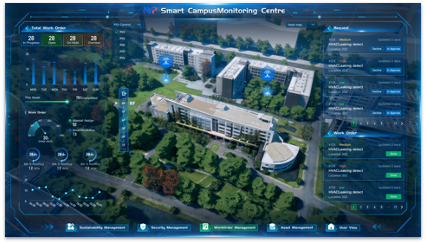
- Digital twins will manage 50% of large commercial buildings within 5 years
- Autonomous maintenance robots will handle routine inspection tasks
- Sustainability regulations will mandate energy-optimized maintenance programs
Maintenance is transforming more dramatically in the next five years than in the previous fifty. The convergence of economic pressure, demographic collapse, and exponential technological capability creates both unprecedented urgency and extraordinary opportunity.
Organizations that adapt strategically will operate more efficiently with smaller teams and superior outcomes. Those that delay will face compounding challenges as six reinforcing forces intensify simultaneously: spiraling costs, chronic staffing shortages, and irreversible competitive disadvantage.
This comprehensive guide examines the seven transformative forces reshaping maintenance through 2030, backed by market forecasts from McKinsey, Gartner, MarketsandMarkets, and leading industry analysts. You’ll discover specific preparation roadmaps, ROI benchmarks, technology selection criteria, and industry-specific implications.
The window for strategic preparation is open now. By 2030, it will have closed, and the gap between leaders and laggards will be unbridgeable.
Download the complete State of Maintenance 2026 report for detailed forecasts, implementation frameworks, and preparation roadmaps analyzing the forces already in motion.
Seven Forces Reshaping Maintenance Through 2030
The future of maintenance is not shaped by a single trend; it is the convergence of seven exponential forces, each reinforcing the others:
Force 1: The Exploding Downtime Crisis
Fortune 500 companies lose $1.4 trillion annually to unplanned downtime, up 62% from $864 billion in 2019. The cost pressure is intensifying, not easing, as equipment complexity grows faster than maintenance capability.
What drives the crisis:
- Equipment complexity increasing exponentially while maintenance expertise stagnates
- Just-in-time operations with zero buffer for disruption
- Hyperconnected systems where single component failures cascade across entire facilities
- Customer expectations demanding 24/7 availability with zero tolerance for outages
- Supply chain fragility making replacement parts scarce and expensive
Where it is heading: By 2030, unplanned downtime costs will approach $2 trillion annually if current trends continue. Organizations that cannot demonstrate measurable downtime reduction face board-level scrutiny, investor pressure, and existential competitive disadvantage.
The downtime crisis is forcing unprecedented investment in predictive technologies. The global predictive maintenance market is projected to reach $91.04 billion by 2033, growing at 29.4% CAGR from $8.96 billion in 2024, one of the fastest-growing enterprise technology categories.
Force 2: The Maintenance Workforce Collapse
The maintenance workforce crisis is not a future problem; it is happening right now, and it accelerates through 2030:
| Workforce Metric | Current State (2025-2026) | 2030 Projection |
|---|---|---|
| Workers age 50 and older | 69% of workforce | Aging in place, no replacement pipeline |
| Annual retirements | ~150,000 technicians | Accelerating as Boomers exit |
| Graduates entering trades | 1.25M over 4 years | Flat or declining growth |
| Job openings per graduate | 4:1 ratio | 5:1 or worse |
| Tribal knowledge transfer | Inadequate documentation | Critical expertise lost forever |
| Wage pressure | 5-7% annual increases | Mandated wage floors worldwide |
The brutal math: You cannot hire your way out of this shortage. There are not enough qualified workers entering maintenance trades. Every organization must achieve dramatically more with fewer people, which demands technology multiplication, not merely technology adoption.
The only viable path forward combines workforce augmentation through AI and automation, systematic tribal knowledge capture before retirements, and radical productivity improvement through connected systems.
Force 3: AI Becomes Maintenance Infrastructure
Artificial intelligence is transitioning from “innovative pilot project” to “expected infrastructure” at breathtaking speed. AI in manufacturing is projected to grow from $34.18 billion in 2025 to $155.04 billion by 2030, a 35.3% compound annual growth rate.
Current adoption acceleration (2024-2026):
| Adoption Stage | Percentage of Organizations | Characteristics |
|---|---|---|
| Not considering | 10% | Small operations, limited capital, commodity assets |
| Exploring options | 25% | Research phase, vendor evaluations, no deployments |
| Piloting systems | 35% | Limited deployment, testing ROI, measuring results |
| Scaling deployment | 25% | Expanding successful pilots across facilities |
| Fully optimized | 5% | AI-driven operations as standard practice |
Real-world performance data:
- Manufacturing facilities using AI report 23% average reduction in downtime from AI-powered process automation
- Companies achieve 20-30% maintenance cost reduction by applying AI-enabled efficiencies to distributed fixed assets
- Predictive maintenance stands as the most impactful AI application in manufacturing, with 77% of manufacturers now utilizing AI solutions compared to 70% in 2024
What changes by 2030: AI transitions from competitive advantage to table stakes. Organizations without AI-assisted maintenance will be as uncommon as those without computerized work orders today. By 2030, 65% of manufacturers will adopt AI-powered scheduling systems, with automation tools reducing maintenance costs by 5-9% and increasing operational effectiveness by 14-24%.
Force 4: Digital Twins Transform Asset Management
Digital twin technology (virtual replicas of physical assets enabling real-time monitoring, simulation, and predictive maintenance) is experiencing explosive growth. The global digital twin market expands from $21.14 billion in 2025 to $149.81 billion in 2030, reflecting 47.9% CAGR and representing one of the fastest technology adoption curves in industrial history.
Why digital twins matter for maintenance:
Digital twins integrate IoT sensors, AI analytics, and machine learning to create precise virtual replicas of equipment, enabling organizations to:
- Monitor asset health in real-time with continuous data streams
- Simulate failure scenarios before they occur in physical assets
- Optimize maintenance schedules based on actual condition versus arbitrary time intervals
- Train technicians on virtual equipment before touching physical assets
- Test maintenance procedures virtually to identify optimal approaches
Market dynamics: Predictive maintenance holds the largest application share in the digital twin market. Manufacturing contributed 35.8% of digital twin adoption in 2024, driven by embedded IIoT sensors, predictive maintenance programs, and continuous-improvement cultures.
Regional leadership: North America dominates digital twin adoption but Asia-Pacific shows fastest growth, particularly in Singapore, Japan, and South Korea where government smart manufacturing initiatives accelerate deployment.
Force 5: IoT Sensor Democratization
The economic barrier to predictive maintenance collapsed between 2019 and 2026 as IoT sensor costs dropped 70-90%:
| Sensor Technology | 2019 Cost | 2026 Cost | 2030 Projection |
|---|---|---|---|
| Vibration monitoring | $500-2,000 | $50-200 | $20-100 |
| Temperature sensors | $100-500 | $10-50 | $5-25 |
| Energy monitors | $200-800 | $30-100 | $15-50 |
| Multi-parameter devices | $1,000+ | $100-300 | $50-150 |
| Pressure transducers | $300-1,200 | $40-150 | $20-80 |
| Acoustic emissions | $800-3,000 | $100-400 | $50-200 |
What this enables: Predictive maintenance deployments that required $100,000-500,000 investments five years ago now cost $5,000-25,000 for meaningful coverage. The economic barrier collapsed. The knowledge barrier is collapsing through AI-assisted interpretation.
ROI reality: Companies adopting IoT-based predictive maintenance achieve ROI of up to $7 for every $1 spent, with payback periods of 3-18 months depending on industry and deployment scale. A McKinsey 2024 survey indicated that over 65% of large manufacturers have initiated or completed IoT sensor deployment for core assets, projected to exceed 85% by 2026.
Real-world example: A European automotive manufacturer achieved 47% unplanned downtime reduction, 22% lower maintenance costs for robotic systems, and 30% spare parts inventory reduction, with overall project ROI achieved in just 14 months.
Force 6: Autonomous Maintenance Systems Emerge
Collaborative robots (cobots) and autonomous maintenance systems are transitioning from science fiction to facilities reality. The global cobot market grows from $1.9 billion in 2025 to $4.88-7.2 billion by 2030, with 20-28% CAGR driven by maintenance applications.
Maintenance-specific robotics growth: The robotics maintenance sector surges to $10.05 billion by 2030, growing at 10.1% CAGR from 2022-2030 as facilities deploy autonomous systems for inspections, routine maintenance, and hazardous environment work.
How cobots augment maintenance teams:
| Application Area | Cobot Capability | Human Role |
|---|---|---|
| Hazardous inspections | Work in toxic/high-temp environments | Monitor remotely, analyze findings |
| Routine tasks | Execute repetitive preventive maintenance | Focus on complex troubleshooting |
| Mobile inspections | Navigate facilities autonomously with AMRs | Respond to identified anomalies |
| Predictive analytics | Continuous monitoring with AI pattern recognition | Verify alerts, execute repairs |
| Documentation | Automatic capture of conditions and procedures | Review data, refine processes |
Technology trajectory: Cobots increasingly rely on artificial intelligence to exhibit heightened autonomy in handling dynamic operational tasks. Looking beyond 2030, cobots will become even more autonomous, powered by next-generation technologies like 5G and augmented reality.
SME accessibility: Cobots are especially valuable for small and medium-sized enterprises because they are relatively affordable and easy to implement, with falling prices and simplified programming making advanced automation accessible beyond Fortune 500 facilities.
Force 7: Asia-Pacific Innovation Leadership
Asia-Pacific CMMS market grows at 12-14% CAGR, nearly double global rates, as the region transitions from manufacturing hub to innovation center:
| Region | 2025 Market Size | 2030 Projection | Primary Growth Drivers |
|---|---|---|---|
| APAC Overall | ~$300M | ~$700M | Industrialization, digital transformation, regulation |
| Greater China | ~$120M | ~$300M | Manufacturing scale, government smart factory mandates |
| Southeast Asia | ~$45M | ~$120M | Infrastructure investment, PropTech adoption |
| India | ~$25M | ~$80M | Infrastructure boom, manufacturing expansion |
| Japan/Korea | ~$90M | ~$180M | Advanced automation, aging workforce solutions |
Why APAC matters globally: Asia-Pacific is not merely a growth market; it is becoming an innovation laboratory. Practices developed for Singapore’s stringent regulatory environment, Thailand’s manufacturing base, or Japan’s aging workforce challenges spread globally as proven solutions.
Organizations operating in APAC encounter advanced maintenance requirements earlier and develop competitive advantages transferable to other markets.
Download the Full Report
Get the complete State of Maintenance 2026 report with all benchmark data and implementation frameworks.
Download Free ReportSee It In Action
Ready to join the facilities teams achieving 75% less unplanned downtime? Start your free 30-day trial.
Start Free TrialThe Technology Convergence: 2026-2030
These seven forces converge on intelligent, connected, autonomous maintenance ecosystems that fundamentally reshape how organizations manage physical assets.
CMMS Market Trajectory Through 2030
The global CMMS market reflects technology convergence accelerating through the decade:
| Year | Market Size | Cloud Deployment Share | AI/ML Integration | Mobile-First Design |
|---|---|---|---|---|
| 2025 | $2.19B | 63% | 32% implemented | 45% fully mobile |
| 2027 | $2.8B | 72% | 48% implemented | 65% fully mobile |
| 2028 | $3.0B | 75% | 55% implemented | 75% fully mobile |
| 2030 | $3.8B | 80%+ | 70%+ implemented | 85%+ fully mobile |
| 2035 | $5.37B | 85%+ | 80%+ implemented | 90%+ fully mobile |
Source: MarketsandMarkets, industry analyst composite estimates
Growth drivers reshaping the market:
- 10.4% CAGR through 2035 as maintenance technology becomes mission-critical
- Cloud deployment dominates new implementations due to scalability and integration
- AI and machine learning capabilities transition from premium features to standard expectations
- Mobile-first design becomes mandatory as younger technicians enter workforce
- Integration requirements expand to encompass building systems, ERP, supply chain, and analytics platforms
PropTech Convergence Accelerates
Property Technology (PropTech) fundamentally reshapes building operations and maintenance:
| PropTech Metric | 2024 | 2032 Projection | Implications for Maintenance |
|---|---|---|---|
| VC investment | $3.2B | Growing steadily | Capital flowing to building tech integration |
| Market size | ~$30B | $88.37B | Massive ecosystem for connected systems |
| Building system integration | Partial, siloed | Comprehensive, unified | CMMS becomes hub for facility operations |
| Maintenance automation | Emerging capabilities | Standard expectation | Work orders auto-generate from building systems |
Source: PropTech market analysis from Grand View Research
What convergence means operationally: Building Management Systems (BMS), access control, energy management, indoor air quality monitoring, and security increasingly integrate with maintenance platforms. The standalone CMMS becomes an integrated node in connected building operating systems.
Practical implications:
- HVAC systems automatically generate work orders when filter pressure differentials exceed thresholds
- Access systems trigger maintenance requests when door sensors detect malfunctions
- Energy management platforms alert maintenance when consumption patterns indicate equipment degradation
- Occupancy sensors optimize maintenance schedules based on actual space utilization rather than arbitrary intervals
AI Capabilities: Reality Versus Hype Timeline
The AI conversation often conflates current capabilities with future possibilities. Here is the realistic timeline:
Available Now (2026):
- Pattern recognition in multi-sensor data streams identifying anomalies
- Anomaly detection with automated alerting to maintenance teams
- AI-assisted work order prioritization based on criticality algorithms
- Predictive failure probability scoring for equipment populations
- Natural language search across maintenance documentation and procedures
- Automated report generation from operational data
- Condition-based maintenance trigger optimization
Emerging Capabilities (2027-2028):
- Multi-system correlation analysis identifying root causes across interconnected equipment
- Autonomous work order generation from sensor alerts with pre-populated details
- Intelligent maintenance scheduling optimization balancing priorities, resources, and constraints
- Voice-activated mobile interfaces for hands-free work order updates
- Automated parts ordering triggers when predictive models indicate upcoming failures
- Augmented reality guidance overlays for complex repair procedures
Future State (2029-2030):
- Autonomous diagnostic recommendations combining sensor data, maintenance history, and equipment documentation
- Self-optimizing maintenance schedules that continuously refine based on outcomes
- Predictive parts inventory management ordering replacement components before failures occur
- Integrated supply chain optimization coordinating maintenance with procurement and logistics
- Cross-facility learning networks where AI models trained at one site benefit entire organization
Organizations should deploy current capabilities while building infrastructure (data quality, connectivity, standardized processes) that enables smooth adoption of emerging technologies.
The Strategic Preparation Roadmap: 2026-2028+
Preparing for 2030 requires systematic action starting immediately. Here is the phased approach successful organizations follow:
Phase 1: Digital Foundation (2026)
Strategic Objective: Establish cloud infrastructure, achieve baseline digitization, and capture performance metrics
Priority Actions:
| Action | Why This Matters | Success Metric | Typical Investment |
|---|---|---|---|
| Cloud CMMS deployment | Foundation enabling all future capabilities | System operational, legacy data migrated | $15K-75K annually |
| Mobile work order adoption | Workforce expectations, real-time updates | 80%+ technician daily usage | Included in CMMS |
| Complete asset inventory | Cannot manage what you do not track | 95%+ critical assets documented | $5K-25K labor |
| Baseline metrics establishment | Measure improvement from known starting point | MTBF, MTTR, PM compliance tracked monthly | Included in CMMS |
| Tribal knowledge capture initiation | Senior workers retiring within 3-5 years | Critical procedures documented | $10K-50K program |
Common Implementation Mistakes:
- Selecting CMMS platforms without strong API and integration architecture
- Deploying systems without comprehensive change management and training programs
- Skipping critical data cleanup before migration, perpetuating bad data
- Treating implementation as IT project rather than operational transformation
- Underestimating ongoing administration and data governance requirements
Budget Planning: Total Phase 1 investment typically ranges $50,000-200,000 for mid-market facilities, with cloud CMMS subscription, implementation services, training, and data migration as primary components.
Phase 2: Connected Capabilities (2027)
Strategic Objective: Prove predictive maintenance value, expand integration, and build organizational data literacy
Priority Actions:
| Action | Why This Matters | Success Metric | Typical Investment |
|---|---|---|---|
| IoT pilot project | Costs low, ROI proven, fast payback | 3-5 critical assets monitored with measurable downtime reduction | $10K-40K |
| AI-assisted work prioritization | Quick win with high visibility | Reduced emergency responses, improved schedule compliance | Included in CMMS |
| BMS/BAS integration | Automated monitoring vs. manual rounds | 50%+ building systems connected, automated work orders | $20K-80K |
| Knowledge base expansion | Accelerate capture before retirements | Searchable procedures actively used by 70%+ technicians | $15K-60K |
| PM compliance optimization | Foundation required for predictive | Sustained 85%+ preventive maintenance compliance | Operational focus |
Investment Focus Areas:
- Connectivity infrastructure: industrial networking, sensor installation, integration middleware
- Training programs developing data interpretation and decision-making skills
- Process refinement based on first-year learnings and user feedback
- ROI documentation building justification for Phase 3 expansion
Budget Planning: Phase 2 typically requires $60,000-250,000 investment, with IoT infrastructure, building system integration, and knowledge management platforms as major components.
Phase 3: Scaled Optimization (2028+)
Strategic Objective: Scale proven approaches, achieve full integration, and embed continuous improvement culture
Priority Actions:
| Action | Why This Matters | Success Metric | Typical Investment |
|---|---|---|---|
| Predictive maintenance scaling | Pilots validated, infrastructure ready, ROI proven | 50%+ critical assets covered with condition monitoring | $75K-300K |
| Full system integration | ERP, procurement, HR, analytics connected | Automated workflows eliminating manual handoffs | $50K-200K |
| Continuous improvement culture | Technology enables, people sustain outcomes | Monthly metric reviews driving process refinement | Operational focus |
| Advanced analytics deployment | Data volume supports sophisticated insights | Predictive models deployed, decision support operational | $30K-150K |
| Cross-facility optimization | Network effects multiply value | Best practice sharing across sites | Operational focus |
Organizational Transformation:
- Maintenance roles evolve from reactive technicians to proactive analysts and optimizers
- Cross-functional collaboration increases as maintenance integrates with operations, procurement, finance
- Data literacy becomes core competency with training programs and performance expectations
- Continuous learning embedded through regular reviews, lessons learned, and process improvements
Budget Planning: Phase 3 investment ranges $200,000-800,000+ for comprehensive scaling, though ROI from Phases 1-2 typically funds expansion from operational savings.
Start Free Trial
Experience the full platform with 30-day free access. No credit card required.
Start Free TrialBook a Demo
Get a personalized walkthrough from our team. See how Infodeck fits your operation.
Schedule DemoTechnology Selection Criteria for Long-Term Success
When evaluating CMMS platforms and related technologies, prioritize longevity and adaptability over current feature checklists; you are selecting infrastructure for the next decade.
Non-Negotiable Platform Capabilities
| Capability | Why Critical for 2030 | Evaluation Questions |
|---|---|---|
| Cloud-native architecture | Scalability, automatic updates, disaster recovery | True cloud or hosted legacy? Multi-tenant or single-tenant? |
| Open API framework | Connect to emerging systems not yet invented | RESTful APIs? Webhook support? Integration marketplace? |
| Mobile-first design | Workforce expectations, field efficiency | Native mobile apps? Offline capability? Photo/video capture? |
| AI/ML integration path | Add capabilities as they mature | Current AI features? Roadmap? Data ownership for training? |
| IoT data ingestion | Handle sensor volume at scale | Supported protocols? Real-time processing? Data storage limits? |
| Multi-site support | Centralized insights, distributed execution | Unlimited locations? Role-based access? Site-specific configuration? |
| Configurable workflows | Adapt without expensive customization | Workflow builder? Approval routing? Conditional logic? |
| Detailed reporting and analytics | Data-driven decision making | Custom reports? Dashboards? Data export capabilities? |
Critical Vendor Questions
AI and Predictive Maintenance:
- How do you integrate AI and machine learning features into the platform?
- Are predictive models pre-trained or do they learn from my data?
- What data volume is required before predictive features become useful?
- Can I export data to train custom models if needed?
IoT and Sensor Integration:
- What is your IoT data architecture and supported sensor protocols?
- How do you handle high-frequency sensor data ingestion at scale?
- What analytics run at the edge versus in the cloud?
- Can sensors from multiple manufacturers integrate smoothly?
Integration Ecosystem:
- How do third-party integrations work: native connectors, APIs, middleware?
- What is your integration marketplace or partner ecosystem?
- Can I build custom integrations if needed?
- How do you handle data synchronization and conflict resolution?
Mobile and Field Technology:
- What is your mobile feature development roadmap?
- Do mobile apps support offline work in areas without connectivity?
- Can technicians capture rich media: photos, videos, voice notes?
- How do mobile apps handle complex workflows and approvals?
Compliance and Regional Support:
- How do you support multi-regional compliance requirements?
- Can the platform adapt to different regulatory frameworks by region?
- What data residency options exist for privacy regulations?
- How do you handle multi-language support for global deployments?
Predictive Maintenance Offerings:
- What does your predictive maintenance solution include?
- Are predictive capabilities included or sold separately?
- What success metrics do current predictive maintenance customers achieve?
- What implementation support and ongoing optimization do you provide?
The right platform delivers infrastructure meeting current operational needs while enabling easy adoption of future capabilities without expensive replacements or migrations.
Industry-Specific 2030 Implications
The seven transformative forces affect industries differently based on operational priorities, regulatory environments, and asset characteristics:
Manufacturing Facilities
Dominant Forces: Downtime crisis, AI adoption, workforce shortage, digital twins
Current State (2026):
- 77% of manufacturers using AI solutions, up from 70% in 2024
- Predictive maintenance as primary AI application driver
- 65% of large manufacturers have initiated IoT sensor deployment
2030 State Projection:
- Predictive maintenance standard practice for all critical production equipment
- Digital twins deployed for complex manufacturing cells and assembly lines
- AI-driven scheduling optimizes changeover maintenance and production coordination
- Augmented reality systems support less-experienced technicians through complex procedures
- Supply chain integration automatically triggers maintenance based on production schedules and material availability
- Cobot-assisted maintenance handles routine tasks in hazardous manufacturing environments
Preparation Priorities: Focus on production-critical equipment first, prove ROI quickly, scale aggressively based on demonstrated downtime reduction and OEE improvement.
Healthcare and Hospital Facilities
Dominant Forces: Regulatory compliance, workforce shortage, 24/7 critical operations, patient safety
Current State (2026):
- Compliance documentation burden consuming 30-40% of maintenance time
- Medical equipment complexity increasing faster than staff training
- Joint Commission and CMS requirements demanding perfect documentation
2030 State Projection:
- Compliance automation eliminates manual documentation burden
- Medical device maintenance fully integrated with clinical information systems
- Predictive capabilities prevent life-critical equipment failures before patient impact
- Staff certification tracking, equipment inspections, and regulatory reporting fully automated
- IoT monitoring provides continuous oversight of critical systems: HVAC, medical gas, emergency power
- Digital twins enable maintenance scenario testing without disrupting clinical operations
Preparation Priorities: Emphasize compliance automation immediate ROI, prioritize life-critical equipment for predictive monitoring, integrate with clinical workflows to reduce operational friction.
Commercial Real Estate and Office Buildings
Dominant Forces: PropTech convergence, tenant expectations, ESG requirements, operating cost pressure
Current State (2026):
- Building systems increasingly connected but operating in silos
- Tenant experience platforms separate from facilities operations
- ESG reporting manual, inconsistent, and time-consuming
2030 State Projection:
- Building operating systems unify all facility functions: HVAC, lighting, access, maintenance
- Tenant experience platforms directly connect to maintenance for direct service requests
- ESG reporting fully automated from operational data with auditable documentation
- Predictive maintenance reduces energy consumption through optimized equipment operation
- Smart building certifications (WELL, LEED, Green Mark) maintained through continuous monitoring
- PropTech platforms enable remote facility management across distributed portfolios
Preparation Priorities: Prioritize tenant-facing systems for quick wins, integrate building management systems early, establish ESG data infrastructure before reporting mandates intensify.
Education Institutions and Universities
Dominant Forces: Budget constraints, aging infrastructure, deferred maintenance, regulatory compliance, multi-site complexity
Current State (2026):
- Deferred maintenance backlogs averaging 30-50% of replacement value
- Limited capital budgets stretching maintenance teams thin
- Aging infrastructure requiring increasingly frequent interventions
- Compliance requirements for safety, accessibility, environmental standards
2030 State Projection:
- Deferred maintenance visibility through condition assessments supports capital planning and funding requests
- Condition-based maintenance strategies stretch limited budgets by optimizing intervention timing
- Safety compliance documentation automated for fire systems, elevators, boilers, hazardous materials
- Multi-campus maintenance coordination optimized through centralized platforms
- IoT sensors provide early warning of system degradation enabling proactive budget requests
- Energy management integration reduces operational costs funding maintenance improvements
Preparation Priorities: Focus on safety-critical systems first, use data to justify capital funding, emphasize energy savings funding maintenance improvements, coordinate across distributed campuses.
What Will Not Change: The Enduring Fundamentals
Amid technological transformation, certain maintenance fundamentals remain constant through 2030 and beyond:
People Still Decide Outcomes
Technology augments human judgment; it does not replace it. The most sophisticated AI systems fail without skilled people using them effectively. The workforce shortage makes human talent more valuable, not less.
Organizations succeeding in 2030 will be those that combine advanced technology with skilled technicians, empowering people to make better decisions faster rather than attempting to eliminate human involvement.
Basics Still Trump Advanced Technology
Organizations that master preventive maintenance fundamentals (accurate asset inventories, consistent PM execution, disciplined work order processes) dramatically outperform those chasing advanced technology without solid foundations.
60-80% of CMMS implementations fail not from technology inadequacy but from poor change management, insufficient training, and lack of basic process discipline.
Build the foundation before adding advanced capabilities. Predictive maintenance fails without reliable preventive maintenance. AI optimizes good processes but cannot fix broken ones.
Change Management Still Determines Success
The best technology deployed without organizational buy-in becomes expensive shelfware. Change management, training, communication, and leadership support remain critical success factors.
Technology adoption succeeds when:
- Leadership communicates clear vision and expectations
- Users receive comprehensive training and ongoing support
- Early adopters are celebrated and skeptics are heard
- Quick wins demonstrate value and build momentum
- Continuous feedback refines implementation
ROI Still Rules All Decisions
Excitement about AI, digital twins, and autonomous systems does not override financial accountability. Every technology investment must demonstrate measurable return through reduced downtime, lower costs, extended asset life, or improved regulatory compliance.
Successful organizations in 2030 will be those that systematically track maintenance ROI, optimize based on data, and make investment decisions driven by demonstrated outcomes rather than technology trends.
Your 2026-2030 Action Plan
The seven forces reshaping maintenance through 2030 are already in motion:
- Downtime crisis intensifies: $1.4 trillion growing to $2 trillion, forcing investment in predictive technologies reaching $91 billion market by 2033
- Workforce demographics demand productivity multiplication: 40% retiring by 2030 with inadequate replacement pipeline
- AI capabilities become infrastructure: $155 billion AI in manufacturing market by 2030, transitioning from advantage to expectation
- Digital twins transform asset management: $150 billion market by 2030 enabling simulation, optimization, and predictive maintenance at scale
- IoT economics enable universal monitoring: sensor costs down 70-90%, predictive maintenance ROI reaching $7 per $1 spent
- Autonomous systems augment human workers: cobot market reaching $7.2 billion by 2030, handling hazardous and routine tasks
- Asia-Pacific drives global innovation: 12-14% CAGR creating laboratory for advanced maintenance practices
Organizations preparing strategically now, building digital infrastructure, developing connected capabilities, and cultivating data-driven cultures, will thrive through 2030 and beyond.
Those delaying face compounding challenges as forces intensify simultaneously. The gap between leaders and laggards becomes unbridgeable.
The preparation window is open today. By 2030, it will have closed.
Start with Phase 1 foundation work in 2026. Expand with connected capabilities in 2027. Scale proven approaches in 2028 and beyond. The roadmap is clear. The technology is accessible. The ROI is proven.
The only remaining question: Will your organization lead the transformation or struggle to catch up?
Discover how Infodeck’s IoT-native CMMS platform provides the foundation for 2030-ready maintenance operations with built-in AI capabilities, comprehensive sensor integration, and proven implementation methodologies.
Sources
- Predictive Maintenance Market to Reach $91.04 Billion by 2033 - Astute Analytica
- AI in Manufacturing Market - Grand View Research
- AI Adoption in Manufacturing: Insights & ROI Benchmarks - TechStack
- Digital Twin Market worth $149.81 billion by 2030 - MarketsandMarkets
- Digital Twin Market Analysis - Grand View Research
- Predictive Maintenance Market Evolution - IoT Analytics
- IoT and AI in Industry 4.0 Predictive Maintenance - MDPI
- The Rise of Collaborative Robots (Cobots) - Automate.org
- Future of Robotics to 2030 Market - MarketsandMarkets
- Robotics and Automation in Maintenance - Zapium


