
01
Requests become owned work.
People can report issues, teams can assign work, and owners can see status without rebuilding the story across email or spreadsheets.
From reactive maintenance to documented response
Power and cooling failures can turn maintenance gaps into customer-facing incidents. With dense racks and strict SLAs, teams need maintenance records, sensor context, and response ownership in one place. Infodeck connects DCIM signals to accountable work orders so cooling, power, and redundancy work stays visible from alert to closeout.
One operating record
For Data Centers & Colocation teams, Infodeck links requests, planned work, assets, contractors, and proof so the record follows the job.
01
People can report issues, teams can assign work, and owners can see status without rebuilding the story across email or spreadsheets.
02
Equipment, locations, maintenance tasks, checklists, and past service notes stay linked so the next job starts with context.
03
Photos, timestamps, approvals, contractor records, and close-out notes stay with the work record for audits and leadership reviews.
Common operating patterns for data center managers, critical facilities engineers, and operations directors across colocation and enterprise facilities.
Your monitoring system showed green until it didn't. A single CRAC unit failed, containment masked the drift, and the on-call technician arrived after servers were already affected. Leadership is asking why the redundancy plan did not catch it.
You designed for N+1 redundancy. Two independent chillers should not fail together, but the maintenance history says the test was recorded without enough load evidence. Your redundancy plan assumes regular testing; nobody can show when the secondary system last carried full load.
The request is simple: show preventive maintenance history, completion records, RCA follow-up, redundancy tests, and technician notes. The evidence exists, but it is scattered across spreadsheets, shared drives, email threads, and notebooks.
A high-density compute rollout is moving faster than cooling upgrades. Existing CRAC capacity is already tight, the customer wants the deployment window confirmed, and the maintenance team needs a plan for equipment they have not supported before.
Your cooling systems look fine in spot checks, but efficiency is still slipping. Fouling, airflow bypass, failed sensors, and deferred maintenance all look similar when energy data is separated from work history.
Ready to bring uptime work into one record?
Operational measures to track when maintenance moves from scattered records to one operating record
Uptime Evidence
Uptime Evidence
Logs in separate systemsUptime Evidence
Work, tests, and sign-off togetherMean Time To Repair
Mean Time To Repair
Fault context gathered after alertMean Time To Repair
Assigned work starts with asset contextAudit Preparation
Audit Preparation
Evidence collected from spreadsheetsAudit Preparation
Maintenance history and photos togetherPower Usage Effectiveness
Power Usage Effectiveness
PUE drift investigated latePower Usage Effectiveness
Maintenance linked to equipment conditionUse these measures to compare operating discipline before and after centralizing maintenance records.
Capabilities mapped to cooling, power, redundancy, audit evidence, and DCIM handoff.
Route temperature, humidity, airflow, and equipment alerts into accountable maintenance work. Track repeated issues against CRAC and CRAH assets so the team can plan inspections before small drift becomes a service problem.
Automated scheduling for N+1 and 2N redundancy testing. Document every test with load verification, failover time, and technician sign-off. Never discover your backup failed during a real outage. Review-ready records show when redundancy work was tested and signed off.
Keep maintenance history, redundancy-test notes, timestamps, owner notes, and photos beside the work record. Export evidence packages when auditors, customers, or internal governance teams ask for maintenance proof.
Track cooling tasks and maintenance windows around high-density rack deployments. Keep air and liquid-cooling work, assets, and sign-off in the same record.
Track PUE inputs and equipment condition by zone. Correlate maintenance actions with energy and cooling trends so efficiency questions have operational context.
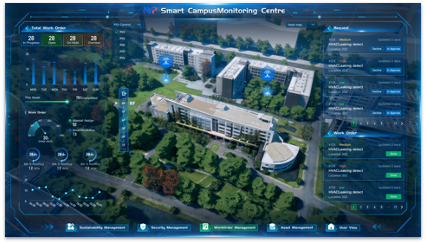
Connect your existing DCIM and BMS systems to maintenance workflows. Sensor alerts automatically create prioritized work orders. Equipment health data flows into maintenance scheduling. No more toggling between 5 different tools to understand facility status.
See how your daily routine transforms with proper maintenance management
Data Center Operations Manager
Managing a colocation facility with critical cooling, power, and customer review obligations
Log into DCIM, BMS, and ticketing system separately to understand overnight status
Fragmented visibility; 20+ minutes to get full picture
Morning Facility Status Check
Single dashboard: 3 zones green, 1 thermal advisory in Row 14, overnight PM completed
Complete facility status in 60 seconds
Log into DCIM, BMS, and ticketing system separately to understand overnight status
Fragmented visibility; 20+ minutes to get full picture
Single dashboard: 3 zones green, 1 thermal advisory in Row 14, overnight PM completed
Complete facility status in 60 seconds
Alert: "CRAC-14B shows repeated efficiency drift and open inspection history"
Plan inspection before the issue grows
Condition Alert
Discover CRAC trouble when a customer reports thermal throttling
Response starts after customer impact
Discover CRAC trouble when a customer reports thermal throttling
Response starts after customer impact
Alert: "CRAC-14B shows repeated efficiency drift and open inspection history"
Plan inspection before the issue grows
Skip redundancy test because "it's too risky" and "we tested it last year probably"
Untested backup; false confidence in redundancy
Quarterly Redundancy Test
Execute documented test procedure with load notes, timing, and sign-off
Redundancy evidence is ready to review
Skip redundancy test because "it's too risky" and "we tested it last year probably"
Untested backup; false confidence in redundancy
Execute documented test procedure with load notes, timing, and sign-off
Redundancy evidence is ready to review
Export maintenance history, photos, and RCA follow-up from one record
Evidence is ready to review
Customer Audit Evidence Request
Reviewer requests 12 months of PM records; the team starts searching email threads
Evidence reconstruction takes over the afternoon
Reviewer requests 12 months of PM records; the team starts searching email threads
Evidence reconstruction takes over the afternoon
Export maintenance history, photos, and RCA follow-up from one record
Evidence is ready to review
Customer wants to deploy GPU racks; no idea if cooling can handle the density
Manual capacity calculations; guessing at thermal impact
New AI Customer Deployment Planning
Pull cooling notes, open maintenance work, and asset constraints for Rows 20-24
Deployment planning starts with current facility context
Customer wants to deploy GPU racks; no idea if cooling can handle the density
Manual capacity calculations; guessing at thermal impact
Pull cooling notes, open maintenance work, and asset constraints for Rows 20-24
Deployment planning starts with current facility context
Night shift sees: 2 PMs scheduled, 1 monitoring advisory, no unowned critical alerts
Smooth shift handoff with full context
PM Scheduling & Handoff
Leave sticky notes for night shift about equipment concerns
Verbal handoffs; knowledge loss between shifts
Leave sticky notes for night shift about equipment concerns
Verbal handoffs; knowledge loss between shifts
Night shift sees: 2 PMs scheduled, 1 monitoring advisory, no unowned critical alerts
Smooth shift handoff with full context
Keep maintenance evidence ready for customer reviews, certification work, and internal governance.
Document redundancy tests, concurrent maintainability checks, and maintenance closeout evidence for certification or customer review.
Keep timestamped maintenance history, incident response follow-up, RCA completion, and corrective actions together for customer and auditor requests.
Track access-sensitive maintenance, environmental monitoring, and asset lifecycle evidence without claiming a certification on the page.
Track PUE trends, energy consumption by system, and maintenance context for efficiency reviews.
Compliance report
Generated from records
Use the demo to walk through cooling alerts, redundancy tests, audit evidence, and DCIM handoff on the same record.
Explore the Platform
Related paths
Follow the next pages that usually help teams evaluate this workflow.