
01
Capture the request and context.
Teams can collect the issue, location, asset, priority, photos, and requester details before work starts.
Give every requester clear milestone updates.
Whether it's an occupant reporting a broken lift or a customer dropping off equipment for repair, the question is always the same: 'What's the status?' Infodeck turns that gap into a visible, milestone-driven process with automatic email and SMS updates.
Operating record
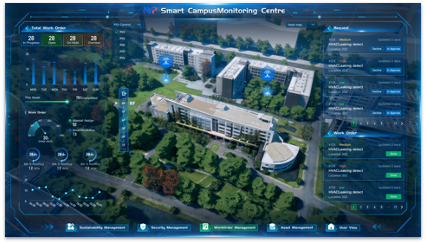
Infodeck keeps the request, assignment, status, evidence, and reporting connected from first report to close-out.
01
Teams can collect the issue, location, asset, priority, photos, and requester details before work starts.
02
Requests, approvals, technicians, contractors, due dates, and follow-up actions stay visible to the people responsible.
03
Close-out notes, timestamps, attachments, and history stay with the record for reviews, audits, and planning.
See what changes when every request follows a transparent workflow
Without Infodeck
The daily struggle
"Is my request done yet?"
Your receptionist fields the same call ten times a day. Your technicians get interrupted mid-repair to answer WhatsApp messages. Nobody trusts the process because nobody can see it.
Intake is a mess of sticky notes and half-filled forms
The customer walks in and explains the problem to reception, but half the details never reach the technician. Model numbers, contact info, fault descriptions. Lost between handwritten notes and verbal handoffs.
Work disappears between teams
A repair is received, triaged, assigned, worked on, and inspected. But the customer sees none of that. All they know is silence. And silence feels like nothing is happening.
Repair quality depends on who picks up the job
One technician follows every step. Another skips half. Without checklists tied to the equipment model or fault type, there is no standard. Managers find out about quality issues only when the customer complains.
With Infodeck
The new reality
Automatic milestone updates by email and SMS
When a job moves from received to in-progress to QA to completed, the requester gets notified automatically. No one on your team has to pick up the phone.
QR code intake at reception
Print a QR code. Stick it at the counter. The customer scans, fills in the form on their own phone: name, contact, issue description, photos, privacy consent. Every detail captured once, correctly.
Work request to work order in one flow
Forms submission triggers a work request. Your team reviews it, approves it, and it converts into a tracked work order with SLA timers, priority, and assignment. One system, one source of truth.
Model-specific SOPs and QA checklists
Attach the right repair checklist based on the equipment type or fault category. Technicians follow the steps, attach evidence photos, and complete QA sign-off before the job can close.
Intake
A printed QR code at your counter opens a request form on the customer's phone. They fill in contact details, describe the issue, attach photos, and submit. No paper. No missing info.
What this step achieves
Complete intake, less re-entry
Review
The form submission creates a work request. Your team reviews the details, checks if it is under warranty or needs parts, then approves it. Approved requests auto-convert into tracked work orders.
What this step achieves
Nothing starts without review
Dispatch
The work order gets assigned to the right technician or team. Priority and SLA targets are applied so everyone knows what needs attention first and what the internal deadline looks like.
What this step achieves
Clear ownership and urgency
Execute
The assigned technician sees the work order with the attached SOP checklist for that equipment model. They follow each step, attach proof photos, and mark items complete as they go.
What this step achieves
More consistent quality
Close loop
Every milestone triggers an email or SMS to the customer: received, in progress, QA review, ready for collection. Meanwhile, managers drag work orders across a Deck Board for live centre-wide status.
What this step achieves
Fewer status-chasing calls
These capabilities work together so your customers feel informed and your team stays focused on the actual work.
Print a QR code for your reception counter, lobby wall, or equipment drop-off point. Customers scan and fill in a structured form on their own device: contact info, issue details, photos, and consent.
Every form submission becomes a work request. Your team reviews, approves, and converts it into a work order. No copy-pasting between systems. The original form data carries through automatically.
Customers receive automatic updates when their request moves to a new stage: received, assigned, in progress, QA review, completed. You set the milestones. The system sends the messages.
Attach repair checklists by equipment type, fault category, or service level. Technicians follow each step and attach evidence. Managers can verify QA was completed before the job closes.
Drag a Work Order Table widget onto a Deck Board and get a live overview of every job in your centre. Filter by status, technician, or priority. See bottlenecks before they become complaints.
Every status change, note, photo, checklist completion, and SLA timestamp is logged. When a customer asks what happened, the timeline is already on the record.
Let your customers see where things stand. Let your technicians focus on the work. Let your managers see the full picture.
30-minute working session. Trial access starts through the demo flow. Works for FM teams, repair centres, and any service workflow.
Related paths
Follow the next pages that usually help teams evaluate this workflow.