
01
Capture the request and context.
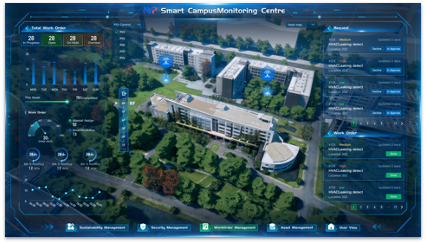
Teams can collect the issue, location, asset, priority, photos, and requester details before work starts.
Give requesters a tracking link. Let them approve or reject with a photo.
Most CMMS tools close the ticket when the technician says done. Infodeck keeps a requester confirmation step with a public tracking URL, notes, and photo evidence.
Operating record
Infodeck keeps the request, assignment, status, evidence, and reporting connected from first report to close-out.
01
Teams can collect the issue, location, asset, priority, photos, and requester details before work starts.
02
Requests, approvals, technicians, contractors, due dates, and follow-up actions stay visible to the people responsible.
03
Close-out notes, timestamps, attachments, and history stay with the record for reviews, audits, and planning.
Your team does good work. But without requester confirmation, the result is easier to dispute.
Without Infodeck
The daily struggle
Faults arrive from too many channels
WhatsApp messages, phone calls, emails, paper notes, walk-up complaints. Your intake desk spends time just logging what's broken.
Reporters keep calling for updates
They reported a fault. Then heard nothing. So they call back. Your front desk becomes a status hotline instead of solving problems.
FM manager manually sorts every fault to the right team
Plumbing goes to one team, HVAC to another, electrical to a third. Someone has to read every report and decide who handles it. That someone is you.
Technician says 'done' but the problem is still there
The aircon is still warm. The leak is still dripping. But the ticket is closed because the technician marked it complete. Now you have a complaint AND a rework cycle.
No evidence trail when disputes happen
The contractor says they fixed it last Tuesday. The requester says nobody came. You have no timestamps, no photos, no proof either way.
With Infodeck
The new reality
One intake queue for every channel
QR codes, WhatsApp, Line, web portal, mobile app. Every fault auto-creates a work request with location, photos, and requester details. No manual logging.
Public tracking URL sent instantly
The requester gets a link via email or SMS. No login needed. They can see the status timeline without calling your front desk.
Forms automation maps faults to the right team
Set up once: fault type X goes to work request template Y, assigned to team Z. The form questionnaire determines the routing. FM manager only handles exceptions.
Requester confirms the fix or rejects with photos
When the work is done, the requester gets a notification. They confirm the fix or reject it with a reason and photos. Rejected work reopens the work order.
Full journey chain from report to sign-off
Every step timestamped: form submission, work request, work order, technician updates, requester confirmation. One audit trail for disputes, compliance, and performance reviews.
This is what your occupants, visitors, and staff experience when they report a fault. No app download. No login. No guessing.
QR codes on walls, equipment, or rooms. Or send a WhatsApp/Line message. The requester picks the easiest channel.
A guided form captures location, fault type, photos, and contact details. Takes 30 seconds. The form fields determine how the fault gets routed.
Email or SMS with a unique tracking URL. No account needed. The requester can check status by opening the link.
The tracking page shows a live timeline: reported, assigned, technician on-site, work in progress. Each milestone triggers a notification.
Email or SMS alert: "Your reported fault has been resolved. Please review." One tap to open the tracking page.
Fixed? Confirm it. Not fixed? Tap "Report Issue," write a reason, and attach photos. The work order reopens and the FM team is notified.
QR codes on walls, equipment, or rooms. Or send a WhatsApp/Line message. The requester picks the easiest channel.
A guided form captures location, fault type, photos, and contact details. Takes 30 seconds. The form fields determine how the fault gets routed.
Email or SMS with a unique tracking URL. No account needed. The requester can check status by opening the link.
The tracking page shows a live timeline: reported, assigned, technician on-site, work in progress. Each milestone triggers a notification.
Email or SMS alert: "Your reported fault has been resolved. Please review." One tap to open the tracking page.
Fixed? Confirm it. Not fixed? Tap "Report Issue," write a reason, and attach photos. The work order reopens and the FM team is notified.
Every feature solves a specific operational pain. Not a checkbox on a feature matrix.
QR codes, WhatsApp, Line, web portal, mobile app. Every channel feeds into one queue. Stop chasing reports across 5 platforms.
Forms automation maps fault type to work request template to team. Three steps: enable, set conditions, map fields. The right fault goes to the right people.
Public tracking URL with live timeline. No login, no app download. The requester can see where the fault stands.
Confirmation for approval. Photo evidence for rejection. Rejected work can reopen, so teams see when the requester confirms the result.
Response and resolution timers by fault type and priority. Visual countdown, automated alerts, escalation chains. You know before you breach.
Track reopen rates, first-fix percentages, response times by team and category. Identify which contractors actually fix things the first time.
Fault management is one part of a modern maintenance system. Learn what CMMS software does, how it works, and why teams move away from spreadsheets and WhatsApp groups.
See exactly how multi-channel intake, forms automation, work request templates, and requester tracking work under the hood.
Give requesters visibility, your team accountability, and managers a record of what happened.
30-minute working session. Trial access starts through the demo flow.
Related paths
Follow the next pages that usually help teams evaluate this workflow.