

Start here
The short version
Short answer: IoT-native CMMS guide for facilities. Compare native sensor data, middleware, work order automation, support, and ownership.
What to check as you read
- IoT-native CMMS receives sensor events inside the same operating record that owns assets, thresholds, work orders, and response proof
- According to Microsoft, 28% of IoT initiatives fail due to integration complexity, with bolt-on solutions introducing multiple failure points
- Compare 5-year ownership across sensors, gateways, middleware, implementation, training, and support instead of only subscription price
- Sensor adoption is rising, but integration ownership determines whether alerts become maintenance work
Every CMMS vendor now claims “IoT integration” in their marketing materials. But there’s a fundamental architectural difference between platforms built from the ground up to process sensor data and those bolting on IoT capabilities as an afterthought through third-party integrations.
This architectural decision impacts everything that matters in predictive maintenance: how quickly you detect equipment anomalies, how reliably data flows from sensors to work orders, and how much you’ll spend over 5 years keeping integrations functioning.
According to Microsoft’s 2021 IoT Signals report, 28% of organizations fail to expand IoT initiatives because projects are “too complex to implement” due to technology demands. Integration architecture is the primary driver of this complexity.
Here is the practical guide to evaluating IoT integration approaches when selecting CMMS platforms in 2026.
Quick Answer: Native vs Bolt-On IoT CMMS
IoT-native CMMS receives sensor data as part of the same operating record that owns assets, thresholds, work orders, and mobile response. Bolt-on IoT can work, but it often adds middleware, slower troubleshooting, and unclear support ownership. For facilities teams, the buying test is direct: when a sensor crosses a threshold, who owns the alert, how fast does it become assigned work, and where is the evidence stored?
The IoT-CMMS Integration Market in 2026
The industrial IoT sensor market is experiencing explosive growth. Over 63% of US industrial facilities deployed sensor-based predictive maintenance strategies by 2024, with this number projected to exceed 85% by 2026 according to McKinsey research.
The industrial sensor market itself is expanding from $24.63 billion in 2025 to $26.75 billion in 2026, achieving an 8.6% CAGR. More than 58% of new sensor installations in North America involve wireless networks and edge analytics.
But sensor deployment is only half the equation. The real value comes from how effectively your CMMS platform processes this sensor data and translates it into actionable maintenance decisions.
Why Integration Architecture Matters More Than Sensor Count
You can deploy hundreds of sensors across your facility, but if your CMMS requires multiple middleware layers to process that data, you’ve introduced:
- Latency: Data takes seconds or minutes instead of milliseconds to trigger alerts
- Complexity: Multiple vendors, APIs, and translation layers create troubleshooting nightmares
- Failure points: Each integration layer represents a potential breakdown in the data pipeline
- Cost multiplication: Separate licensing for IoT platforms, middleware, integration development, and ongoing maintenance
According to research from BGC’s 2024 analysis, middleware complexity leads to half of IoT failures in massive deployments. Yet the same analysis shows a 40% decrease in integration issues when organizations adopt open standards through proper middleware implementation.
The lesson: Integration architecture quality determines success or failure.
Two Fundamentally Different Approaches to IoT-CMMS Integration
IoT-Native Architecture
Definition: The CMMS platform is engineered from its foundation to receive, process, and act on sensor data in real-time. IoT isn’t a feature you activate; it’s part of the core platform architecture.
Technical characteristics:
- Sensor communication protocols (MQTT, HTTP, LoRaWAN, NB-IoT) built directly into the platform
- Real-time data processing engine native to the system architecture
- Automatic work order generation as core functionality, not API-triggered
- Unified data model where assets and sensor readings exist in the same database
- Single vendor accountability for platform, sensors, connectivity, and support
- Native mobile app support for sensor management alongside maintenance tasks
Data flow:
[IoT Sensors] → [CMMS Platform] → [Automatic Actions]
     ↓
[Direct MQTT/HTTP connection, sub-second processing]
Bolt-On Integration Architecture
Definition: The CMMS connects to IoT capabilities through external platforms, middleware layers, or third-party integration services. The core platform wasn’t designed for real-time sensor data processing.
Technical characteristics:
- Requires separate IoT platform, gateway, or middleware service
- Data passes through translation layers and API connections
- Work order triggers configured through webhook or API integrations
- Asset data and sensor data often live in separate systems requiring manual correlation
- Multiple vendors involved in the full solution stack
- Separate mobile apps or platforms for sensor management vs work orders
Data flow:
[IoT Sensors] → [IoT Platform/Gateway] → [Middleware/API] → [CMMS]
     ↓                    ↓                     ↓
[MQTT to Platform] [Data Translation]  [API Calls with Delays]
Architecture Comparison: Technical and Business Impact
| Aspect | IoT-Native CMMS | Bolt-On Integration |
|---|---|---|
| Data flow | Direct: Sensor → CMMS (1 hop) | Indirect: Sensor → Gateway → Middleware → CMMS (3+ hops) |
| Response time | Milliseconds to sub-second | Seconds to minutes (varies by middleware) |
| Failure points | Minimal (sensor and platform only) | Multiple (sensor, gateway, middleware, API, CMMS) |
| Setup complexity | Lower (single platform configuration) | Higher (multiple platform integration) |
| Vendor support | Single vendor for all issues | Multiple vendors (finger-pointing common) |
| Implementation timeline | 5-6 weeks typical | 14-16+ weeks typical |
| Customization flexibility | May be more limited to platform capabilities | More flexible (can add custom middleware) |
| Cost structure | Bundled or modest premium | Separate licensing for each component |
| Scalability | Add sensors without integration work | May require integration updates per sensor type |
| Mobile integration | Single unified mobile app | Often separate apps for sensors vs CMMS |
| Historical data access | Unified database queries | Complex joins across systems |
How IoT-Native CMMS Architecture Works
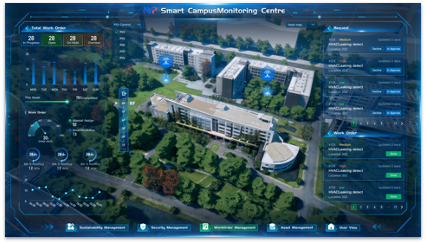
According to Verdantix research, commercial CMMS solutions are shifting toward platforms that support predictive maintenance, technician productivity, and vendor oversight at scale through native IoT integration. Leading solutions are distinguished by deep integration with Internet of Things and enterprise systems.
Let’s examine how IoT-native architecture delivers on this promise through four integrated components.
1. Direct Sensor Data Ingestion
IoT-native platforms support common industrial sensor protocols without requiring external gateways or translation layers.
| Protocol | Primary Use Case | Technical Advantage | Typical Latency |
|---|---|---|---|
| MQTT | Most IoT sensors (temp, vibration, pressure) | Lightweight, low bandwidth, publish-subscribe model | Under 100ms |
| HTTP/REST | Web-based sensors, modern equipment APIs | Familiar to developers, widely supported | 200-500ms |
| LoRaWAN | Long-range campus deployments, remote assets | 15km+ range, low power consumption | 1-5 seconds |
| NB-IoT | Cellular IoT in areas without WiFi | No local network infrastructure needed | 1-10 seconds |
According to advanced technical documentation on MQTT, MQTT is the most commonly used messaging protocol for IoT, standardized by OASIS and ISO. It provides a scalable and reliable publish-subscribe model designed as an extremely lightweight transport ideal for connecting remote devices with small code footprints and minimal network bandwidth.
In an IoT-native CMMS, these protocols are built into the platform core. When a vibration sensor detects an anomaly and publishes data via MQTT, the CMMS receives it directly, no intermediate platform required.
2. Real-Time Processing Engine
The platform processes incoming sensor data immediately within the CMMS architecture:
Processing capabilities:
- Compare readings against configured thresholds in real-time
- Identify anomalies using statistical algorithms or machine learning models
- Trigger instant alerts when conditions are met (no polling delays)
- Store time-series data for historical trend analysis
- Execute conditional logic (if temperature exceeds X AND vibration exceeds Y, then…)
According to LLumin’s IoT integration best practices, a manufacturing plant might deploy vibration sensors that communicate via MQTT to monitor equipment health, with the CMMS automatically triggering work orders and alerts when anomalies are detected. MQTT integration improves data access across CMMS, enterprise asset management solutions, machine health monitoring systems, and AI models.
In native architecture, this processing happens within the CMMS, with no external analytics platform required. Data doesn’t leave the system for analysis and return via API.
3. Automatic Work Order Generation
The true value of IoT-CMMS integration lies in converting sensor data into immediate action.
Example workflow in IoT-native system:
- Sensor detects anomaly: Vibration sensor on Pump-03 reads 0.8 inches/second
- CMMS receives data: Platform ingests reading via MQTT in under 100ms
- Threshold comparison: System compares against configured limit of 0.5 in/s
- Instant work order creation: Platform auto-generates work order titled “Investigate elevated vibration on Pump-03”
- Technician notification: Mobile push notification sent within 1 second of threshold breach
- Context attachment: Work order includes sensor reading, historical trend graph, asset maintenance history
- Priority assignment: System automatically sets priority based on criticality rules
- Parts suggestion: CMMS recommends spare parts based on similar past incidents
Total time from sensor reading to technician notification: Under 2 seconds
In bolt-on systems, this same workflow requires:
- Sensor reading to IoT platform (100ms-5s depending on protocol)
- IoT platform to process and evaluate threshold (1-30s)
- API call to middleware (1-10s)
- Middleware to format data for CMMS API (1-5s)
- CMMS to receive API call and create work order (2-10s)
- CMMS to send notification (1-5s)
Total time: 6 seconds to 65 seconds (or longer if polling intervals are involved)
This latency difference matters when equipment is approaching failure.
4. Unified Asset-Sensor Data Model
IoT-native platforms maintain a single, integrated data model where sensors are first-class citizens alongside assets.
In native architecture:
- Each asset has associated sensors as child records in the database
- Sensor readings automatically link to asset maintenance history
- Work orders display both operational data (from sensors) and maintenance records (from CMMS)
- Analytics queries span sensor data and maintenance performance without complex joins
- Mobile technician apps show current sensor readings alongside work order details
In bolt-on architecture:
- Sensors exist in separate IoT platform database
- Assets exist in CMMS database
- Manual or API-based correlation required to link the two
- Reports often require data exports, joins, and custom development
- Technicians may need to check separate dashboards for sensor status vs work order information
This unified model reduces cognitive load on maintenance teams and eliminates data synchronization issues.
Download the Full Report
Get 100+ data points, verifiable sources, and actionable frameworks in a single PDF.
Get the ReportSee It In Action
See how Infodeck keeps the request, work order, owner, and proof on one record.
Book a DemoHow Bolt-On Integration Architecture Works
Traditional CMMS platforms add IoT functionality through integration layers that sit between sensors and the maintenance management system.
Typical Bolt-On Architecture Stack
┌─────────────────┐
│   IoT Sensors   │ (Temperature, Vibration, Pressure, etc.)
└────────┬────────┘
         │ MQTT/HTTP
         ↓
┌─────────────────────────┐
│   IoT Platform/Gateway  │ (ThingWorx, AWS IoT, Azure IoT Hub)
│   - Sensor management   │
│   - Data aggregation    │
│   - Basic analytics     │
└────────┬────────────────┘
         │ API/Webhook
         ↓
┌─────────────────────────┐
│   Middleware/iPaaS      │ (Zapier, MuleSoft, custom integration)
│   - Data translation    │
│   - API orchestration   │
│   - Error handling      │
└────────┬────────────────┘
         │ REST API
         ↓
┌─────────────────────────┐
│        CMMS             │ (Receives formatted work order requests)
└─────────────────────────┘
Component Breakdown and Associated Costs
| Component | Primary Function | Typical Annual Cost | Required Expertise |
|---|---|---|---|
| IoT Platform | Collect, store, manage sensor data | $6,000-60,000 (scale-based) | IoT specialists |
| API Middleware | Translate data formats, handle authentication | $3,000-12,000 or included | Integration developers |
| Custom Integration | Connect systems, map data, handle edge cases | $15,000-50,000 (one-time) + $5,000+ annual maintenance | Full-stack developers |
| Analytics Platform | Process sensor data, create dashboards | $6,000-36,000 (optional if IoT platform includes) | Data analysts |
| CMMS Platform | Core maintenance management | $10,000-50,000 | CMMS administrators |
| Total Year 1 | All components | $40,000-208,000 | Multiple specialties |
| Total Ongoing | Annual licensing + maintenance | $19,000-113,000+ | Multiple specialties |
Integration Complexity Challenges
According to the MaintainX CMMS Integration Guide for 2025, the complexity of IoT integration often surprises integration leaders. IoT projects can involve a large number of devices, a proliferation of APIs, and large amounts of data, all of which can tax traditional integration strategies, skills, and technologies.
eWorkOrders’ CMMS integration comparison research notes that complex projects like custom CMMS integration involving multiple modules and significant data mapping can take several months to fully implement. While native connectors provide the fastest start with pre-built connections between systems, they aren’t as common. Third-party middleware or iPaaS solutions offer more endpoints but aren’t ideal for long-term, enterprise-grade solutions.
The Multi-Vendor Support Challenge
One of the most underestimated challenges in bolt-on architecture is vendor coordination when issues arise.
Example troubleshooting scenario:
Your vibration sensor stops sending data to CMMS. Who do you call?
- Sensor manufacturer: “The sensor is transmitting data. We see it in our diagnostics.”
- IoT platform vendor: “We’re receiving sensor data. Check your API integration.”
- Middleware vendor: “Our logs show successful API calls to CMMS. Check their endpoint.”
- CMMS vendor: “We’re not receiving data. Check your integration.”
Result: Hours or days of finger-pointing between vendors while critical equipment goes unmonitored.
In IoT-native architecture, you call one vendor who owns the entire data pipeline.
Real-World Implementation Timelines
IoT-Native CMMS Implementation (50-Asset Facility)
| Phase | Timeline | Key Activities | Resources Required |
|---|---|---|---|
| Platform setup | Week 1-2 | Configure CMMS, import assets, set up user accounts | CMMS admin, facilities manager |
| Sensor deployment | Week 2-4 | Install sensors, connect to platform network, configure sensor parameters | Technicians, IoT specialist (vendor-provided) |
| Threshold configuration | Week 4-5 | Set alert parameters, test triggers, define work order templates | Maintenance manager, CMMS admin |
| Training & testing | Week 5-6 | Train technicians, run simulated alerts, refine workflows | All maintenance staff |
| Go-live | Week 6 | Activate automatic work orders, monitor closely | Full team |
| Total timeline | 5-6 weeks | From contract to production | 1-2 internal resources |
Bolt-On Integration Implementation (50-Asset Facility)
| Phase | Timeline | Key Activities | Resources Required |
|---|---|---|---|
| CMMS setup | Week 1-4 | Configure base CMMS without IoT | CMMS admin |
| IoT platform setup | Week 2-6 | Deploy separate IoT platform, configure sensor management | IoT specialists, network team |
| Sensor deployment | Week 4-8 | Install sensors, connect to IoT platform (not yet CMMS) | Technicians, IoT vendor |
| Integration development | Week 6-12 | Build API connections, data mapping, error handling, authentication | Integration developers, both vendors |
| Middleware configuration | Week 8-10 | Set up iPaaS or custom middleware, test data translation | Integration team |
| End-to-end testing | Week 10-14 | Test full pipeline, troubleshoot failures, handle edge cases | Full technical team, both vendors |
| User testing | Week 13-15 | Train users, test workflows, identify issues | Maintenance staff, technical team |
| Go-live | Week 14-16 | Activate with close monitoring, on-call support | Full team + vendor support |
| Total timeline | 14-16+ weeks | From contract to production | 3-5 internal resources |
Timeline difference: 9-11 weeks longer for bolt-on approach
This timeline difference translates directly to delayed ROI and extended period of manual maintenance processes.
Total Cost of Ownership Analysis: 5-Year Comparison
Let’s examine realistic 5-year TCO for a mid-sized facility with 50 critical assets requiring monitoring.
IoT-Native CMMS Solution
| Cost Component | Year 1 | Year 2 | Year 3 | Year 4 | Year 5 |
|---|---|---|---|---|---|
| CMMS subscription (10 users @ $100/user/mo) | $12,000 | $12,000 | $12,000 | $12,000 | $12,000 |
| IoT module premium (included or small add-on) | $3,000 | $2,000 | $2,000 | $2,000 | $2,000 |
| Sensors (50 @ $150 avg) | $7,500 | $1,500 | $1,500 | $1,500 | $1,500 |
| Gateway hardware | $2,000 | - | - | - | - |
| Implementation (vendor-led) | $5,000 | - | - | - | - |
| Training | $2,000 | $500 | $500 | $500 | $500 |
| Ongoing support (included in subscription) | - | - | - | - | - |
| Annual Total | $31,500 | $16,000 | $16,000 | $16,000 | $16,000 |
| 5-Year Total | $95,500 |
Bolt-On Integration Solution
| Cost Component | Year 1 | Year 2 | Year 3 | Year 4 | Year 5 |
|---|---|---|---|---|---|
| CMMS subscription (10 users @ $83/user/mo) | $10,000 | $10,000 | $10,000 | $10,000 | $10,000 |
| IoT platform subscription | $6,000 | $6,500 | $7,000 | $7,500 | $8,000 |
| Middleware/iPaaS platform | $3,000 | $3,200 | $3,400 | $3,600 | $3,800 |
| Sensors (50 @ $150 avg) | $7,500 | $1,500 | $1,500 | $1,500 | $1,500 |
| Gateway hardware | $2,500 | - | - | $1,500 | - |
| Integration development | $25,000 | - | - | - | - |
| Integration maintenance/updates | $2,000 | $5,000 | $5,000 | $6,000 | $6,000 |
| Additional training (multiple platforms) | $3,000 | $1,000 | $1,000 | $1,000 | $1,000 |
| Multi-vendor support contracts | - | $2,000 | $2,000 | $2,000 | $2,000 |
| Annual Total | $59,000 | $29,200 | $29,900 | $33,100 | $32,300 |
| 5-Year Total | $183,500 |
Planning takeaway: in this modeled scenario, bolt-on ownership is materially higher because the buyer carries middleware, integration development, and multi-vendor support separately. Replace these assumptions with quotes from your own vendors before using the numbers in a business case.
Hidden Costs in Bolt-On Solutions
The TCO comparison above includes direct costs but doesn’t fully capture:
- Internal IT time: Integration troubleshooting, version updates, security patches across multiple platforms
- Delayed ROI: 11 additional weeks before realizing maintenance efficiency benefits
- Opportunity cost: What else could your IT team accomplish instead of maintaining integrations?
- Scale penalty: Adding new sensor types may require integration rework in bolt-on systems
- Vendor changes: If any vendor in the stack discontinues support, entire integration may need rebuilding
According to IoT cost analysis from Expanice, the Total Cost of Ownership for IoT adoption includes expenses beyond initial hardware and software, including installation, integration with existing systems, ongoing maintenance, updates, security measures, and staff training. Organizations often underestimate these software and operating costs when they budget only for sensors and licenses.
Book a Demo
See how Infodeck handles the requests, work, and records your operation already runs.
Book a DemoView Pricing
Review plan scope, quotas, and the operating scale each Infodeck plan is built for.
View PricingWhen Bolt-On Integration Actually Makes Sense
Despite higher complexity and cost, bolt-on integration can be the pragmatic choice in specific scenarios.
Scenario 1: Significant Existing CMMS Investment
Situation: You’ve invested heavily in CMMS customization, integrations with ERP and other enterprise systems, and have years of historical data you cannot migrate.
Why bolt-on works: The cost and disruption of replacing CMMS outweighs bolt-on integration complexity. Your existing CMMS likely has API capabilities to receive sensor data.
Success factors:
- Strong internal integration team or reliable integration partner
- Well-documented CMMS API
- Executive commitment to funding ongoing integration maintenance
Scenario 2: Specialized Sensor Requirements
Situation: Your equipment requires specialized sensors with proprietary protocols that only work with specific IoT platforms (common in process manufacturing or scientific facilities).
Why bolt-on works: You don’t have a choice of IoT platform; the sensor manufacturer dictates it. You need CMMS integration to that specific platform.
Success factors:
- Sensor manufacturer provides integration tools or support
- IoT platform has thorough API documentation
- Budget for professional integration services
Scenario 3: Enterprise Data Lake Architecture
Situation: Your organization has an enterprise-wide strategy to centralize all operational data (IoT, production, quality, maintenance) in a corporate data lake that feeds multiple systems including CMMS, ERP, and BI tools.
Why bolt-on works: IoT data flows to the data lake regardless of CMMS choice. CMMS pulls relevant data from the lake rather than directly from sensors.
Success factors:
- Mature data engineering team
- Mature data lake infrastructure already in place
- Clear data governance and ownership
Scenario 4: Complex Multi-Site Deployments with Diverse Equipment
Situation: You operate 50+ facilities globally with wildly different equipment types, making a single IoT-native CMMS unable to support all sensor varieties and protocols needed.
Why bolt-on works: Flexibility to integrate different IoT platforms and sensor types at different sites while maintaining centralized CMMS visibility.
Success factors:
- Enterprise-grade integration platform (iPaaS)
- Dedicated integration team
- Standardized data models across sites
Evaluating IoT-Native CMMS Platforms: Key Questions
When evaluating vendors claiming “native IoT integration,” ask these specific technical and business questions to separate true native architecture from glorified API integrations.
Architecture & Technical Questions
1. “Show me the exact data flow from sensor reading to work order creation.”
- Look for: Direct sensor-to-CMMS path with minimal hops
- Red flag: Vague explanations or “it depends on your setup”
2. “What sensor communication protocols do you support natively without middleware?”
- Look for: MQTT, HTTP/REST at minimum; LoRaWAN or NB-IoT as bonus
- Red flag: “We integrate with any IoT platform” (translation: not native)
3. “Where does sensor data processing occur: in your platform or an external service?”
- Look for: “Within our CMMS application” with specific technical details
- Red flag: References to external analytics platforms for basic threshold monitoring
4. “How quickly does a threshold breach trigger work order creation?”
- Look for: Sub-second to few-second response times with specific examples
- Red flag: “It varies” or “within a few minutes”
5. “Can I query historical sensor data and maintenance records in a single report?”
- Look for: Unified database, single API, native reporting spanning both datasets
- Red flag: Need to export data from separate systems and join in Excel or BI tool
Functionality Questions
6. “Show me configuring a custom threshold rule and automatic work order template.”
- Look for: Point-and-click configuration within CMMS interface
- Red flag: Requires API coding or external platform configuration
7. “How do technicians see current sensor readings when working on an asset?”
- Look for: Sensor data visible in mobile app work order view, native integration
- Red flag: Technicians must check separate dashboard or web portal
8. “What happens if sensor data stops flowing, how do I know and troubleshoot?”
- Look for: Built-in sensor health monitoring, connectivity alerts, diagnostic tools
- Red flag: “Check with your IoT platform vendor”
Scalability Questions
9. “What’s your largest customer deployment in terms of sensor count?”
- Look for: Hundreds to thousands of sensors with performance metrics
- Red flag: Dozens of sensors, or unwillingness to share numbers
10. “If I want to add 50 new sensors of a different type, what’s involved?”
- Look for: Register sensors in CMMS, configure thresholds, done
- Red flag: New integration development, additional platform fees, or “contact professional services”
11. “Are there additional fees based on sensor count or data volume?”
- Look for: Transparent pricing model, reasonable scalability pricing
- Red flag: Per-sensor fees that make scaling prohibitively expensive
Support & Partnership Questions
12. “Who do I contact when sensor data isn’t reaching CMMS?”
- Look for: Single vendor support team owns entire data pipeline
- Red flag: “Depends on where the issue is” requiring you to coordinate vendors
13. “What sensor hardware brands are certified compatible with your platform?”
- Look for: Published compatibility list, certified hardware partners
- Red flag: “Works with any sensor” (generic answer suggesting minimal testing)
14. “What’s your SLA for data processing latency?”
- Look for: Published SLA with specific metrics (99.9% of readings processed within 1 second)
- Red flag: No SLA or vague “real-time” claims without metrics
Infodeck’s IoT-Native Architecture Approach
Infodeck supports IoT-connected facilities work by tying sensor signals to the same operating record used for assets, work orders, and mobile response.
Native Technical Capabilities
Protocol support:
- MQTT (primary protocol for most industrial sensors)
- HTTP/REST APIs for modern equipment and web-based sensors
- Secure WebSocket connections for bidirectional communication
- Standard authentication (API keys, OAuth 2.0)
Real-time processing:
- Sub-second threshold monitoring across all connected sensors
- Statistical anomaly detection using moving averages and standard deviations
- Multi-condition rules (trigger when temperature AND vibration exceed thresholds)
- Time-based logic (alert if condition persists for X minutes)
Automatic actions:
- Instant work order generation with pre-filled templates
- Priority assignment based on asset criticality and severity
- Technician assignment using skills-based routing
- Spare parts recommendations from historical data
- Email and mobile push notifications
Unified data model:
- Assets and sensors in single database schema
- Sensor readings link to asset maintenance history
- Work orders display real-time and historical sensor context
- Analytics span operational and maintenance data without joins
Practical Benefits for Maintenance Teams
Single platform experience:
- Configure sensors, thresholds, and work order templates in one interface
- Technicians access sensor data and work orders in one mobile app
- Reports combine equipment performance metrics with maintenance KPIs
- One vendor for all support questions
Deployment questions to ask:
- How are sensors mapped to asset records?
- Who configures thresholds and escalation rules?
- What happens when a gateway, API, or sensor event fails?
- How quickly can a test sensor event become an assigned work order?
Scale questions to ask:
- What changes when the site adds 10, 100, or 1,000 sensors?
- How are sensor credentials, battery replacement, and location changes tracked?
- How does pricing change by sensor, asset, gateway, or site?
- Where can technicians see sensor context while completing the work?
What to Validate in a Live Demo
Ask vendors to show the path from sensor event to completed work record, not just the analytics dashboard:
- Trigger a sample sensor event.
- Show the asset and location context.
- Create or route the work order.
- Notify the technician.
- Close the task with photos or notes.
- Show where the event remains searchable later.
Predictive Maintenance ROI: What to Expect
Understanding realistic ROI expectations helps justify the IoT-CMMS investment, regardless of integration approach chosen.
Industry Benchmark Data
Predictive maintenance research summaries point to strong outcomes when the equipment is critical, the data is reliable, and teams act on alerts. The same caveat applies here: the architecture helps, but the operating discipline proves the ROI.
[McKinsey and industry summaries show that predictive maintenance can produce strong results, but ROI depends heavily on equipment criticality, failure history, data quality, and whether teams act on the alerts. Use the benchmarks below as modeling prompts, not promises.
Realistic Outcome Ranges
| Metric | What to measure in the pilot | Evidence to keep |
|---|---|---|
| Downtime reduction | Unplanned downtime hours before and after sensor-triggered work | Incident log, work orders, downtime notes |
| Maintenance cost reduction | Emergency labor, parts, and contractor spend avoided or reduced | Work order cost fields, invoices |
| Equipment life extension | Repeated faults, vibration trends, and replacement timing | Asset history and sensor trend records |
| Energy cost reduction | Energy use for the monitored equipment or zone | Meter readings, BMS export, utility data |
| ROI timeline | Months until verified avoided cost exceeds pilot spend | Pilot budget, baseline, and monthly review |
| Support overhead | Hours spent maintaining gateways, APIs, and middleware | IT tickets and vendor support records |
The US Department of Energy documents even more dramatic potential results: 70-75% decrease in breakdowns, 35-45% reduction in downtime, and potential 10x ROI.
Factors Influencing Your ROI
Integration approach matters:
- IoT-native: Faster time to value (6-8 weeks), lower ongoing costs
- Bolt-on: Delayed ROI start (14-16 weeks), higher integration maintenance drag
Asset criticality:
- Higher ROI when monitoring critical assets with expensive downtime costs
- Lower ROI for non-critical assets or equipment with low failure rates
Team discipline:
- Organizations that respond quickly to alerts see 2-3x better results
- Teams that ignore sensor alerts negate the entire investment
Data quality:
- Proper sensor calibration and threshold configuration essential
- “Garbage in, garbage out” applies fully to predictive maintenance
Making Your Integration Architecture Decision
Choose IoT-Native CMMS If You:
- Are implementing CMMS and IoT together: no existing integration investments to protect.
- Want a shorter deployment path: fewer systems to connect before alerts can become work.
- Prefer fewer support handoffs: sensor signals, asset context, work orders, and mobile response sit closer together.
- Do not have existing IoT infrastructure: starting fresh without legacy platform constraints.
- Prioritize long-term ownership cost over initial cost: willing to pay for simpler operations if the operating model supports it.
- Have limited integration expertise internally: do not want to maintain complex API integrations.
- Want a unified mobile experience for technicians: sensor context and work order response in one workflow.
- Need fast response for critical equipment: alerts should reach the maintenance workflow without unnecessary waiting or manual transfer.
Choose Bolt-On Integration If You:
-
Have significant existing CMMS investment: deep customization, integrations, or historical data migration make replacement too costly.
-
Already have a mature IoT platform deployed: building on existing infrastructure may be more practical than replacing it.
-
Have specialized integration requirements: unique workflows or data transformations may require a separate integration layer.
-
Enterprise architecture mandates specific platforms: corporate standards may dictate the IoT, integration, or data platform.
-
Have a strong internal integration team: dedicated developers can build and maintain connections.
-
Operate a diverse multi-site environment: different sensor types across facilities may require flexibility.
-
Use enterprise data lake architecture: all operational data may need to be centralized before reaching applications.
-
Can accept a longer implementation path: integration timelines may be acceptable if the current stack is strategically important.
Critical Evaluation Metrics
Regardless of approach chosen, measure these key metrics during vendor evaluation and after implementation:
| Metric | What to Measure | Target Performance |
|---|---|---|
| Time to first alert | From sensor install to first automatic work order | Ask vendors to show a live path from sensor to assigned work |
| Data latency | Delay from sensor reading to CMMS visibility | Test with a real sensor event, not a slide |
| Alert-to-action time | From threshold breach to technician notification | Confirm the mobile notification and escalation path |
| Implementation timeline | Contract signing to production use | Separate sensor install, integration, testing, and training |
| Integration maintenance burden | Hours per month maintaining connections | Ask who maintains mappings, APIs, and failed events |
| Vendor response time | Support ticket resolution for sensor issues | Confirm support ownership across sensor, gateway, and CMMS |
| Scalability effort | Time to add 10 new sensors | Validate the setup steps for new sensors and new assets |
| Total 5-year cost | All licensing, integration, maintenance costs | Compare full ownership models |
The Future of IoT-CMMS Integration
Industry trends strongly favor native integration approaches as platforms mature and customer expectations evolve.
Market Evolution Drivers
1. AI and machine learning integration
Verdantix research highlights rising AI expectations in CMMS platforms. The AI segment within predictive maintenance is expected to grow at a compound annual growth rate over 30% through 2026.
Native platforms can integrate AI directly into the sensor data processing pipeline. Bolt-on architectures require AI capabilities in external platforms or complex multi-system data flows.
2. Edge computing and 5G connectivity
Edge processing, 5G connectivity, and digital twins may make sensor-driven maintenance easier to operate. They do not remove the basic buying question: can the platform turn a signal into accountable work?
Native platforms are better positioned to take advantage of edge computing, processing sensor data closer to equipment for even lower latency.
3. Industry consolidation
As major ERP and enterprise software vendors acquire CMMS and IoT platforms, integrated solutions will become the norm rather than exception. Organizations betting on bolt-on architectures may find themselves forced to migrate anyway.
4. Technician experience expectations
Modern maintenance technicians expect consumer-grade mobile experiences. Having to switch between separate apps for sensor data and work orders creates friction that reduces adoption. Native platforms deliver unified experiences.
Key Takeaways: Integration Architecture Matters More Than You Think
Your IoT-CMMS integration architecture decision has far-reaching implications beyond initial implementation:
Response speed: Native architecture reduces the handoffs between signal, rule, alert, and work order. For fast-moving failures, fewer handoffs matter.
Reliability: Each integration layer in bolt-on architecture represents a potential failure point. Microsoft data shows 28% of IoT projects fail due to complexity, driven primarily by integration challenges.
Total cost: While bolt-on solutions may have lower initial CMMS subscription costs, a fair comparison should include integration development, middleware licensing, vendor support, and ongoing maintenance.
Scalability: Adding sensors to native platforms requires simple configuration. Bolt-on systems may require integration updates, additional licensing, or professional services.
Support complexity: Native platforms reduce handoffs across alerting, work orders, and response records. Bolt-on setups often require coordinating several vendors when issues arise.
Pilot timeline: Native implementations can shorten the path from test sensor to assigned work order, but actual timing depends on sensors, connectivity, data cleanup, and vendor support.
With over 63% of US industrial facilities having deployed sensor-based predictive maintenance, CMMS buyers should ask a practical architecture question early: who owns the alert, who owns the work order, and who owns the evidence after the technician closes it?
Treat IoT architecture as an operating decision, not a connector checklist. Ask where sensor data enters, who owns alerts, and how a threshold becomes assigned work. Infodeck can show the sensor-to-work-order flow in a 30-minute demo and map the scope to pricing.
For ROI modeling, use the predictive maintenance ROI guide to connect sensor alerts, downtime assumptions, labor cost, and work order history.
Sources
- Gartner IoT Predictions 2025: Market Analysis
- IoT Now: Interoperability Issues in IoT Integration
- Industrial Wireless Sensor Networks Research Report 2026
- Verdantix: Green Quadrant CMMS Benchmark 2025
- MaintainX: CMMS Integration Guide 2025
- eWorkOrders: CMMS Integration Comparison
- IoT For All: Why IoT Adopters Get Stuck - Middleware Solutions
- LLumin: Best Practices for CMMS IoT Integration
- HiveMQ: MQTT Essentials 2025
- Expanice: Calculating IoT Solution Costs 2025
- WorkTrek: Predictive Maintenance Cost Savings
- LLumin: Predictive Maintenance Slash Downtime by 40%
Frequently Asked Questions
What is IoT-native CMMS and how does it differ from traditional CMMS platforms?
What's the difference between native and bolt-on IoT integration in CMMS?
Which communication protocols should a CMMS support for IoT sensors?
Can I add IoT capabilities to my existing CMMS platform?
Is IoT-native CMMS more expensive than bolt-on solutions?
How does IoT-native architecture improve predictive maintenance outcomes?
What are the main technical advantages of native IoT integration?
From guide to workflow
See where this work lives in Infodeck
When the idea becomes daily work, Infodeck keeps requests, owners, updates, and proof on one operating record.
IoT and sensor response
Route sensor events into alerts, work orders, and follow-up.
View IoTWork order management
Turn requests into assigned work, SLA tracking, updates, and closure proof.
View work ordersPreventive maintenance
Plan recurring work and condition-based maintenance before issues become urgent.
View preventive maintenance

