
Start here
The short version
Short answer: Capture maintenance decisions, failure context, and safe procedures without turning knowledge transfer into worker surveillance.
What to check as you read
- Capture the conditions, evidence, decision, action, and verification behind a repair, not only the final fix.
- Prioritize knowledge tied to critical assets, rare high-consequence work, recurring faults, and single-person dependencies.
- Record the work with informed participation, clear access rules, and a defined retention purpose. Do not score or monitor technicians through capture sessions.
- A local workaround never replaces an approved safety procedure, manufacturer instruction, or legal requirement.
Maintenance knowledge capture records why work was done, not just what was done. A useful record connects the asset condition, evidence, diagnosis, decision, repair, and verification so another qualified technician can understand the failure later.
The term tribal knowledge often describes experience that has never reached an approved record. Some of it is valuable. Some of it is an untested habit. Capture should preserve context without turning a technician into a camera subject or treating every workaround as fact.
Start with work that carries operational risk: a recurring chiller trip, a modified pump arrangement, an obsolete controller, a shutdown sequence used once a year, or a supplier substitution that has already caused confusion. Capture the decision while the evidence and people involved are still available.
Capture decisions and failure context
“Replaced bearing” does not help the next technician decide whether a similar noise has the same cause. A knowledge record should show the path from observation to verified outcome.
| Record field | What to write | Why it matters later |
|---|---|---|
| Asset and operating context | Asset ID, location, duty, load, mode, weather or occupancy condition where relevant | Confirms whether the old case is comparable |
| Trigger and symptom | Alarm, complaint, sound, reading, leak, trip, or inspection finding | Gives search terms and a starting condition |
| Evidence | Readings, photos, fault codes, samples, trend window, or visible condition | Separates observation from memory |
| Checks performed | Tests in order, tools used, and results | Prevents the same dead ends from being repeated |
| Diagnosis and confidence | Probable cause, confirmed cause, or unresolved finding | Stops an assumption from becoming a false fact |
| Decision | Repair, monitor, isolate, escalate, replace, or accept for a defined period | Shows what was chosen |
| Decision basis | Safety boundary, manufacturer limit, failure history, redundancy, parts availability, or specialist advice | Preserves the reason behind the choice |
| Action and parts | Work performed, approved procedure, part number, substitution, and contractor where relevant | Makes the intervention traceable |
| Verification | Test after work, return-to-service reading, observation period, and result | Shows whether the action worked |
| Follow-up | New work, monitoring point, owner, due condition, and review date | Keeps an unresolved risk visible |
Use a confidence label when the cause was not proved. “Probable cause based on vibration and inspection” is more useful than a confident but unsupported conclusion. Record what was ruled out as well as what was found.
The U.S. Department of Energy’s maintenance assessment criteria call for maintenance history on equipment that affects safe and reliable operations, root-cause analysis, and feedback into maintenance and training. The principle applies beyond federal facilities: a closed work order should leave enough context to improve the next decision.
Prioritize the knowledge that creates operational dependence
Do not begin by asking experienced staff to document everything. Build a short risk queue. Score each candidate by consequence, recurrence, difficulty of recovery, and how many people can perform or explain the work.
Capture first when one or more of these conditions are present:
- one person is the only reliable source for a system or procedure
- failure affects life safety, essential service, production, research, or occupied space
- the work is rare, complex, or performed during shutdowns
- the asset has site modifications that the manual does not show
- parts are obsolete, substituted, or sourced through a specialist route
- a fault has repeated because the previous diagnosis was not clear
- a contractor holds records that the site team cannot retrieve
- the procedure depends on an unlabelled valve, panel, control point, or access route
ISO 55001:2024 added explicit attention to knowledge in asset management. The ISO committee’s summary of the 2024 edition notes that data without context, insight, and experience has limited value. ISO 30401 takes a wider management-system view and covers establishing, maintaining, reviewing, and improving organisational knowledge practices. See the ISO 30401 overview.
These standards do not tell a facility which pump note to write. They support the operating principle: knowledge needs ownership, review, and a repeatable way to remain useful.
Use the lightest capture method that preserves the lesson
Choose the format around the work. A short note may be enough for a part substitution. A shutdown sequence may need an approved procedure, annotated drawing, and paired practice.
Enrich the work order
For ordinary corrective work, the work order is the best capture point because the asset, date, people, and action already exist. Add a close-out prompt with five questions:
- What condition did you find?
- What checks led to the decision?
- What action did you take, and under which approved procedure?
- How did you verify return to service?
- What should the next technician check first if this repeats?
Link durable findings to the asset record, but keep the original work order as evidence. Work order management provides the event trail; asset records keep stable equipment context close to future work.
Run a focused expert walkthrough
Use a known event, not a broad request such as “tell us everything about this plant room.” Ask the technician to walk through one failure, seasonal changeover, isolation plan, or vendor decision. Prompt for exceptions:
- What made the symptom different from an ordinary failure?
- Which check changed your diagnosis?
- What looked plausible but was wrong?
- Which condition would require stopping and escalating?
- What changed after the last modification?
NASA’s Engineering and Safety Center teaches a structured lessons-learned format built around complete, valid lessons and root causes where they are understood. Facility teams can apply the same discipline without copying NASA’s process: capture the event, evidence, lesson, limits, and future use.
Pair the work and debrief it
One technician performs or explains the work. A second technician follows the record and names what is missing. This exposes hidden steps that an expert no longer notices.
The second person should not simply sign that training happened. Ask them to find the asset, identify energy sources, gather the right information, explain decision points, and state when specialist help is required. Record gaps in the procedure, not a score against the person.
Use short video for motion, sound, and access
Video helps when hand position, access angle, equipment sound, control sequence, or inspection view is difficult to describe. Keep the camera on the task and equipment unless a participant has agreed to appear. Add a title, asset reference, date, speaker, safety boundary, and transcript or summary so the video can be found without watching every file.

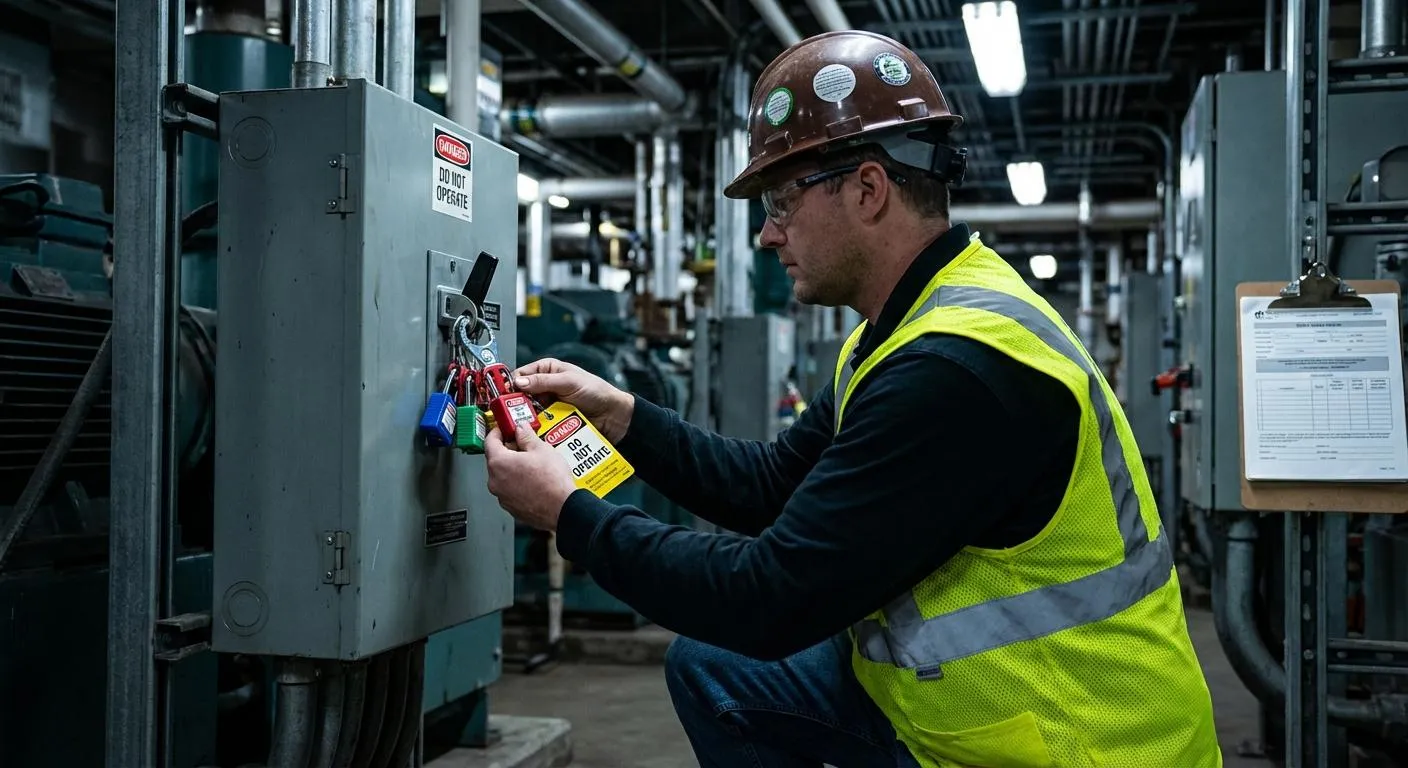
A video is reference material, not authorization to perform hazardous work. In the United States, OSHA’s control of hazardous energy rule requires an energy-control program, procedures, training, and periodic inspections where the rule applies. Other jurisdictions have their own duties. Keep approved safety procedures separate from informal tips, and make the governing procedure obvious.
Capture the work, not the worker
Knowledge continuity fails when technicians believe the exercise is covert monitoring, a replacement plan, or a search for blame. Set boundaries before an interview, screen recording, audio clip, or video begins.
- explain the task being captured and who will use it
- obtain informed participation and follow local recording and employment rules
- limit the recording to the equipment, decision, and procedure where possible
- state where the material is stored, who can access it, and when it is reviewed or removed
- let the contributor check the technical summary before approval
- remove personal comments, unrelated conversations, passwords, access codes, and occupant information
- do not use capture sessions for hidden productivity scoring, behaviour monitoring, or disciplinary evidence
- provide a route to correct a record without erasing the original work history
This is not a promise of legal compliance. Privacy, employment, union, security, and recording requirements vary. Confirm the applicable rules with the responsible people in your organisation before recording.
Separate experience from approved procedure
Experienced technicians know where manuals are incomplete, but a familiar workaround can also hide a damaged control, defeated safeguard, or undocumented modification. Every captured lesson needs a status.
| Status | Meaning | Use |
|---|---|---|
| Approved procedure | Reviewed by the responsible technical or safety owner | May be assigned to qualified people within its stated scope |
| Field observation | A recorded condition or pattern, not yet a rule | Supports diagnosis and review |
| Proposed change | A suggested task, interval, part, or sequence awaiting review | Do not treat as approved work |
| Historical decision | Explains why a past action was taken | Reassess if conditions have changed |
| Superseded | Retained for history but replaced by a named revision | Must not appear as current instruction |
Never capture instructions to ignore an alarm, bypass an interlock, work live, exceed a limit, or skip a manufacturer step as an approved shortcut. Escalate the condition for technical and safety review. If local experience supports changing a preventive maintenance checklist, document the evidence and approval rather than quietly changing the interval.
Keep the record usable after the expert leaves
Every durable record needs four controls:
- Owner: the role responsible for technical accuracy.
- Scope: the assets, sites, versions, and conditions covered.
- Review trigger: equipment modification, repeat failure, new manufacturer guidance, procedure change, safety event, or planned review.
- Status: draft, approved, superseded, or archived.
Searchability matters too. Use the asset ID, equipment type, symptom, fault code, and action in plain language. Avoid naming a document after one person. “AHU-04 low airflow after filter change” can be found by a future technician; “Sam’s trick” cannot.

A mobile maintenance workflow can reduce the gap between doing the work and recording it, but the team still owns the writing standard and review. If a system cannot preserve source evidence, revision status, and links between assets and work, keep those limitations visible during evaluation.
Start with a small continuity test
Choose one asset class with recurring faults or concentrated expertise. Review its recent work history and select three records that would be difficult for another technician to repeat. Rewrite them using the decision-context fields above. Then ask a second qualified technician to find and explain the record without help from the original author.
Track practical results:
- Could the second technician find the record from the asset or symptom?
- Could they distinguish evidence from assumption?
- Were the safety boundary and escalation point clear?
- Did the record show whether the repair worked?
- Was any personal or restricted information captured unnecessarily?
- Who will review the record when the asset changes?
Fix those gaps before expanding to more equipment. A searchable library of vague notes is still a vague library.
When comparing software, check whether the workflow can keep work history, attachments, asset context, and follow-up actions together. Review Infodeck pricing for scope, then book a demo with one real knowledge-continuity scenario. Ask the team to show how a future technician would find the original failure, decision, and verification record.
Sources
- ISO 55001:2024 overview, ISO Technical Committee 251
- ISO 30401:2018 knowledge management systems, International Organization for Standardization
- A Structure for Capturing Lessons Learned, NASA Engineering and Safety Center Academy
- Maintenance Assessment Plan, U.S. Department of Energy
- The control of hazardous energy, U.S. Occupational Safety and Health Administration
Conclusion
Good maintenance knowledge is not a biography of the most experienced technician. It is a usable record of conditions, evidence, decisions, safe boundaries, and verified outcomes.
Capture the next difficult job while it is happening. Let another qualified person test the record. Correct what they cannot follow. That loop turns individual experience into operational continuity without turning knowledge transfer into surveillance.
Frequently Asked Questions
What is tribal knowledge in maintenance?
What should a maintenance knowledge capture record include?
How can facilities teams capture knowledge without surveilling technicians?
Can a CMMS preserve maintenance knowledge?
How should a team start a maintenance knowledge transfer program?
From guide to workflow
See where this work lives in Infodeck
When the idea becomes daily work, Infodeck keeps requests, owners, updates, and proof on one operating record.
Platform overview
Requests, assets, rooms, visitors, contractors, sensors, and approvals on one operating record.
Explore platformPricing
Quota-based plans for teams comparing rollout scope, sites, assets, and workflow volume.
View pricingCMMS comparisons
Compare Infodeck with common maintenance software options.
Compare options